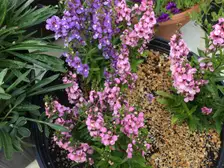
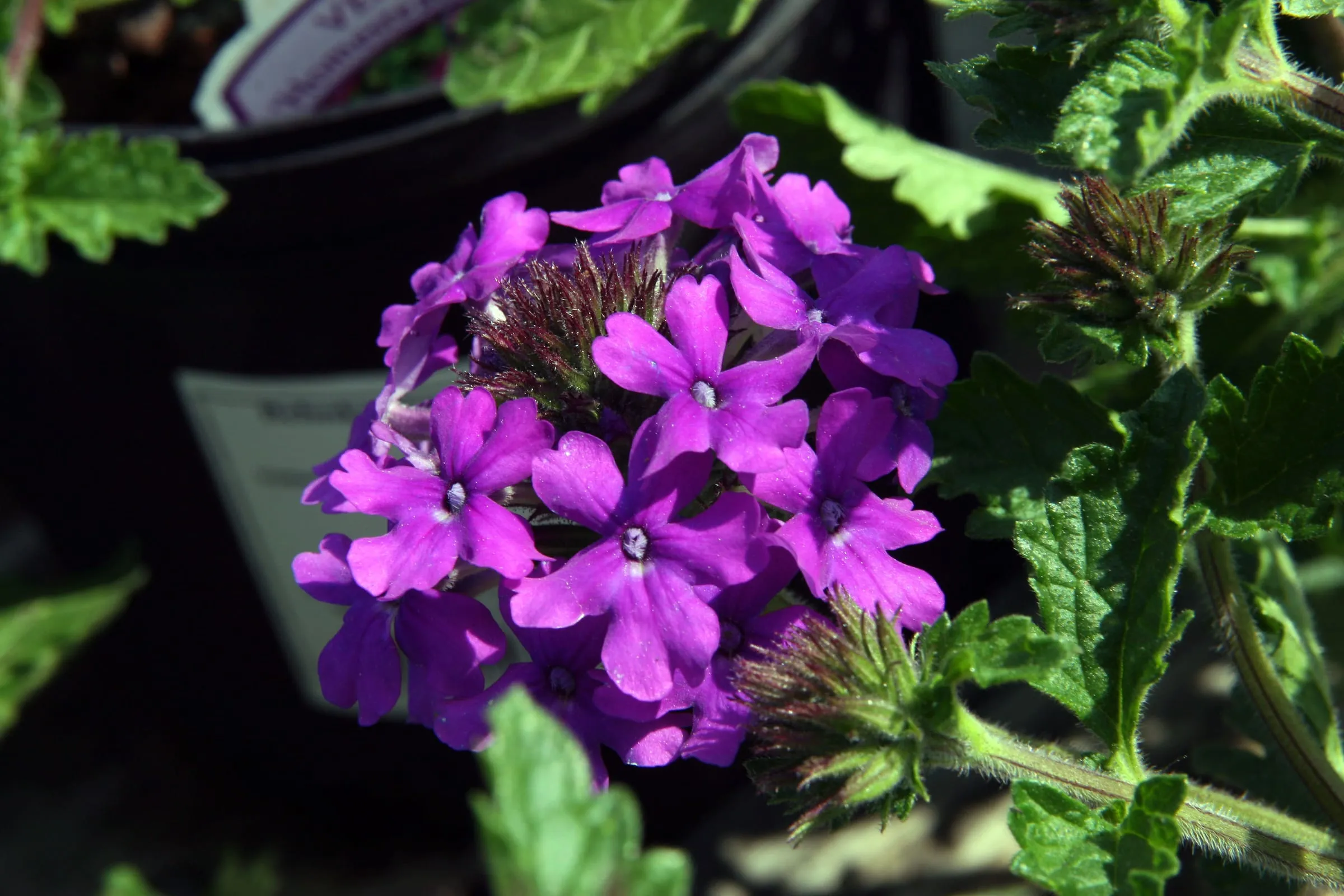
Photo: David J. Stang, CC BY-SA 4.0, via Wikimedia Commons
- Light
- full sun all day. Fewer flowers, powdery mildew and floppy stems with anything less
- Water
- low once established. A deep drink once a week in a bed if it has not rained an inch, more often in a pot, and never soggy
- Toxicity
- not listed by ASPCA or Pet Poison Helpline. The ASPCA's only verbena entries are lemon verbena and sand verbena, which are different plants. Absence from the list is not evidence of safety
| Type | Warm-season annual |
|---|---|
| Sun | Full sun |
| Water | Low |
| Size | 6 to 12 in tall, 18 to 36 in wide |
| Bloom | purple, pink, red, lavender, white · late spring to frost |
| Plant in | mid-April to June |
| Interest | Summer, fall |
| Upstate winter | Survives most winters |
| Hardy zones | 6 to 10 for 'Homestead Purple'; most garden hybrids are annual here |
| Use in | Containers, beds |
| Role | Trailer, filler |
Toxicity not independently confirmed: Not listed by ASPCA or Pet Poison Helpline. If you have pets, check with the ASPCA or your vet before putting this one where they can reach it.
Verbena is the trailer for a sunny planter that needs color from May until frost. It hangs over the rim, it shrugs off July, and butterflies find it fast. ‘Homestead Purple’ is the one to look for. It was found on an old Georgia homestead, so our heat is nothing new to it.
In the Upstate
‘Homestead Purple’ is a perennial, hardy to zone 6, and in a bed it usually comes back for two or three years before it wears out. The trailing hybrids sold in spring flats (Superbena, Lanai and the like) are a different story. Treat those as annuals. In a pot the roots see roughly one zone colder than the ground, so do not count on any verbena surviving winter in a container. It goes in from mid-April on, and by August it wants a haircut.
In a container
Verbena is a trailer or a low filler, a foot tall and two to three feet across by midsummer. It shares a pot well with petunias, calibrachoa and lantana because they all want the same sun and the same sharp drainage. Water when the top inch is dry, which in a July pot is every day or two, and never let it sit soggy. If bloom slows in the heat, trim the whole plant back by a quarter and it will be flowering again in two to three weeks.
Care
Full sun and drainage are most of it. Feed lightly in late spring and again after the midsummer trim, and stop there. Verbena does not want a rich diet. Do not cut it hard in fall if you hope it comes back, since heavy fall pruning reduces its cold hardiness. The one thing that kills it is wet feet: soggy soil, overhead watering and crowding bring root rot and mildew.
Want this planted for the light you actually have? Start a project
Where it shows up
Sources
- Clemson HGIC 1175, Verbena (hgic.clemson.edu/factsheet/verbena/)
- NC State Extension Plant Toolbox, Verbena canadensis (plants.ces.ncsu.edu/plants/verbena-canadensis/)
- NC State Extension Plant Toolbox, Verbena x hybrida (plants.ces.ncsu.edu/plants/verbena-x-hybrida/)
- ASPCA toxic and non-toxic plant list, searched for Verbena and Glandularia (aspca.org)
- Pet Poison Helpline, searched for verbena (petpoisonhelpline.com)