- Light
- full sun, six hours or more
- Water
- low once established. Let the soil dry briefly between waterings, which in a summer pot still means a check every day or two
- Toxicity
- Not listed by ASPCA or Pet Poison Helpline. That is not the same as safe
| Type | Warm-season annual |
|---|---|
| Sun | Full sun |
| Water | Low |
| Size | 12 to 36 in tall, 8 to 12 in wide |
| Bloom | purple, blue, lavender, pink, white, bicolor · May to frost |
| Plant in | mid-April to June |
| Interest | Summer, fall |
| Upstate winter | One season |
| Hardy zones | 9 to 11 |
| Use in | Containers, beds |
| Role | Height, filler |
Toxicity not independently confirmed: Not listed by ASPCA or Pet Poison Helpline. If you have pets, check with the ASPCA or your vet before putting this one where they can reach it.
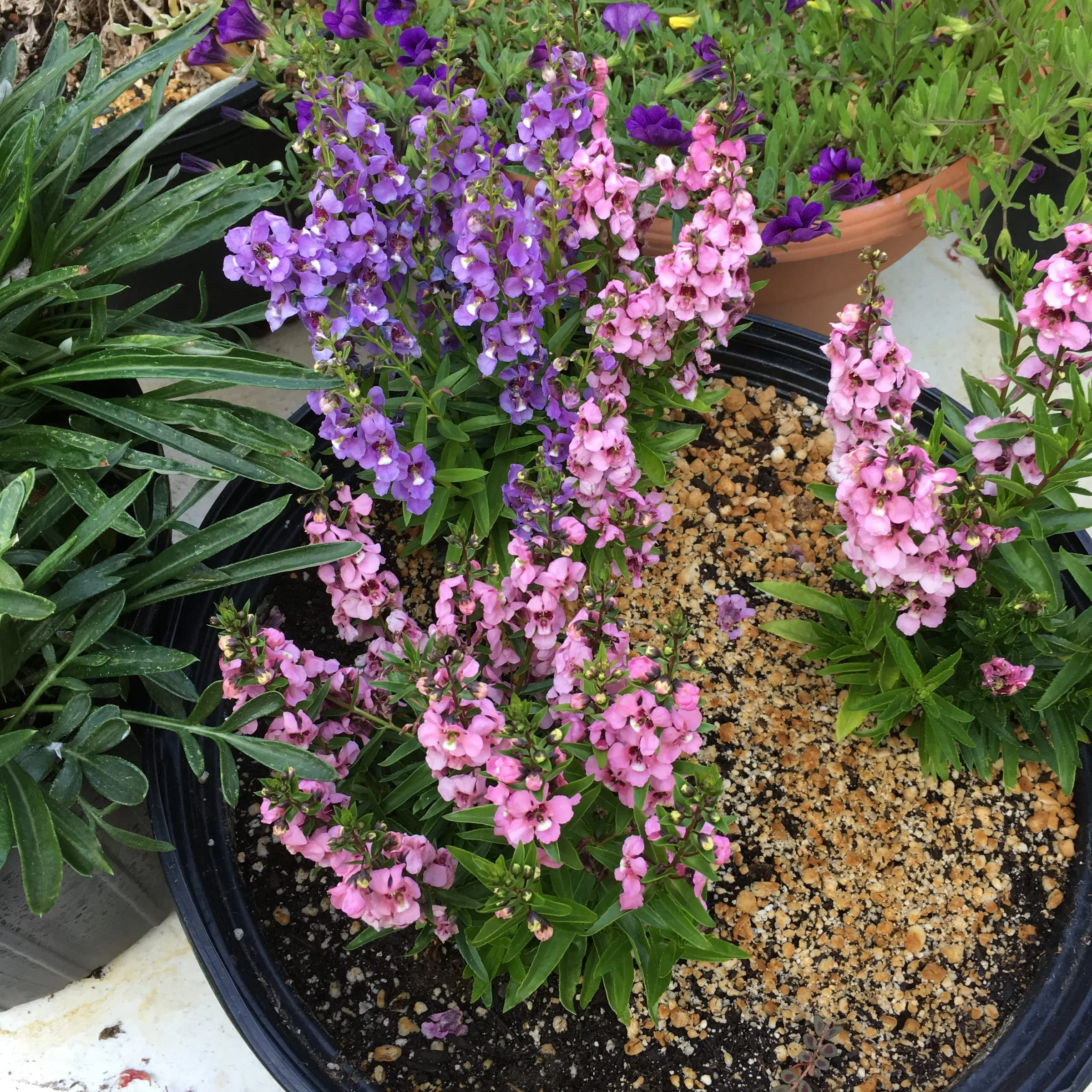
Angelonia is the summer snapdragon: upright spikes of small two-lipped flowers in purple, blue, lavender, pink, and white that keep coming from late spring to frost without deadheading. Clemson calls it a perfect fit for the hot, dry summers we usually get, and it is the plant for height in a full-sun pot when a real snapdragon would have melted. Deer leave it alone, which matters on the edge of town.
In the Upstate
Angelonia is a tender plant, hardy only to zone 9 per Clemson, so it goes out mid-April at the earliest and a Greenville frost in November ends it. Between those dates it is one of the least fussy plants in a summer pot. Clemson’s trials found it very heat and drought tolerant once established, and NC State adds that it handles humidity, which is the part that kills so many other summer flowers here. August does not slow it down. Clemson says containers can be brought inside to overwinter, but most people buy new plants each spring.
In a container
Angelonia is the height in a summer planter, 12 to 18 inches on most plants per NC State and up to 3 feet on the tall ones per Clemson, and only about a foot wide, so plant it close, 8 or 9 inches apart, and the stems hold each other up. Clemson likes it in larger window boxes and containers. Once it is rooted in, let the top of the mix dry briefly between waterings. It does not need replacing mid-season. If it gets tall and open by July, cut it back by half and it reflowers in 2 to 3 weeks.
Care
Let the mix dry briefly between waterings, and feed with a slow-release fertilizer at planting topped up with a liquid feed now and then, or a slow-release feed every 2 months. No deadheading is needed. The only real trouble NC State lists is root and stem rot in cultivars that lack resistance, which is a drainage problem, and occasional aphids. A soggy pot in a wet week is the thing that kills it.
Want this planted for the light you actually have? Start a project
Where it shows up
Sources
- Clemson HGIC 1187, Angelonias, Summer Snapdragons (hgic.clemson.edu/factsheet/angelonias-summer-snapdragons/)
- NC State Extension Plant Toolbox, Angelonia angustifolia (plants.ces.ncsu.edu/plants/angelonia-angustifolia/)