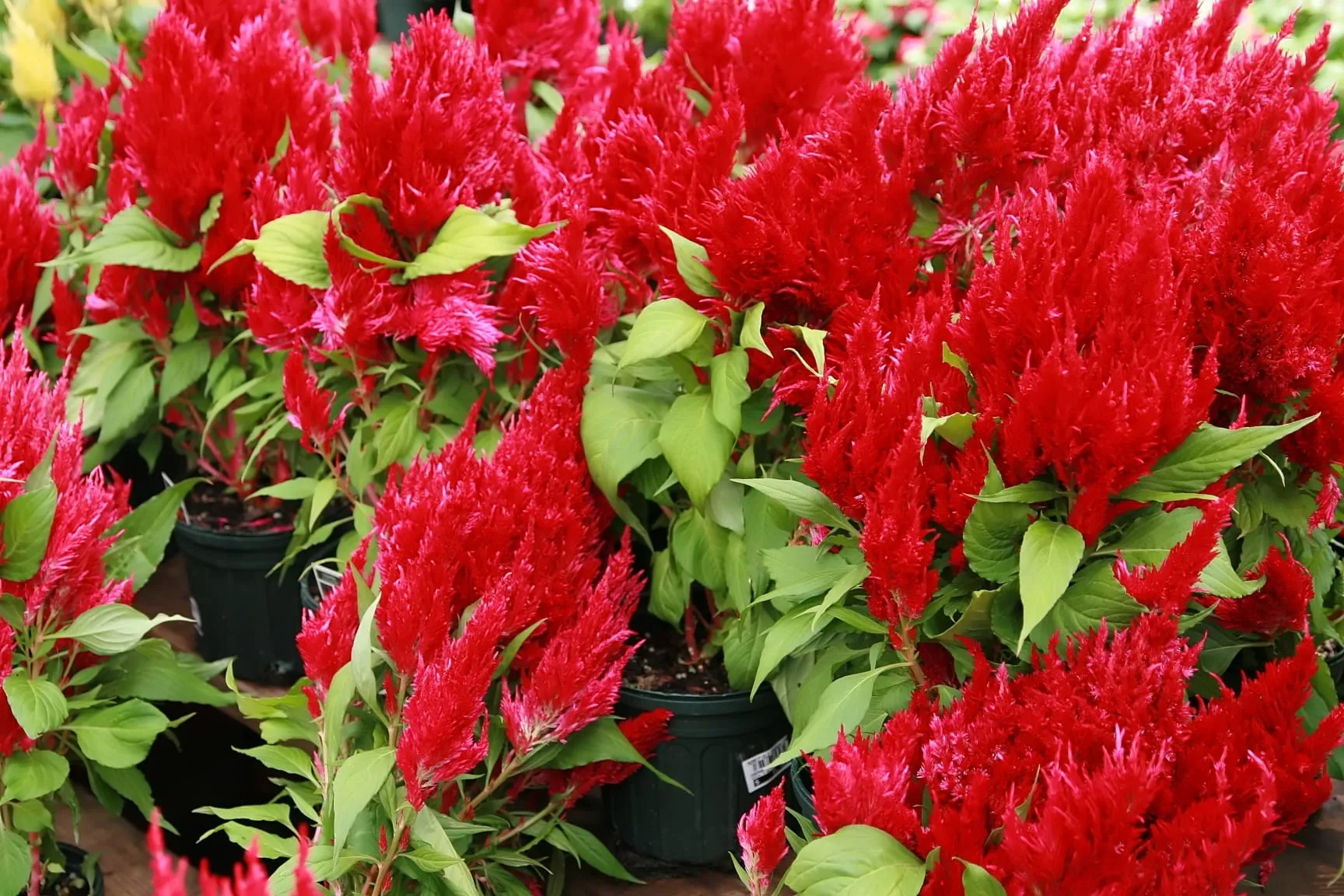
Photo: David J. Stang, CC BY-SA 4.0, via Wikimedia Commons
- Light
- full sun, six hours or more. Less sun means fewer and smaller plumes
- Water
- medium. Water when the top inch is dry; it takes heat and dry spells but rots in soggy mix
- Toxicity
- non-toxic to dogs, cats and horses (ASPCA, listed as Celosia Plumosa, cockscomb; that is the plumed group of Celosia argentea, the plant sold here)
| Type | Warm-season annual |
|---|---|
| Sun | Full sun |
| Water | Medium |
| Size | 9 to 18 in tall, 9 to 12 in wide |
| Bloom | red, orange, pink, yellow, purple · late spring to frost |
| Plant in | mid-April to June |
| Interest | Summer, fall |
| Upstate winter | One season |
| Hardy zones | 10 to 11 |
| Use in | Containers, beds |
| Role | Filler, height |
Toxicity confirmed against ASPCA Animal Poison Control.
Celosia is the plant for anyone who wants color you can see from the street. The plumed types throw up feathery flames in red, orange, pink, and gold that last for months and dry well when you cut them. It loves heat and humidity, which is rare in a bright annual. It works in fall pots too, where the reds and golds read like autumn without a single mum.
In the Upstate
Celosia is a true annual, frost tender, and hardy nowhere near us. Plant it from mid-April once frost is past. It hits its stride in July and August, when NC State notes it thrives in heat and humidity. It will reseed in a bed if you let the plumes go, which some people like and some do not. The first frost in November takes it down.
In a container
The plumes give a pot a spike of height even though the plant itself stays 9 to 18 inches tall, so it works as a filler in a big pot or as the tallest thing in a small one. Give it a spot in the middle where the plumes clear the neighbors. Water when the top inch of mix is dry. A summer planting holds its color into fall without swapping. One warning from NC State: crowding, rain, and high humidity can rot the flower heads, so do not pack it in tight and keep water off the plumes.
Care
Water at the base, not over the top. Feed lightly with a slow-release at planting. Cut faded plumes to the next set of leaves and new ones follow. Slugs and snails chew it, so check under the pot after rain. The one thing that kills it is soggy roots: it is more drought tolerant than most annuals and far less forgiving of a pot that stays wet.
Want this planted for the light you actually have? Start a project
Sources
- NC State Extension Plant Toolbox, Celosia argentea (plants.ces.ncsu.edu)
- ASPCA, Celosia Plumosa (aspca.org)