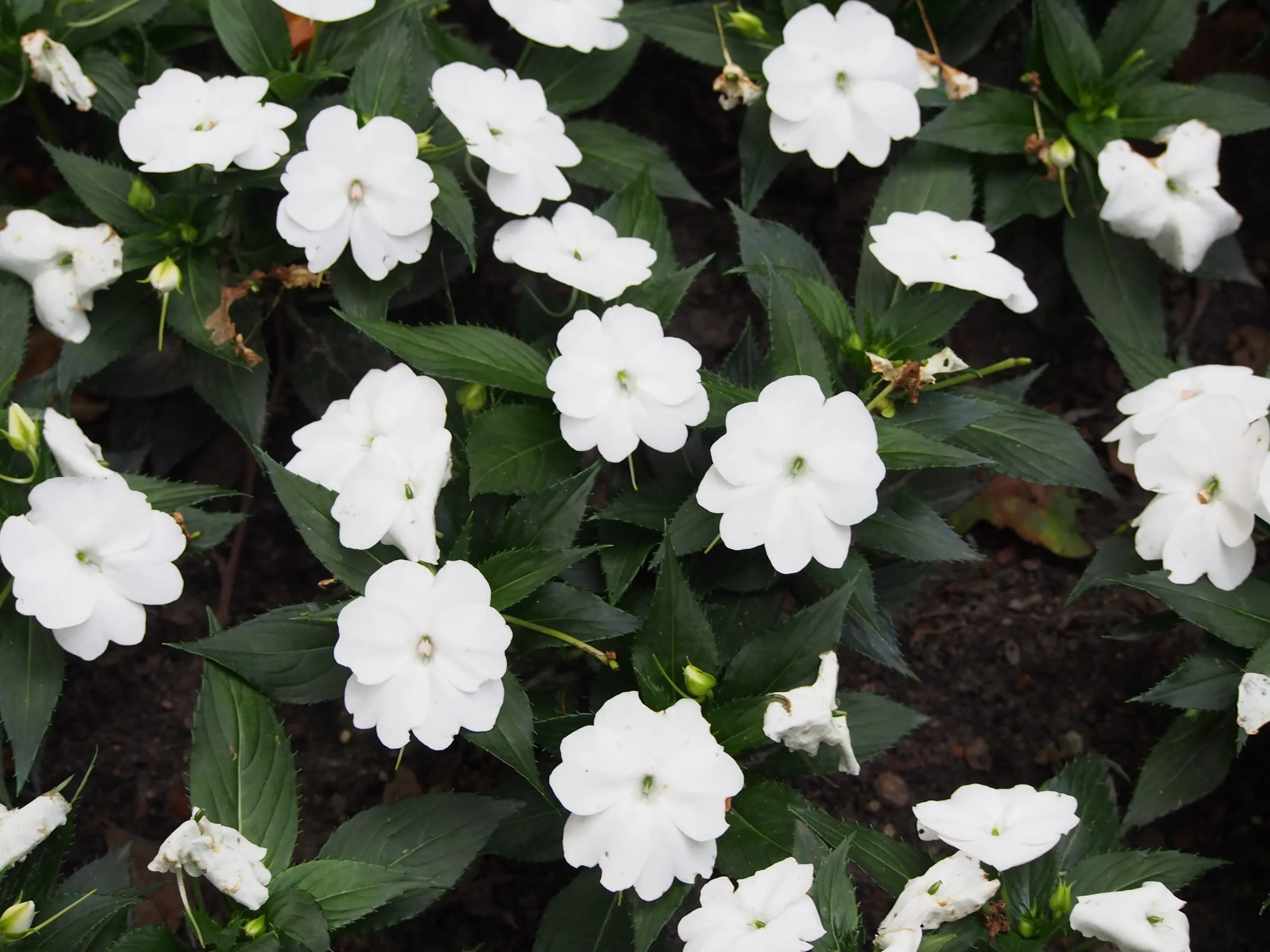
Photo: Agnieszka Kwiecień, Nova, CC BY-SA 4.0, via Wikimedia Commons
- Light
- full sun to part sun. It is the impatiens bred for sun, but full shade makes it stretch and stop blooming
- Water
- medium to high. It keeps its buds when it wilts, but drying out scorches the leaves, so water whenever the top inch is dry
- Toxicity
- non-toxic to dogs and cats (ASPCA, Impatiens spp.). The ASPCA entry does not mention horses
| Type | Warm-season annual |
|---|---|
| Sun | Full sun, part sun |
| Water | High |
| Size | 14 to 42 in tall, 14 to 36 in wide |
| Bloom | pink, coral, orange, salmon, red, lilac, lavender, white · May to frost |
| Plant in | mid-April to June |
| Interest | Summer, fall |
| Upstate winter | One season |
| Hardy zones | 10 to 12 |
| Use in | Containers, beds |
| Role | Filler, height |
Toxicity confirmed against ASPCA Animal Poison Control.
SunPatiens are the impatiens that changed the rules. The old shade impatiens got wiped out by downy mildew after 2013, and these hybrids from New Guinea stock resist it and take full sun on top of that. They bloom without pause from planting to frost, they clean up after themselves, and they get big. They belong where a porch gets sun half the day and you want flowers, not just leaves.
In the Upstate
They are hardy only to zone 10, so here they are annuals that die at the first frost. Plant from mid-April on. Heat and humidity are what they were bred for, and a Greenville August does not slow them. The one Upstate problem is water: a plant in full sun in a pot can dry out between morning and evening in July, and while it will not drop its buds, the leaves scorch and the plant looks rough for weeks.
In a container
Pick the series to fit the pot. Compact types run 14 to 32 inches, the Spreading series makes a mound 18 to 36 inches tall and wide, and the Vigorous series stands up to 42 inches with stems stout enough to hold in a thunderstorm. In a mixed planter it is the filler or the centerpiece, not the spiller. Water whenever the top inch is dry, which in August is daily. No deadheading, no pinching, no midseason swap.
Care
Rich, moist, well-drained soil and a monthly water-soluble feed, more often in a pot. Keep the soil from swinging between soggy and bone dry. Watch for aphids, thrips and spider mites in a dry spell. The one thing that kills it is a pot too small for a plant this size, which dries out faster than anyone can water it.
Want this planted for the light you actually have? Start a project
Where it shows up
Sources
- Clemson HGIC 1166, Impatiens (hgic.clemson.edu/factsheet/impatiens/)
- NC State Extension Plant Toolbox, Impatiens x hybrida SunPatiens Group (plants.ces.ncsu.edu/plants/impatiens-x-hybrida-sunpatiens-group/)
- ASPCA, Impatience Plant (aspca.org)