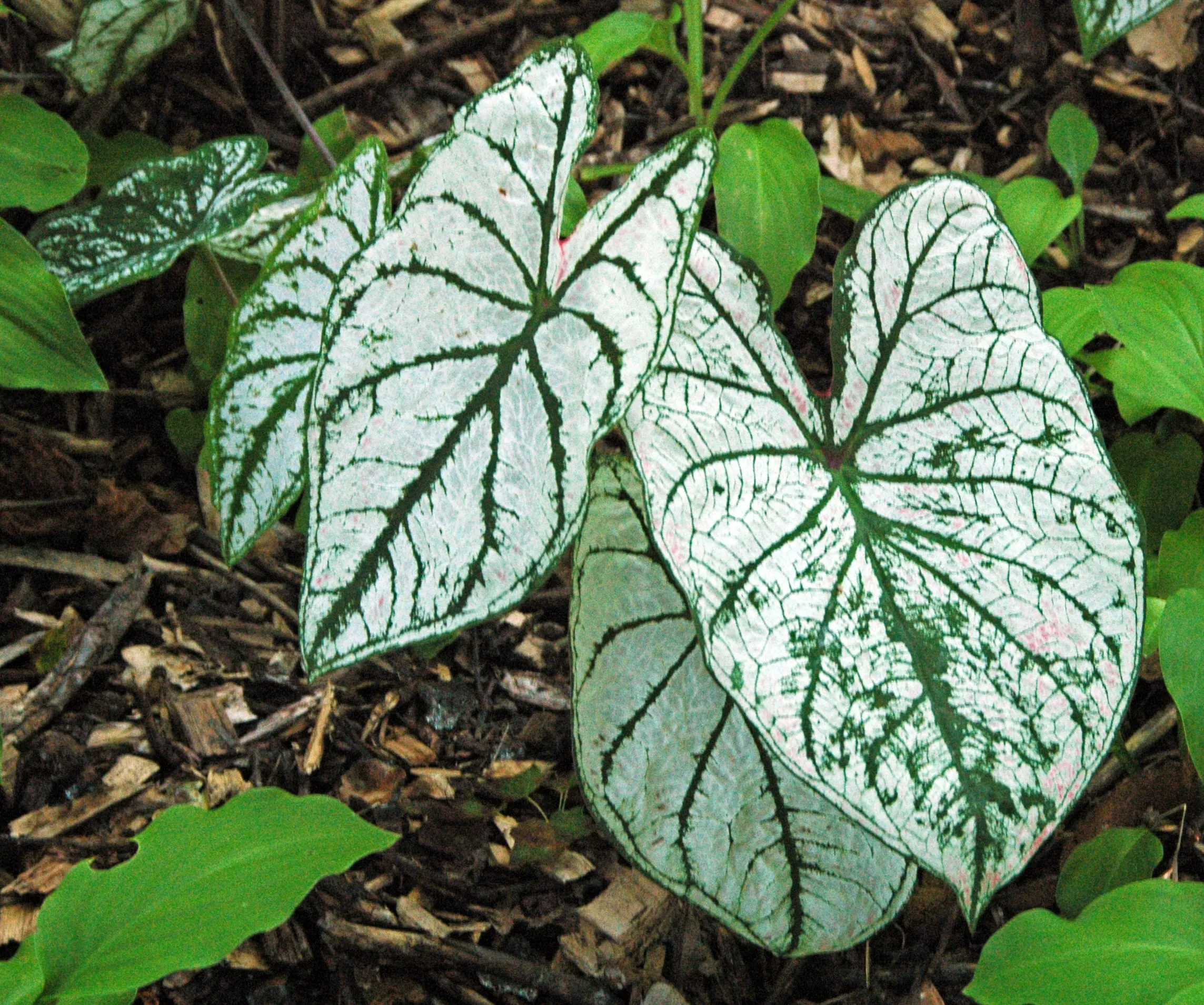
Photo: James St. John, CC BY 2.0, via Wikimedia Commons
- Light
- dappled or part shade with protection from hot afternoon sun. A few cultivars ('Aaron', 'Red Flash', 'White Queen') take a couple of hours of sun; most scorch
- Water
- high. Keep the soil evenly moist through the summer, never saturated. In a pot that is most days in July, and it must have a drainage hole
- Toxicity
- toxic to dogs, cats and horses (ASPCA, Caladium hortulanum): insoluble calcium oxalates; oral irritation, pain and swelling of mouth, tongue and lips, excessive drooling, vomiting (not horses), difficulty swallowing. Also poisonous to people (NC State Extension, medium severity): burning and swelling of the lips, mouth and tongue, nausea, vomiting and diarrhea; the sap irritates skin
| Type | Warm-season annual |
|---|---|
| Sun | Part sun, shade |
| Water | High |
| Size | 12 to 24 in tall, 12 to 24 in wide |
| Plant in | May to June, once the soil reaches 70 degrees |
| Interest | Summer, fall |
| Upstate winter | One season |
| Hardy zones | 9 to 10 |
| Use in | Containers, beds |
| Role | Filler, height |
Toxicity confirmed against ASPCA Animal Poison Control; NC State Extension Plant Toolbox.
Caladiums are how you get big color into a shaded entry without a single flower. The heart-shaped leaves come in white, pink, red and green, often with the veins picked out in a second color, and a white one like ‘Moonlight’ or ‘Candidum’ lights up a dark porch from across the yard. They love our heat and humidity, which is more than we can say for most shade plants.
In the Upstate
Caladiums are hardy only to zone 9 or 10, so they are annuals here. They are also the last thing to go in. Set out in cool soil they sit and rot, and Clemson’s rule is to plant them when you would plant okra, once the soil is 70 degrees, which in Greenville means May. From there they reach full size in one season and hold until the nights cool in October. You can dig and store the tubers, but second-year leaves are usually smaller, so it is easier to start fresh each spring.
In a container
A fancy-leaved caladium stands 12 to 24 inches and fills a pot as a mid-height filler or, in a group, the centerpiece. It is a thirsty plant. Keep the mix evenly moist, which in a July pot means checking daily, and make sure the pot drains, because caladiums rot when kept wet. Pinch off the greenish flower spike when it appears so the plant puts its energy into leaves. It does not need swapping midseason.
Care
Feed a container caladium every two weeks with a liquid fertilizer, or use a six-month slow-release at planting, and avoid anything high in phosphorus. Wash off any fertilizer that lands on the leaves, since it burns them. Water in the morning or evening, not in the heat of the day. The one thing that kills it is cold, wet soil: plant too early or keep it soggy and the tuber rots before it ever leafs out.
Want this planted for the light you actually have? Start a project
Where it shows up
Sources
- Clemson HGIC 1160, Caladium (hgic.clemson.edu/factsheet/caladium/)
- NC State Extension Plant Toolbox, Caladium bicolor (plants.ces.ncsu.edu/plants/caladium-bicolor/)
- ASPCA, Caladium (aspca.org)