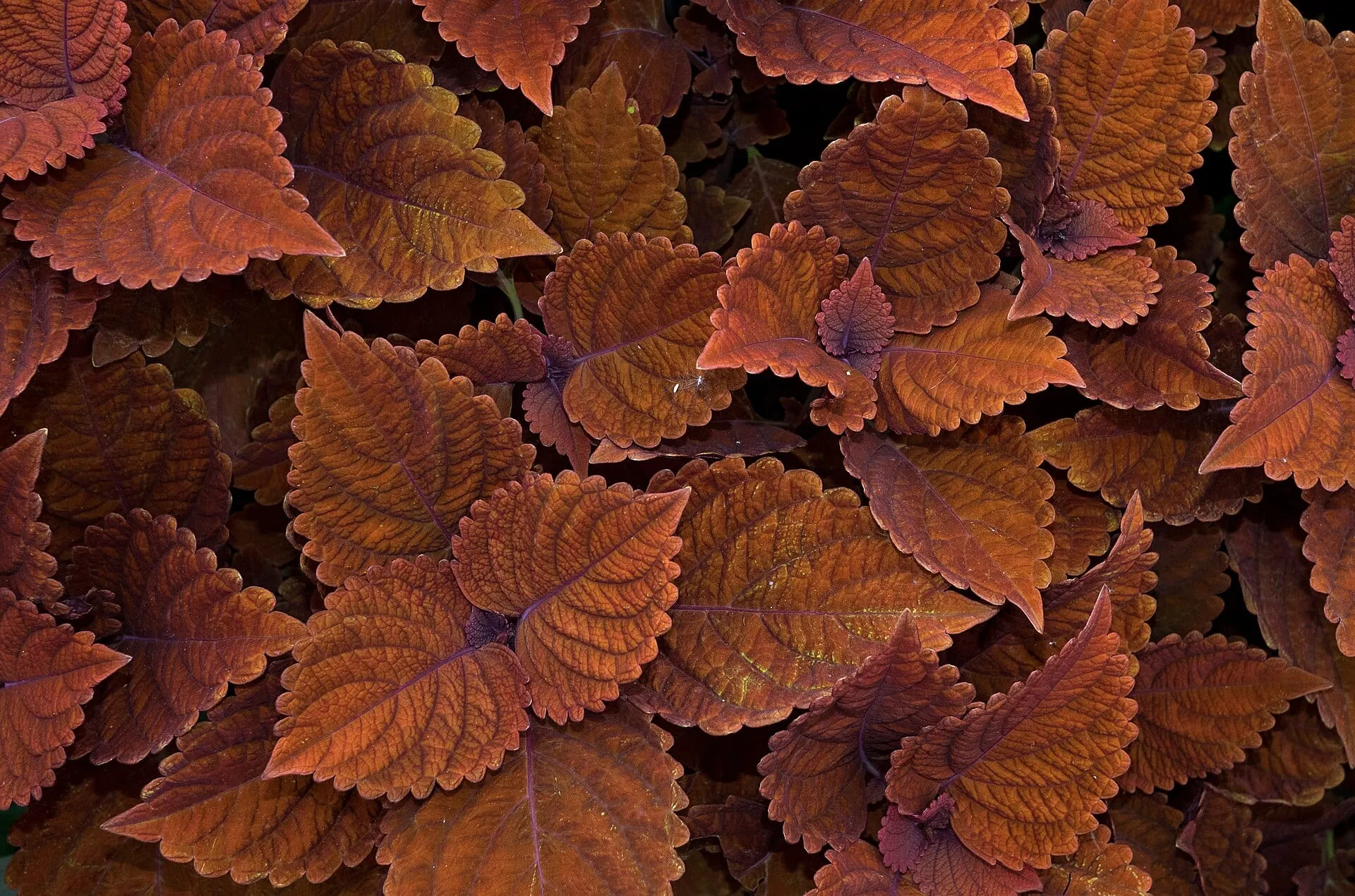
Photo: Rhododendrites, CC BY-SA 4.0, via Wikimedia Commons
- Light
- part shade or dappled light for most kinds. Sun-tolerant cultivars ('Alabama Sunset', Redhead, Wasabi and others) take full sun. Older shade types bleach and scorch in it
- Water
- medium. Keep it evenly moist and never let it wilt, but it must drain. In a pot it dries fast and may need water daily in July
- Toxicity
- toxic to dogs, cats and horses (ASPCA, genus Coleus; the ASPCA entry is for Coleus amboinicus, the same genus): essential oils; vomiting, diarrhea, depression, anorexia, occasionally bloody diarrhea or vomiting. NC State Extension lists the leaves as poisonous to people (low severity): allergic dermatitis with a red rash after repeated contact
| Type | Warm-season annual |
|---|---|
| Sun | Full sun, part sun, shade |
| Water | Medium |
| Size | 12 to 36 in tall, 12 to 36 in wide |
| Plant in | mid-April to June |
| Interest | Summer, fall |
| Upstate winter | One season |
| Hardy zones | 10 to 11 |
| Use in | Containers, beds |
| Role | Filler, height |
Toxicity confirmed against ASPCA Animal Poison Control (genus entry); NC State Extension Plant Toolbox.
Coleus is color without flowers, which is why it carries a shaded porch from May to October when almost nothing else will. The leaves come in lime, burgundy, rust, pink and near-black, often three of those on one leaf. It works as the filler in shade planters and as the tall centerpiece in sun ones, now that the sun-tolerant cultivars exist.
In the Upstate
Coleus is a tender annual anywhere in South Carolina. The first frost kills it outright, and a cold snap makes it drop leaves and look miserable. It goes out from mid-April, later if the nights are still cool, and it hits full size fast. Our humidity is fine for it. The catch is the sun: the old shade types bleach and scorch on a west-facing porch, so match the cultivar to the exposure rather than guess.
In a container
Depending on the cultivar it is a 12 inch filler or a 3 foot centerpiece, and the wide ones spread as far as they stand. A pot dries out much faster than a bed, so in July a coleus in full sun may want water every day. Pinch the growing tips often through spring and early summer so it branches instead of stretching. Flower spikes show up in late summer. Pinch those off too, since a coleus that goes to seed starts to decline.
Care
Water at the soil, not over the leaves, and let the top inch dry before you water again. Feed in June, July and August with an all-purpose soluble fertilizer, but not a bloom booster, because the extra phosphorus makes it leggy and pushes flowers. Watch for mealybugs and whiteflies. The one thing that kills it is wet feet: a heavy mix or a saucer of water brings stem and root rot, and the leaves go muddy brown at the edges.
Want this planted for the light you actually have? Start a project
Where it shows up
Sources
- Clemson HGIC 1162, Coleus (hgic.clemson.edu/factsheet/coleus/)
- NC State Extension Plant Toolbox, Coleus scutellarioides (plants.ces.ncsu.edu/plants/coleus-scutellarioides/)
- ASPCA, Coleus (aspca.org)