Photo: Ввласенко, CC BY-SA 3.0, via Wikimedia Commons
- Light
- full sun. A little afternoon shade is fine in our summers, but real shade makes it flop
- Water
- low. Let the soil dry between waterings, because wet, rich soil rots the crown and gives weak stems
- Toxicity
- not listed by ASPCA or Pet Poison Helpline. Absence from those lists is not evidence of safety. For people, NC State Extension rates it low severity if eaten (alkaloids; possible stomach upset)
| Type | Perennial |
|---|---|
| Sun | Full sun, part sun |
| Water | Low |
| Size | 18 to 24 in tall, 18 to 24 in wide |
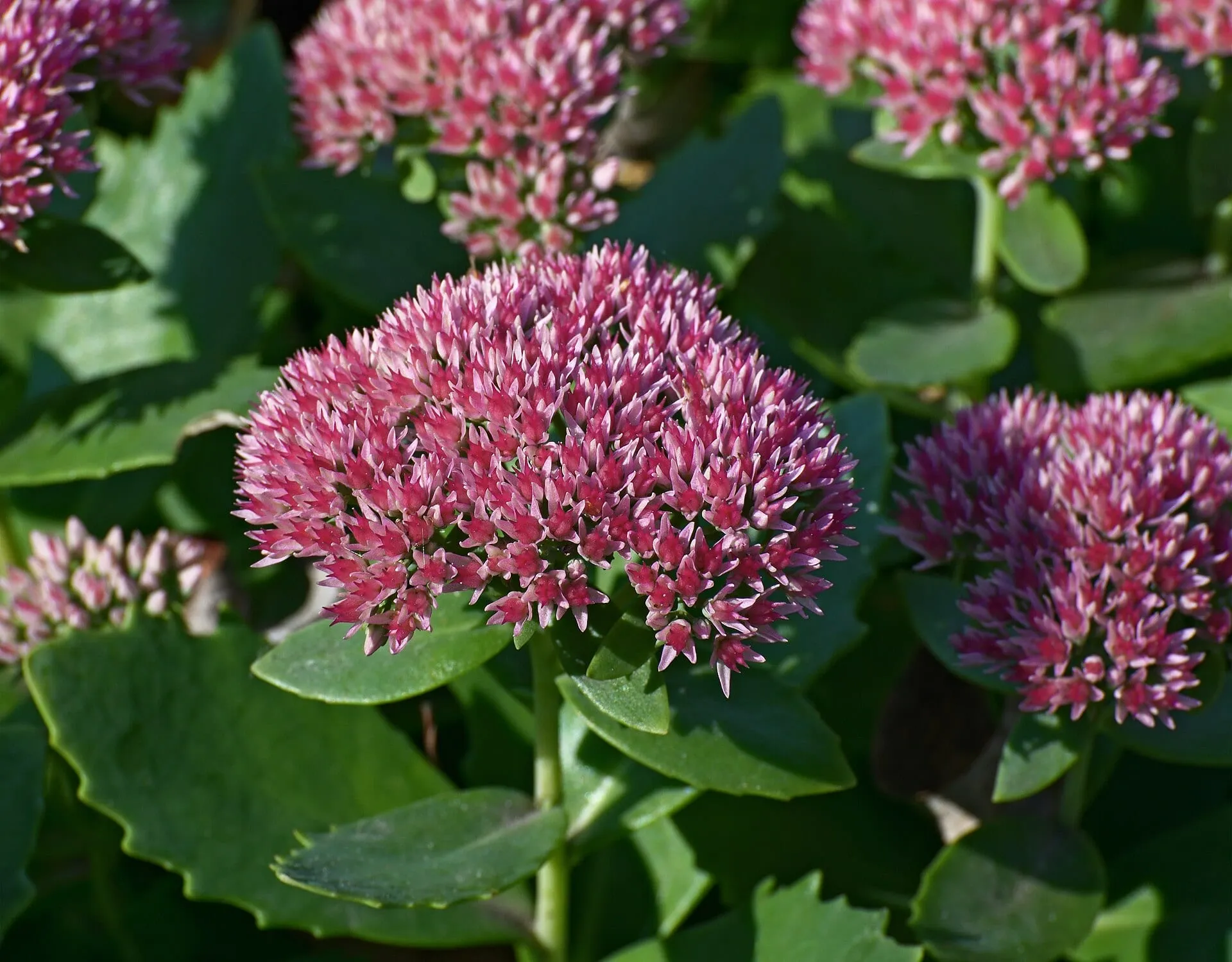
| Bloom | pink, rose-red · late August to October, then coppery seed heads through winter |
| Plant in | fall or early spring |
| Interest | Summer, fall, winter |
| Upstate winter | Survives our winter |
| Hardy zones | 3 to 9 |
| Use in | Containers, beds |
| Role | Filler, height |
Toxicity not independently confirmed: Not listed by ASPCA or Pet Poison Helpline; NC State Extension Plant Toolbox for people. If you have pets, check with the ASPCA or your vet before putting this one where they can reach it.
‘Autumn Joy’ is the sedum that earns its keep three seasons running. Fleshy gray-green leaves in spring, broccoli-like pink buds in summer, flat heads that open rose-red in September while the butterflies pile on, then copper-brown seed heads that stand through winter. It is a succulent, so it wants sun and dry feet, and it asks for almost nothing else. It suits sunny planters and beds that need a late-season anchor.
In the Upstate
It is hardy far past our winters, in the ground or in a pot. Plant in fall or early spring. Summer heat does not bother it, and Clemson lists sedums among the perennials for hot, dry spots. The honest failure here is flopping: in rich soil, in too much shade, or with too much water, the stems splay open just as the flowers come. Give it full sun and lean soil, or pinch it back in late spring, and it stays upright.
In a container
In a planter it is a mounded filler, 18 to 24 inches tall and wide, with enough presence to carry the pot from August to Christmas. It suits the same dry, sunny pots as lantana and ornamental grasses. Water only when the mix has dried out, which even in July may be once a week. It does not need swapping mid-season, and the dried heads can stay up through the holidays.
Care
Water sparingly and skip the fertilizer, because rich soil makes it weak. Pinch or cut back in late spring if you want a shorter, bushier plant. Leave the seed heads for winter and cut the old stems to the ground in late winter. Slugs, aphids and scale show up occasionally. The one thing that kills it is wet soil, so drainage comes first and everything else second.
Want this planted for the light you actually have? Start a project
Sources
- Clemson HGIC 1153, Growing Perennials (hgic.clemson.edu/factsheet/growing-perennials/)
- Clemson HGIC, Seasonal Container Gardening: Fall Through Winter (hgic.clemson.edu)
- NC State Extension Plant Toolbox, Hylotelephium spectabile 'Autumn Joy' (plants.ces.ncsu.edu)
- Missouri Botanical Garden Plant Finder, Hylotelephium 'Herbstfreude' (missouribotanicalgarden.org)
- ASPCA toxic and non-toxic plant list, searched for Hylotelephium, sedum and stonecrop, no entry for this plant (aspca.org)