Photo: Krzysztof Ziarnek, Kenraiz, CC BY-SA 4.0, via Wikimedia Commons
- Light
- full sun, six hours or more. It tolerates part shade with fewer flowers and more leaf spot
- Water
- medium. Even moisture through the growing season; once established it takes a dry spell, but a pot in July still needs watering every couple of days
- Toxicity
- not listed by ASPCA or Pet Poison Helpline. Absence from those lists is not evidence of safety
| Type | Perennial |
|---|---|
| Sun | Full sun, part sun |
| Water | Medium |
| Size | 18 to 24 in tall, 12 to 24 in wide |
| Bloom | golden yellow · June to October |
| Plant in | early fall, or mid-April |
| Interest | Summer, fall |
| Upstate winter | Survives our winter |
| Hardy zones | 3 to 9 |
| Use in | Containers, beds |
| Role | Filler, height |
Toxicity not independently confirmed: Not listed by ASPCA or Pet Poison Helpline. If you have pets, check with the ASPCA or your vet before putting this one where they can reach it.
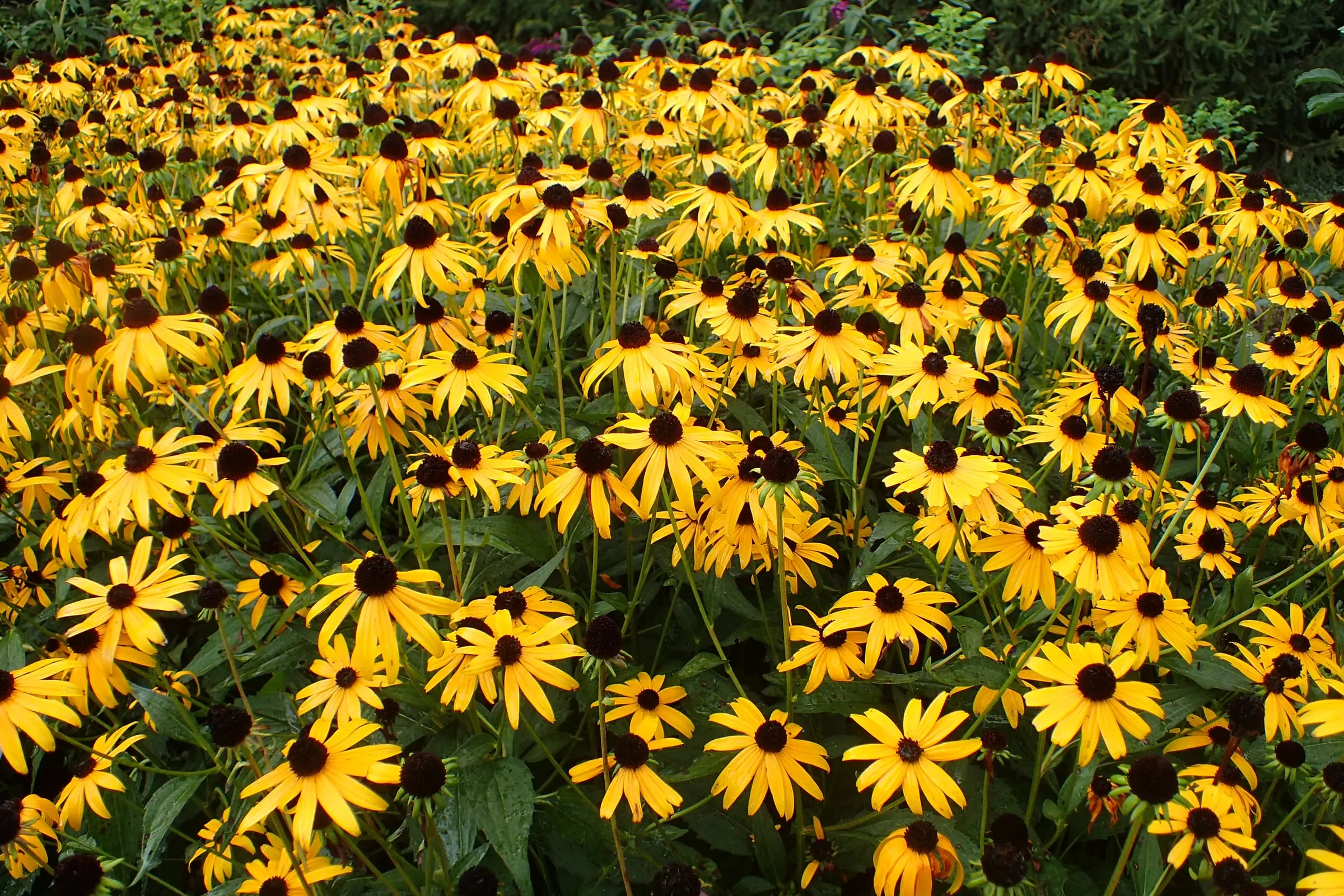
‘Goldsturm’ is the black-eyed Susan that keeps going. Golden 3 to 4 inch daisies with a dark brown center, from June until frost, on a plant that stays around 2 feet tall. It is a native-descended perennial that bees and songbirds use, and it does the late-summer work in a sunny bed when most spring color has given up. It is the one for yellow that lasts and does not need fussing.
In the Upstate
It is hardy far colder than Greenville gets, in the ground or in a pot. Clemson’s timing is early fall for planting, with mid-April as the second choice, and fall-planted clumps settle in before the heat. It dies back to the ground after frost and returns in spring. The honest catch is our humidity: crowded plants get leaf spot and powdery mildew, so give each one air, water the soil rather than the leaves, and clear dead foliage in fall.
In a container
In a planter it is the filler with a little height, 18 to 24 inches, in front of a taller grass or behind a trailer. It spreads by rhizomes, so a clump in a pot will want dividing after a couple of years. Water every few days in summer heat, and deadhead to keep the flowers coming. It does not need swapping mid-season. If you only have a small pot, Clemson names ‘Little Goldstar’ and ‘City Garden’ as the compact forms for containers.
Care
Water for even moisture, more in a pot than a bed, and feed once with a little slow-release fertilizer when new leaves emerge in spring. Deadhead through summer for rebloom, then leave the last seed heads standing for the birds. Cut the dead stems back in fall, winter, or early spring, and divide every three or four years. The thing that does it in is wet leaves in still air, which invites the fungal spots. Drought and heat it takes in stride once it is established.
Want this planted for the light you actually have? Start a project
Sources
- Clemson HGIC 1192, Rudbeckia (hgic.clemson.edu/factsheet/rudbeckia/)
- NC State Extension Plant Toolbox, Rudbeckia fulgida var. sullivantii 'Goldsturm' (plants.ces.ncsu.edu)
- Missouri Botanical Garden Plant Finder, Rudbeckia fulgida var. sullivantii 'Goldsturm' (missouribotanicalgarden.org)
- ASPCA toxic and non-toxic plant list, searched for Rudbeckia and black-eyed Susan, no entry (aspca.org)