Photo: Salicyna, CC BY-SA 4.0, via Wikimedia Commons
- Light
- full sun to light shade. Six hours gives the most flowers, and dark red and purple cultivars fade less with afternoon shade
- Water
- medium. Drought tolerant once established, but water deeply while it is budding and blooming or the flowers come smaller and fewer
- Toxicity
- toxic to cats specifically (ASPCA, Day Lilies, Hemerocallis spp., a genus-level entry): toxic principle unknown; vomiting, inappetence, lethargy, kidney failure, death. The same ASPCA entry lists it as non-toxic to dogs, and the ASPCA's Orange Day Lily entry adds non-toxic to horses. Cats are the only species known to be affected
| Type | Perennial |
|---|---|
| Sun | Full sun, part sun |
| Water | Medium |
| Size | 12 to 36 in tall, 12 to 36 in wide |
| Bloom | yellow, gold, orange, pink, red, purple · May to July, with rebloomers like 'Stella de Oro' repeating into fall |
| Plant in | early fall or early spring |
| Interest | Spring, summer |
| Upstate winter | Survives our winter |
| Hardy zones | 3 to 9 |
| Use in | Containers, beds |
| Role | Filler, height |
Toxicity confirmed against ASPCA Animal Poison Control.
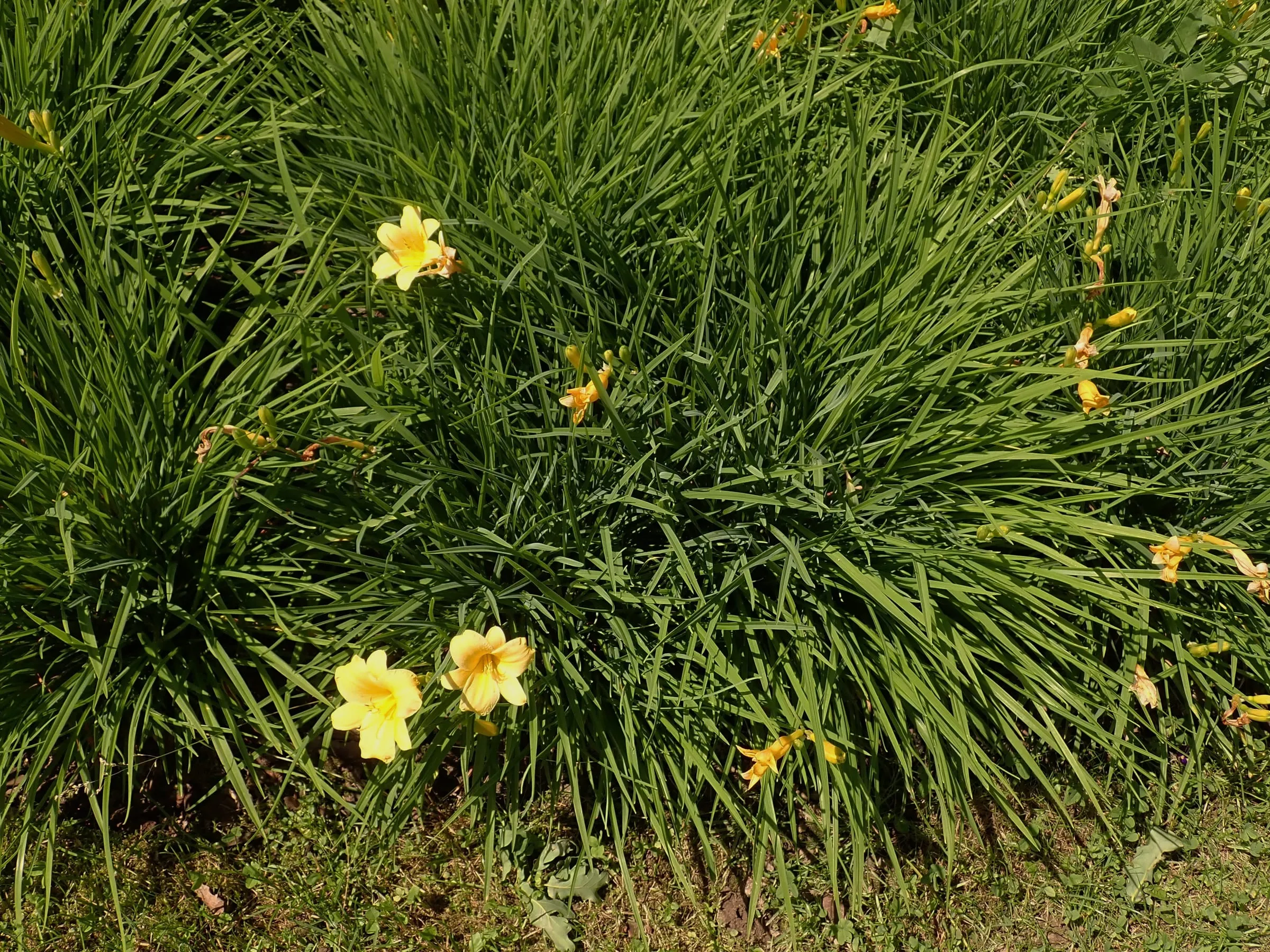
Daylilies are the perennial Clemson calls dependable, and they mean it: tolerant of drought and flooding, unbothered by heat, happy in almost any soil, and in bloom somewhere from late spring until fall. Each trumpet flower lasts one day, but a clump makes so many buds that a well-established plant blooms for 30 to 40 days, and rebloomers like ‘Stella de Oro’ go again and again. The compact ones give bright, tough summer color in pots, and the bigger ones suit a sunny entrance.
In the Upstate
They grow well in every part of South Carolina and are hardy far below our winter lows, in the ground or in a pot. Plant in early fall or early spring when soil temperatures are moderate, though they tolerate planting almost any time. Summer heat does not slow them. Deer eat them, the dormant types die back to nothing after frost so a pot goes empty, and each spent flower and finished stalk has to be picked off or the plant looks messy. Thrips, spider mites and daylily leaf streak show up some years and are rarely serious.
In a container
Clemson’s own note is that small cultivars can be planted in containers, and ‘Stella de Oro’ at about 14 inches tall is the one to reach for. It is a filler with some height, and it fills a pot fast. Water deeply once or twice a week in summer, more while it is in bud. Divide the clump every few years when it crowds the pot. It does not need swapping in summer, but plan a winter changeover, since a dormant daylily is bare from November to March.
Care
Water while budding and blooming, and let it coast the rest of the time. Feed lightly with a slow-release fertilizer in early spring and again in midsummer, with the soil moist when you do. Remove spent blooms and seed pods, cut each finished flower stalk to the ground, and clear dead foliage in fall. Divide after flowering when a clump gets crowded. The one thing that kills it is poorly drained soil, so if drainage is bad, raise the bed or use a pot.
Want this planted for the light you actually have? Start a project
Sources
- Clemson HGIC 1163, Daylily (hgic.clemson.edu/factsheet/daylily/)
- NC State Extension Plant Toolbox, Hemerocallis (plants.ces.ncsu.edu)
- Missouri Botanical Garden Plant Finder, Hemerocallis 'Stella de Oro' (missouribotanicalgarden.org)
- ASPCA, Day Lilies (many varieties) and Orange Day Lily (aspca.org)