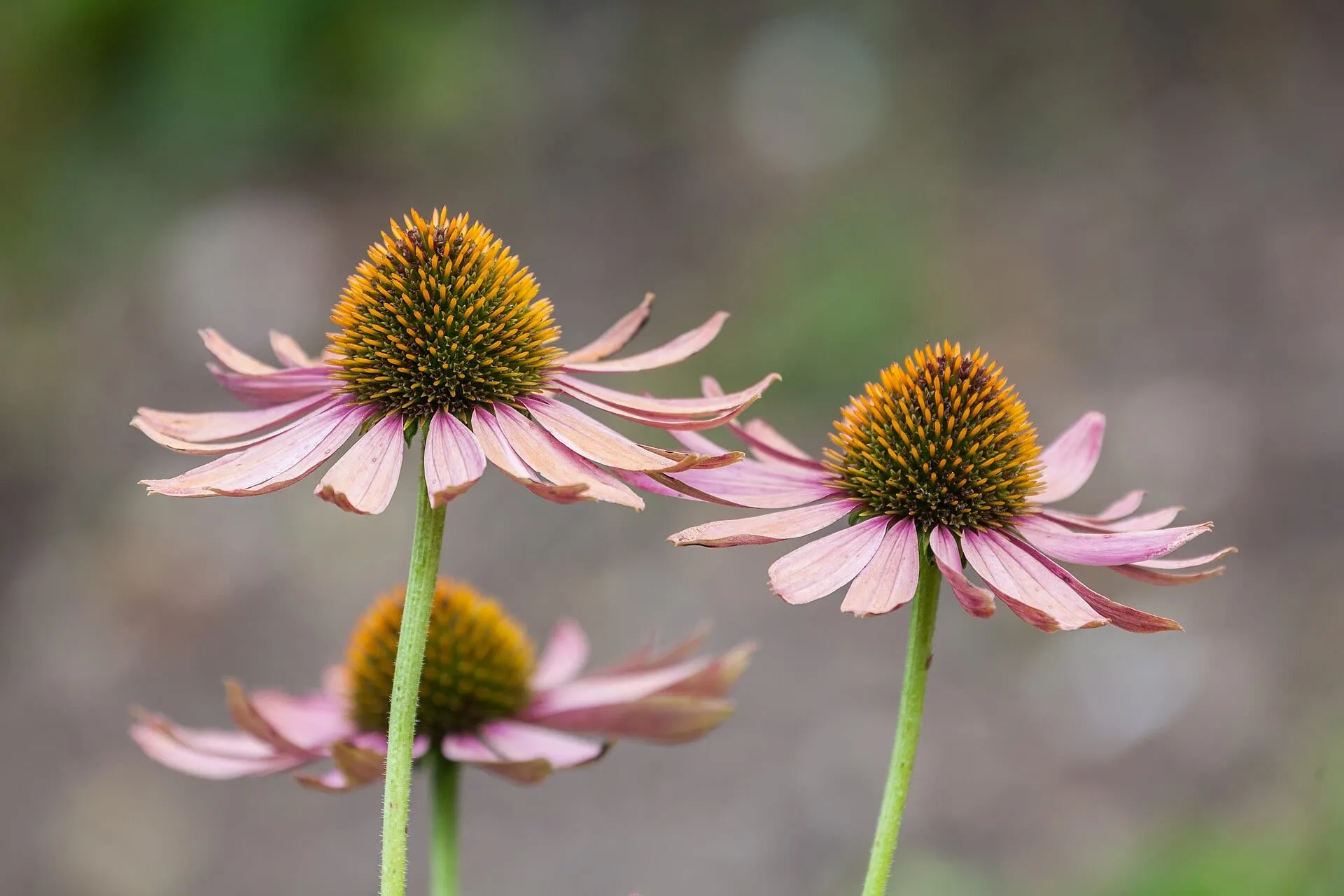
Photo: Diego Delso, CC BY-SA 3.0, via Wikimedia Commons
- Light
- full sun to part shade. Six hours or more gives the most flowers and the stiffest stems
- Water
- low once established. Water deeply the first summer, then only in a real dry spell; keep the leaves dry when you can
- Toxicity
- not listed by ASPCA or Pet Poison Helpline. Absence from those lists is not evidence of safety
| Type | Perennial |
|---|---|
| Sun | Full sun, part sun |
| Water | Low |
| Size | 36 to 48 in tall, 12 to 24 in wide |
| Bloom | purple-pink, white, pink · June to August, with stray blooms until frost |
| Plant in | fall, or early spring |
| Interest | Summer, fall |
| Upstate winter | Survives our winter |
| Hardy zones | 3 to 8 |
| Use in | Containers, beds |
| Role | Height, filler |
Toxicity not independently confirmed: Not listed by ASPCA or Pet Poison Helpline. If you have pets, check with the ASPCA or your vet before putting this one where they can reach it.
Purple coneflower is a native perennial with big daisy flowers, pink-purple petals around a spiny copper cone, on stiff stems that never need staking. Butterflies work the flowers all summer and goldfinches eat the seed in winter. It is deer resistant, drought tolerant once it settles in, and it grows well everywhere in South Carolina except the coast. It belongs where a sunny bed or a large planter needs height and a long summer show.
In the Upstate
It is hardy through our winters with room to spare, in the ground or in a pot. Clemson’s timing is fall for planting, so the roots are established before summer heat. It dies to the ground after frost. The two honest problems here are aster yellows, a disease that deforms the flowers and means pulling the plant, and rabbits, which can eat a young clump to the ground. Give it air between plants and water at the soil line, and fungal spots stay minor.
In a container
This is a tall plant, 3 to 4 feet in bloom, so in a planter it is the height at the back, and it needs a big pot to hold that root system through August. It fills in over two or three years, and a small nursery plant can look thin its first summer. Water a pot deeply when the top two inches are dry. It does not need swapping mid-season. The compact cultivars, such as ‘Kim’s Knee High’ at 12 to 18 inches, fit smaller containers better than the species does.
Care
Water to establish, then let it be, and feed once with a light application of slow-release fertilizer in late March. Leave the last flowers to go to seed for the birds, then cut dead stems in late winter. Divide every three or four years. The one thing that kills it is wet, poorly drained soil, which rots the crown. Everything else it shrugs off.
Want this planted for the light you actually have? Start a project
Sources
- Clemson HGIC 1182, How to Grow Echinacea (hgic.clemson.edu/factsheet/echinacea/)
- NC State Extension Plant Toolbox, Echinacea purpurea (plants.ces.ncsu.edu)
- ASPCA toxic and non-toxic plant list, searched for Echinacea and coneflower, no entry (aspca.org)