Photo: David J. Stang, CC BY-SA 4.0, via Wikimedia Commons
- Light
- full sun to part shade. The gold form shows its brightest color with sun, but it wants afternoon shade and steady water in our summers
- Water
- medium to high. Keep it evenly moist; it wilts fast in a dry pot and perks back up with a drink
- Toxicity
- Not listed by ASPCA or Pet Poison Helpline. Absence from those lists is not evidence of safety
| Type | Perennial |
|---|---|
| Sun | Full sun, part sun, shade |
| Water | High |
| Size | 2 to 4 in tall, 12 to 24 in wide |
| Bloom | yellow · summer |
| Plant in | fall or early spring |
| Interest | Spring, summer, fall |
| Upstate winter | Survives our winter |
| Hardy zones | 3 to 8 |
| Use in | Containers, beds |
| Role | Trailer, groundcover |
Toxicity not independently confirmed: Not listed by ASPCA or Pet Poison Helpline. If you have pets, check with the ASPCA or your vet before putting this one where they can reach it.
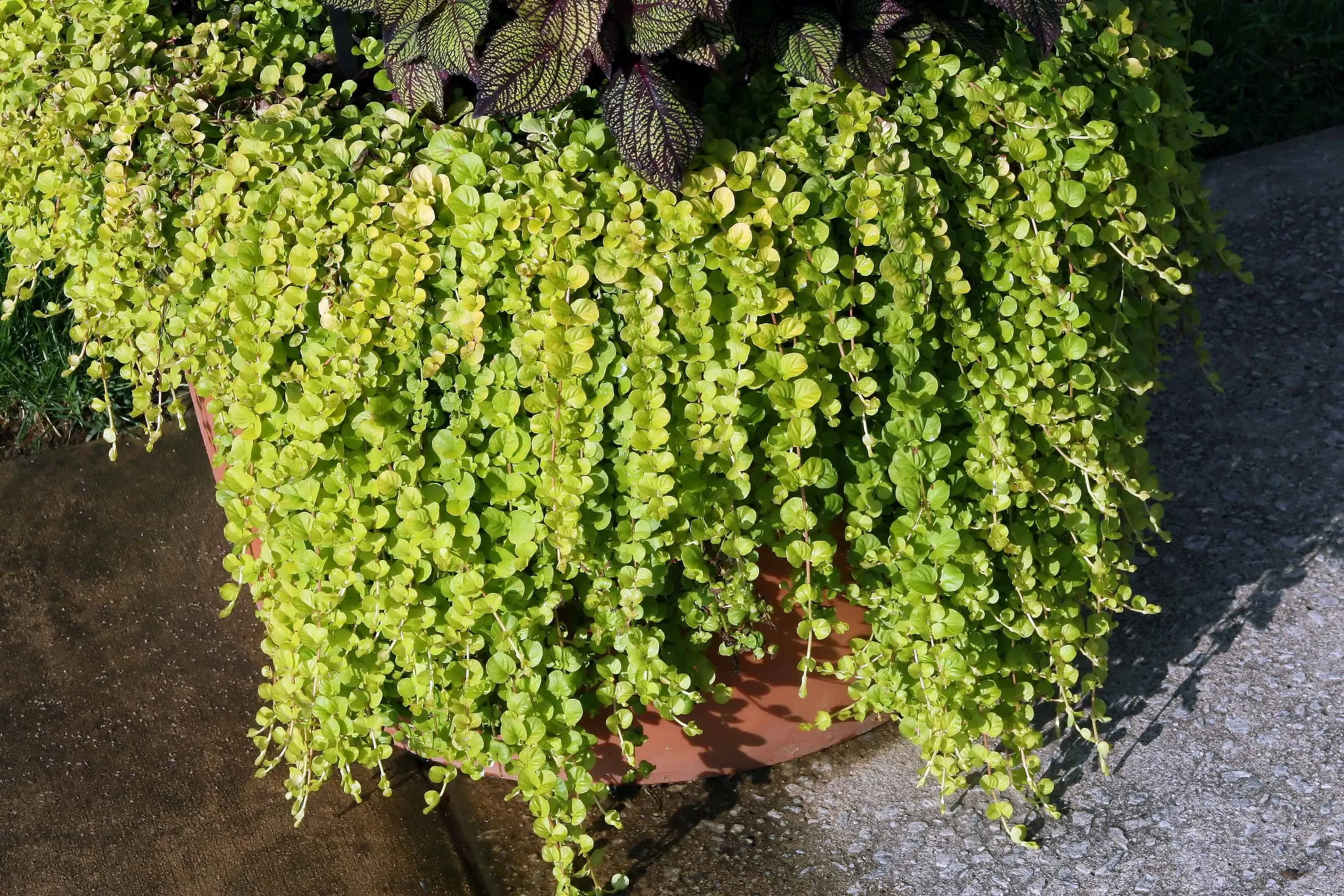
Creeping Jenny is the chartreuse trailer that spills over the rim of a pot like poured paint. The gold form, ‘Aurea’, is the one worth using: its round coin-shaped leaves light up a shady porch where most trailers go dull. It roots wherever a stem touches soil, so it fills in fast. Small yellow flowers show up in summer, but the leaves are the point.
In the Upstate
It is hardy to zone 3, so an Upstate winter does not touch it. In a pot it dies back to a mat of stems in December and pushes new growth in March. Summer is the harder season. Missouri Botanical Garden notes it prefers some afternoon shade, and in a dry pot it wilts by lunchtime. Give it morning sun and steady water and it holds. It is also the plant to be careful with. NC State calls it weedy and an ecological threat where it escapes, and it will run through a bed and into a lawn. Keep it in a container or a bed with hard edges.
In a container
It is a trailer and a living mulch: 2 to 4 inches tall, spreading a foot or two and hanging well below the pot rim by midsummer. Plant it at the edge and let it drape. Water whenever the top of the mix feels dry, which in July is daily. It is a perennial, so the same plant can stay in the pot for years and be trimmed back each spring.
Care
Water is the whole job. It tolerates a wet pot better than a dry one and NC State lists it for pond margins and rain gardens. Feed lightly with the rest of the pot. Trim it hard in early spring to clear the winter stems, and cut runners any time they reach the ground so they do not root into your bed. The one thing that kills it is a hot, dry pot in August, though even then it often comes back from the roots once you water.
Want this planted for the light you actually have? Start a project
Sources
- NC State Extension Plant Toolbox, Lysimachia nummularia (plants.ces.ncsu.edu)
- Missouri Botanical Garden Plant Finder, Lysimachia nummularia 'Aurea' (missouribotanicalgarden.org)
- ASPCA Toxic and Non-Toxic Plants, searched moneywort and creeping jenny, no entry (aspca.org)
- Pet Poison Helpline, searched lysimachia, no entry (petpoisonhelpline.com)