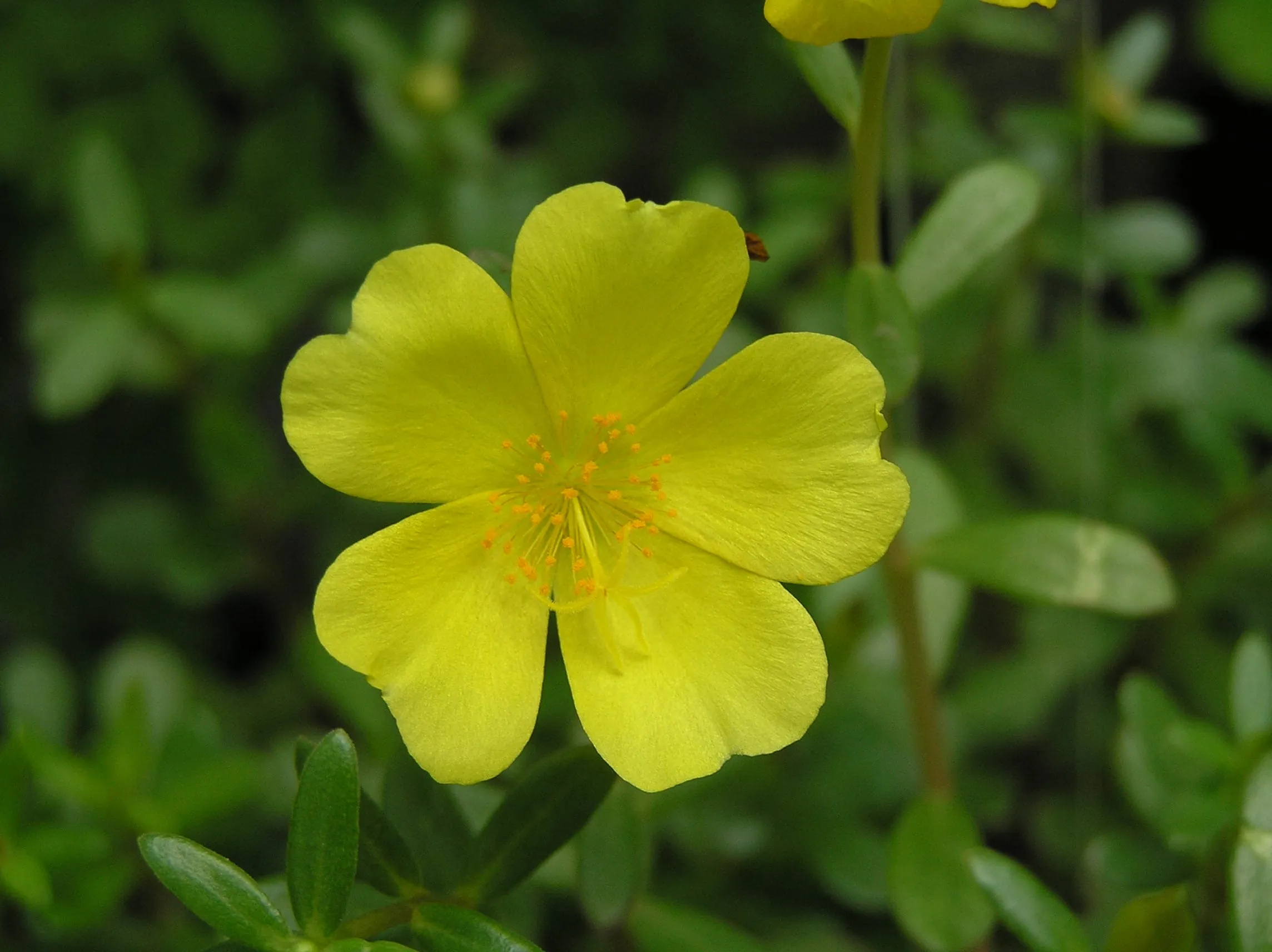
Photo: 阿橋 HQ, CC BY-SA 2.0, via Wikimedia Commons
- Light
- full sun, six hours or more. The flowers close in shade, at night and on cloudy days
- Water
- low once established. Let the mix dry between waterings; a wet pot rots the stems
- Toxicity
- toxic to dogs, cats and horses (ASPCA, purslane and moss rose, Portulaca oleracea): soluble calcium oxalates; tremors, salivation, and rarely kidney failure in dogs and cats. NC State Extension rates it low severity for people, with the same oxalates
| Type | Warm-season annual |
|---|---|
| Sun | Full sun |
| Water | Low |
| Size | 4 to 8 in tall, 10 to 15 in wide |
| Bloom | yellow, orange, pink, red, white · May to frost, opening in the morning and closing in the afternoon |
| Plant in | mid-April to June |
| Interest | Summer, fall |
| Upstate winter | One season |
| Use in | Containers, beds |
| Role | Trailer, groundcover |
Toxicity confirmed against ASPCA Animal Poison Control; NC State Extension Plant Toolbox.
Purslane is a succulent that does not care how hot the porch gets. The garden hybrids sold under this name have fleshy little leaves on spreading reddish stems and saucer flowers in yellow, orange, pink, red, and white that open each morning. NC State says the genus does well in heat and humidity and is drought tolerant, and that is the whole reason to plant it: a south-facing pot in August, watered by someone who travels.
In the Upstate
Purslane is a warm-season annual. NC State sets plants out at the last frost date, which for us means mid-April to be safe, and it grows fast once the soil is warm. It sails through July and August. The first frost, around early November, ends it, and there is no bringing it back. The species is also a common summer weed here, which tells you how well the family likes our climate. One caution from NC State: the flowers close at night and on cloudy days, so a run of gray weather is a run of no flowers.
In a container
Purslane trails and carpets. Missouri Botanical Garden puts the ornamental cultivars at 4 to 8 inches tall and up to 15 inches wide. Plant it at the rim of a full-sun pot and it spills over, or use it alone in a low bowl or hanging basket, which NC State lists as its home. Give it a fast-draining mix and let it dry between waterings. It does not need replacing mid-season, though it can get sparse in the middle by late summer, and a trim tightens it back up.
Care
Water when the mix is dry, feed little or not at all, and pinch back long stems to keep it full. NC State lists aphids, snails and slugs, and stem or root rot in wet spots as the problems. Overwatering is the thing that kills it, and shade is the thing that keeps it from blooming. Keep pets from grazing on it, since it looks edible and is on the ASPCA list.
Want this planted for the light you actually have? Start a project
Where it shows up
Sources
- NC State Extension Plant Toolbox, Portulaca (plants.ces.ncsu.edu/plants/portulaca/)
- NC State Extension Plant Toolbox, Portulaca oleracea (plants.ces.ncsu.edu/plants/portulaca-oleracea/)
- Missouri Botanical Garden Plant Finder, Portulaca oleracea Rio Series (missouribotanicalgarden.org)
- ASPCA, Purslane and Moss Rose (aspca.org)