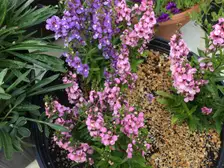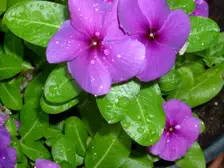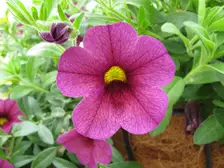
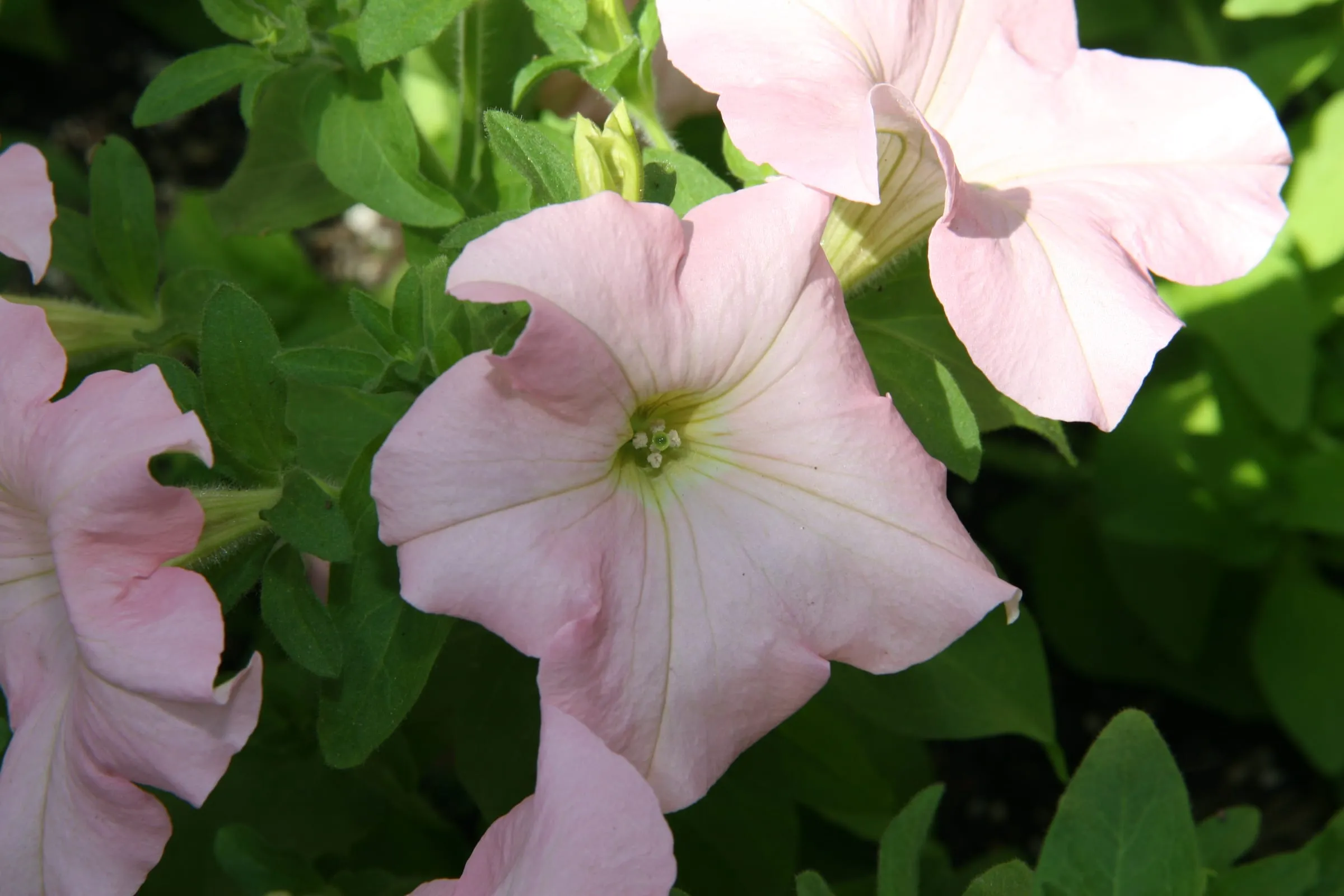
Photo: David J. Stang, CC BY-SA 4.0, via Wikimedia Commons
- Light
- full sun. In shade it goes spindly and stops flowering
- Water
- medium. Water deeply when the top inch or two is dry rather than a little every day, and keep it off the flowers
- Toxicity
- non-toxic to dogs, cats and horses (ASPCA, Petunia species)
| Type | Warm-season annual |
|---|---|
| Sun | Full sun |
| Water | Medium |
| Size | 6 to 18 in tall, 18 in to 4 ft wide |
| Bloom | purple, pink, red, white, yellow, blue, bicolor · May to frost |
| Plant in | mid-April to June |
| Interest | Spring, summer, fall |
| Upstate winter | One season |
| Hardy zones | 10 to 11 |
| Use in | Containers, beds |
| Role | Filler, trailer |
Toxicity confirmed against ASPCA Animal Poison Control.
Petunias are the workhorse of a sunny porch planter. They bloom from the day they are set out until frost, they come in every color but black, and the white and lavender ones smell sweet in the evening. The spreading types (Wave, Supertunia and their cousins) are a better bet than the big ruffled ones, and the next section says why.
In the Upstate
A petunia is a tender perennial from South America, hardy only to zone 10, so here it dies with the first hard frost. It goes out from mid-April, once the last frost date is behind us. The large-flowered grandiflora types do not hold up in our summers. Their heavy blossoms bruise and rot in July rain and humidity. The multiflora, milliflora and spreading types shrug that off, which is why Clemson recommends them for South Carolina.
In a container
Petunias fill and spill. A spreading type stays under a foot tall and can reach three or four feet across, so one plant can carry a lot of pot. Water when the top inch or two is dry, and water deeply rather than a splash every morning, which keeps roots shallow. Sometime in late July it will get leggy and thin. Cut it back by half, feed it, water it well, and it fills back in.
Care
Feed monthly with a balanced fertilizer, because petunias grow fast and bloom hard. The big double types need deadheading to keep going. Most of the small-flowered ones clean themselves. Keep water off the leaves and flowers to avoid petal blight in humid stretches. The one thing that kills it is shade: with less than a full day of sun it stretches, sulks and quits.
Want this planted for the light you actually have? Start a project
Where it shows up
Sources
- Clemson HGIC 1171, Petunia (hgic.clemson.edu/factsheet/petunia/)
- NC State Extension Plant Toolbox, Petunia x hybrida (plants.ces.ncsu.edu/plants/petunia-x-hybrida/)
- ASPCA, Petunia (aspca.org)