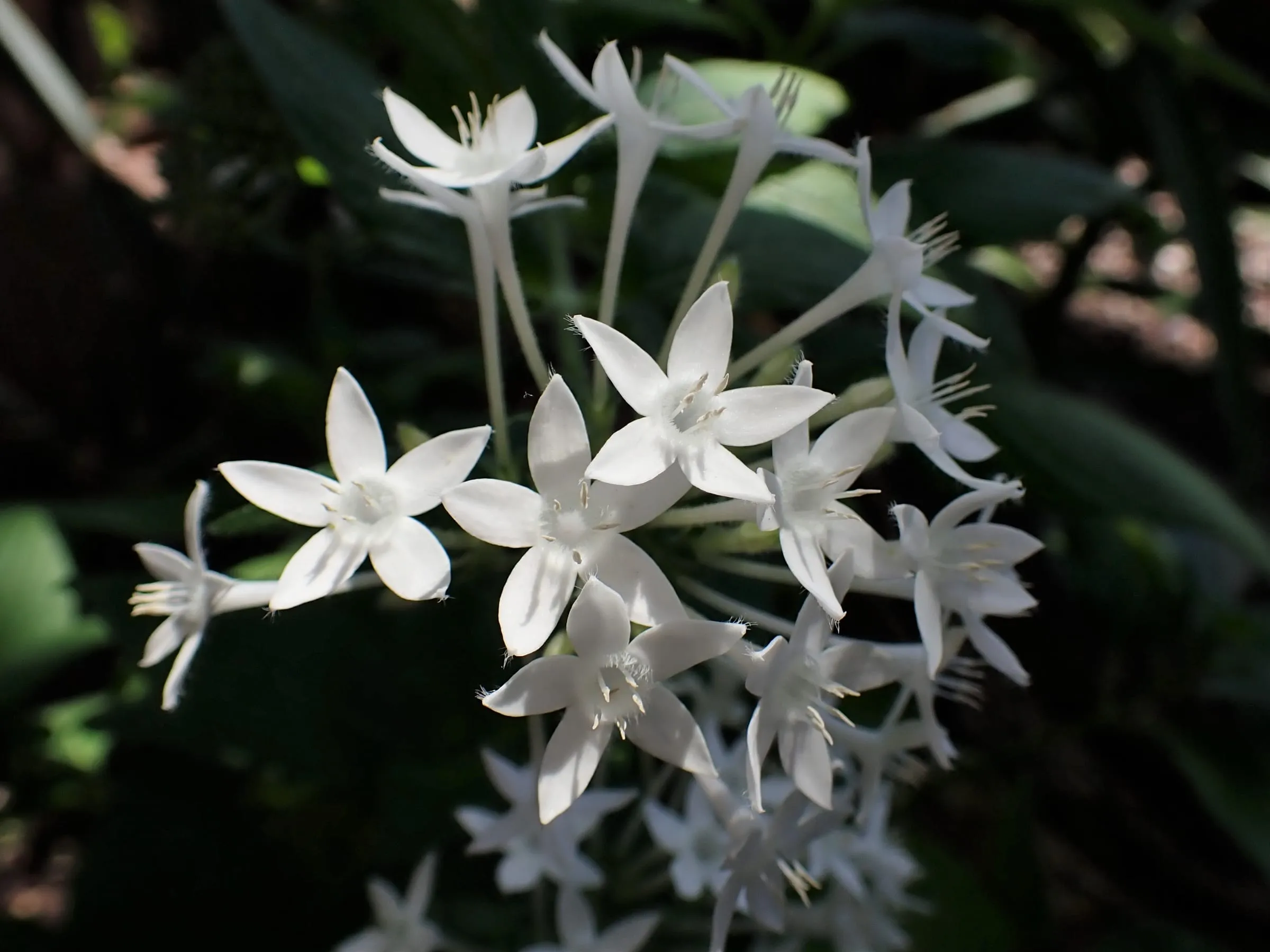
Photo: Krzysztof Ziarnek, Kenraiz, CC BY-SA 4.0, via Wikimedia Commons
- Light
- full sun for the most flowers. It tolerates part sun with fewer blooms
- Water
- medium. Water when the top inch is dry, then let it drain; it handles a missed day better than most annuals
- Toxicity
- Not listed by ASPCA or Pet Poison Helpline. Absence from those lists is not evidence of safety
| Type | Warm-season annual |
|---|---|
| Sun | Full sun, part sun |
| Water | Medium |
| Size | 12 to 24 in tall, 9 to 24 in wide |
| Bloom | pink, red, lavender, white · May into fall |
| Plant in | mid-April to June |
| Interest | Summer, fall |
| Upstate winter | One season |
| Hardy zones | 10 to 11 |
| Use in | Containers, beds |
| Role | Filler |
Toxicity not independently confirmed: Not listed by ASPCA or Pet Poison Helpline. If you have pets, check with the ASPCA or your vet before putting this one where they can reach it.
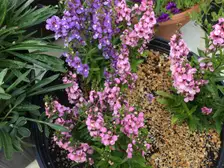
Pentas is the butterfly plant. Every stem ends in a dome of small star-shaped flowers, and swallowtails and hummingbirds find them fast. It blooms from May into fall without much help from you. NC State notes it is seldom bothered by deer, which matters on a lot of Greenville porches.
In the Upstate
Pentas is a tropical, hardy only in zones 10 and 11, so it is a one-season plant here. It goes in from mid-April once frost is past and the nights warm up. Heat is its friend: it keeps flowering through August when petunias have quit. The first hard frost in November ends it, and there is no bringing it back.
In a container
It is a filler, the plant that carries the middle of a mixed pot. Most cultivars sold here stay 12 to 24 inches tall and about as wide, so it fits a 14-inch pot with room for a trailer. Water when the top inch of mix is dry. In July that is most days, but NC State rates its drought tolerance moderate to high, so a missed afternoon is not the end of it. It does not need swapping mid-season.
Care
Water, let it drain, and do not let it sit in a saucer of water. Feed every couple of weeks with a liquid fertilizer for annuals, or use a slow-release at planting. Pinch off spent flower heads to keep new ones coming. Watch for aphids and spider mites in a dry spell. The one thing that kills it is cold: it will not survive a frost, and a cold night in April sets it back, so do not rush it out.
Want this planted for the light you actually have? Start a project
Sources
- NC State Extension Plant Toolbox, Pentas lanceolata (plants.ces.ncsu.edu)
- ASPCA Toxic and Non-Toxic Plants, searched pentas, no entry (aspca.org)
- Pet Poison Helpline, searched pentas, no entry (petpoisonhelpline.com)