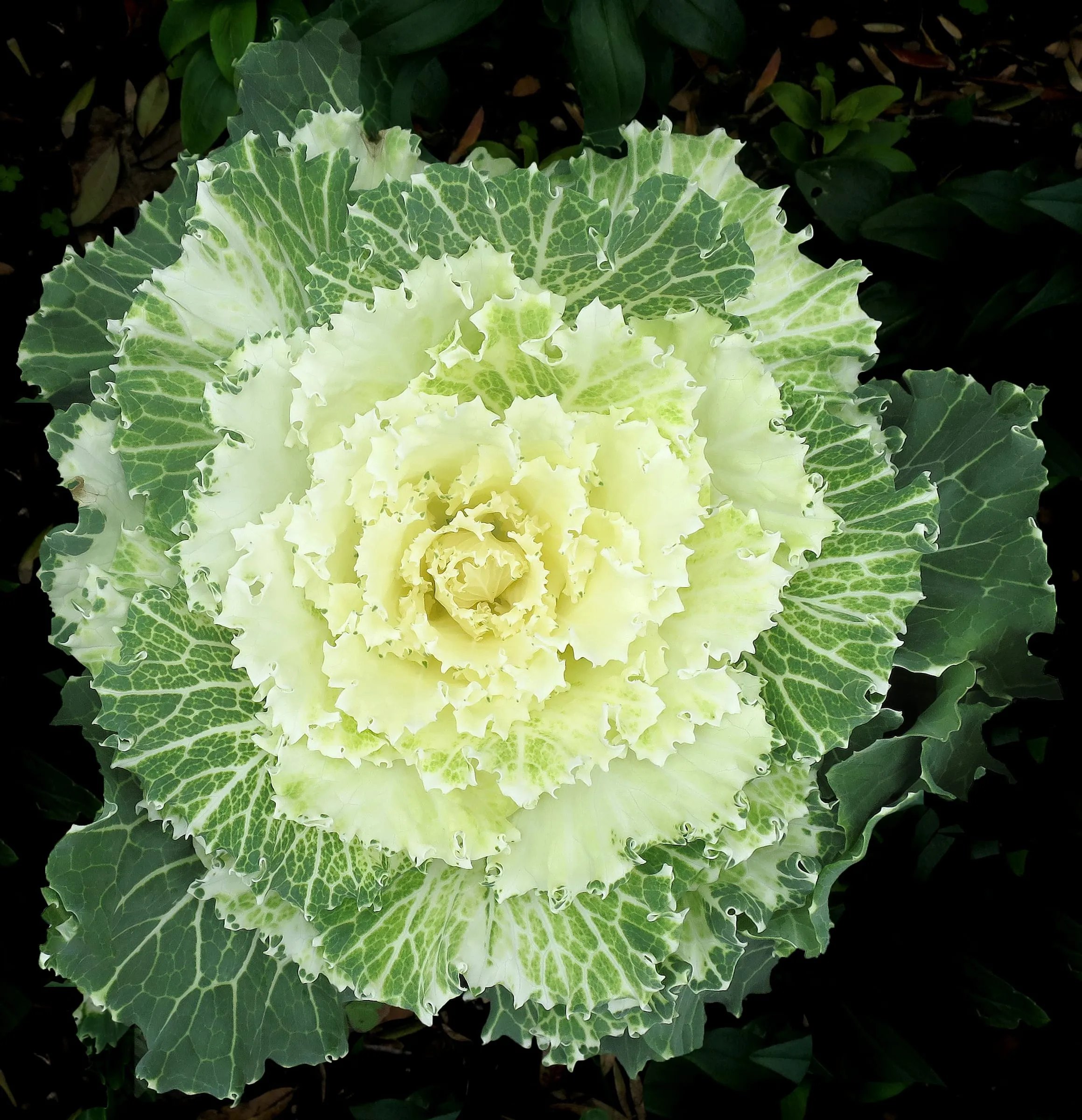
Photo: Jim Evans, CC BY-SA 4.0, via Wikimedia Commons
- Light
- full sun, six hours or more. The color and the tight rosette both fall apart in shade
- Water
- medium. Regular water in fertile, well-drained soil, and never a pot that stays soggy
- Toxicity
- Not listed by ASPCA or Pet Poison Helpline. That is not the same as safe
| Type | Cool-season annual |
|---|---|
| Sun | Full sun |
| Water | Medium |
| Size | 12 to 18 in tall, 12 to 18 in wide |
| Plant in | October, or late February to March |
| Interest | Fall, winter |
| Upstate winter | One season |
| Hardy zones | 2 to 11 |
| Use in | Containers, beds |
| Role | Filler, height |
Toxicity not independently confirmed: Not listed by ASPCA or Pet Poison Helpline. If you have pets, check with the ASPCA or your vet before putting this one where they can reach it.
Ornamental cabbage and kale are the plants that make a fall planter look finished after the flowers thin out. The rosettes of white, pink, purple, and green are as showy as a bloom, and they hold that look for months. Clemson pairs them with pansies and violas in fall containers. The frilled kales (‘Nagoya’, ‘Peacock’) and the smooth-leaved cabbages read differently from the street, so pick by the pot.
In the Upstate
These want cool weather and go in around October, once the heat breaks. NC State plants them as the weather cools in fall and rates them cold tolerant to 5°F, with the color deepening as temperatures drop below 50°F, and Clemson’s kale piece says kale leaves take 20°F and taste better after a frost. A hard snap can scorch the outer leaves, and in a pot the roots sit a zone colder than they would in the ground. Come spring the plant stretches and tries to flower, and it is over. Treat it as one fall-to-spring season and swap it out with the pansies.
In a container
A single kale is a center plant in a 12 to 14 inch pot, or a filler in something bigger. Missouri Botanical Garden puts the rosettes at 12 to 18 inches tall and wide, and NC State allows up to 2 feet, so give each one room and it will fill it. The color sits in the center of the rosette, so set it where you look down into it, not up at it. Water when the surface is dry. Expect to pull a few yellowing bottom leaves through the winter, which is normal.
Care
Full sun, fertile soil that drains, and steady water. NC State calls it low maintenance, and it is. The pests that bother edible kale in the vegetable garden, cabbage worms and aphids, mostly quiet down after frost. The one thing that kills it is a pot that stays wet, and the one thing that ruins the look is shade, which loosens the rosette and washes out the center. NC State says they are edible if you choose, but they were bred for looks, not flavor.
Want this planted for the light you actually have? Start a project
Where it shows up
Sources
- Clemson HGIC, Seasonal Container Gardening: Fall Through Winter (hgic.clemson.edu/seasonal-container-gardening-fall-through-winter/)
- Clemson HGIC, Kale Is a Headless Cabbage (hgic.clemson.edu/kale-is-a-headless-cabbage/)
- NC State Extension Plant Toolbox, Brassica oleracea Ornamental Kale Group (plants.ces.ncsu.edu/plants/brassica-oleracea-ornamental-kale-group/)
- Missouri Botanical Garden Plant Finder, Brassica oleracea (Ornamental Cabbage and Kale Group) (missouribotanicalgarden.org)