Photo: Forest & Kim Starr, CC BY 3.0, via Wikimedia Commons
- Light
- full sun to part shade. It blooms best in sun and lasts longer into warm weather with afternoon shade
- Water
- medium. Evenly moist in a mix that drains, since the roots rot in wet soil
- Toxicity
- Not listed by ASPCA or Pet Poison Helpline. That is not the same as safe
| Type | Cool-season annual |
|---|---|
| Sun | Full sun, part sun |
| Water | Medium |
| Size | 6 to 12 in tall, 6 to 12 in wide |
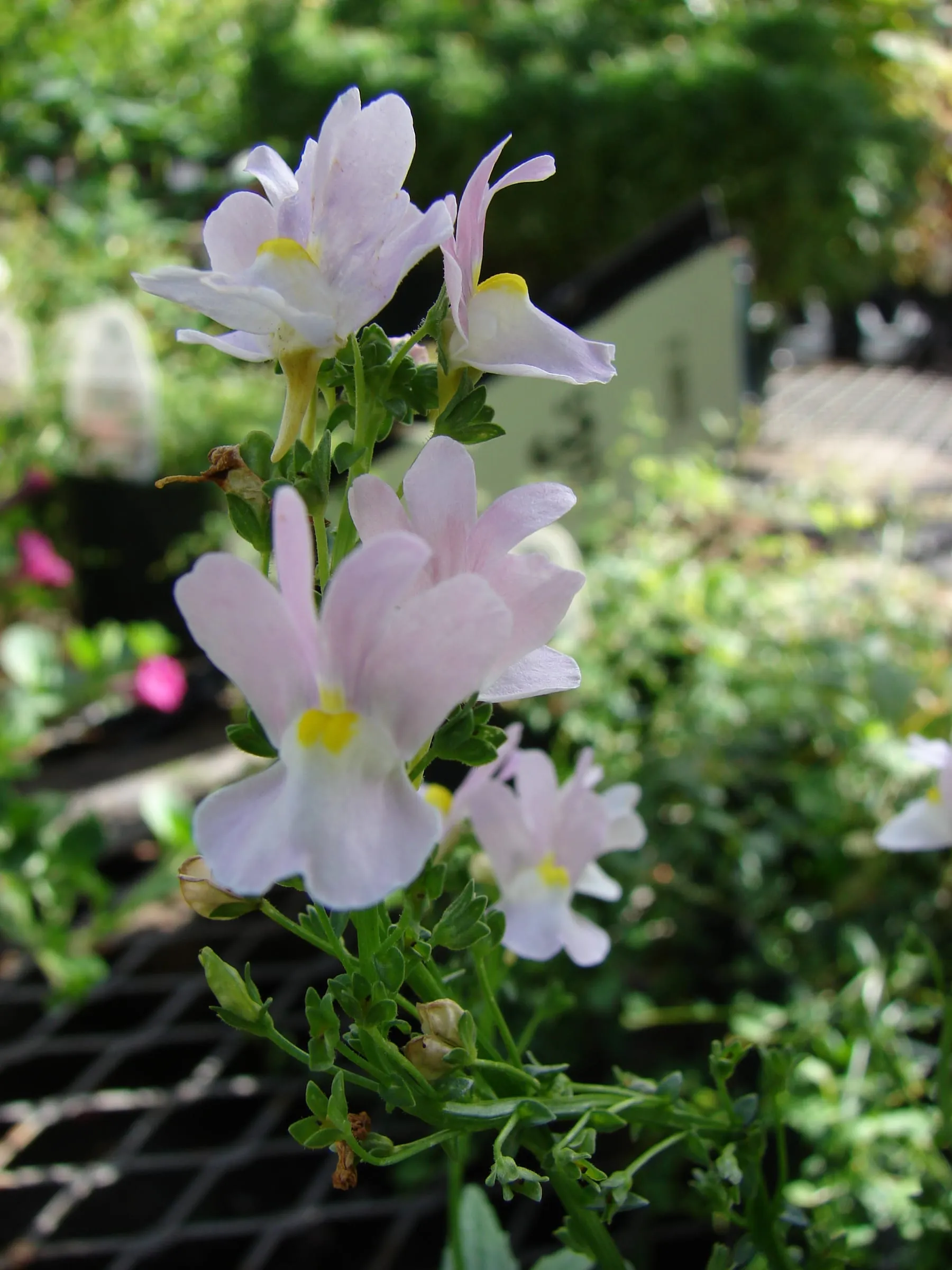
| Bloom | white, pink, blue, lavender, yellow, orange, bicolor · March to June, and again in fall |
| Plant in | late March to April, or October |
| Interest | Spring, fall |
| Upstate winter | One season |
| Hardy zones | 9 to 10 |
| Use in | Containers, beds |
| Role | Filler |
Toxicity not independently confirmed: Not listed by ASPCA or Pet Poison Helpline. If you have pets, check with the ASPCA or your vet before putting this one where they can reach it.
Nemesia is a small mound of two-lipped flowers, a bit like tiny snapdragons, in nearly every color but green, and many of the hybrids smell sweet. It adds a soft, cottagey note to a spring pot between the bolder pansies and snapdragons. Missouri Botanical Garden’s honest line is that nemesias are hard to grow well in much of the country because they want moderate days and cool nights. That describes an Upstate spring and fall, and nothing in between.
In the Upstate
Nemesia detests hot, humid summers, in Missouri Botanical Garden’s words, and a Greenville summer is exactly that. The perennial types are hardy only to zones 9 and 10, so a freeze ends them too. That leaves two windows. Set plants out around the last frost in late March for a show that runs into June, then cut them back or pull them when they collapse in the heat. Or plant in October for the cool weeks of fall, knowing the first hard freeze finishes them. Do not count on nemesia lasting a full season either way.
In a container
Nemesia is a filler for the front and middle of a pot, 6 to 12 inches tall and wide, and the trailing hybrids soften an edge. It wants humus-rich, evenly moist mix with good drainage, which a quality potting mix provides. Water when the surface dries, and give it afternoon shade as May warms to stretch the bloom. Expect to replace it at the summer changeover.
Care
Keep it evenly moist, feed lightly, and cut it back when the flowers thin, which can bring a second flush if the weather cooperates. Root rot in poorly drained soil is the only problem Missouri Botanical Garden lists, so drainage matters more than feeding. The thing that ends nemesia is heat, and the thing that kills it early is a pot that stays wet.
Want this planted for the light you actually have? Start a project
Sources
- Missouri Botanical Garden Plant Finder, Nemesia (group) (missouribotanicalgarden.org)
- Missouri Botanical Garden Plant Finder, Nemesia caerulea (missouribotanicalgarden.org)