Photo: Prenn, CC BY-SA 3.0, via Wikimedia Commons
- Light
- full sun, with afternoon shade a help once the weather warms
- Water
- low. Let the top of the soil dry between waterings, and never leave it sitting wet
- Toxicity
- toxic to dogs and cats (ASPCA, pinks, listed under Dianthus caryophyllus; the ASPCA has no separate entry for Dianthus chinensis): unknown irritant; mild gastrointestinal signs, mild dermatitis. NC State Extension lists Dianthus chinensis as low severity for people: triterpenoid saponins, brief skin irritation from contact
| Type | Cool-season annual |
|---|---|
| Sun | Full sun, part sun |
| Water | Low |
| Size | 6 to 12 in tall, 6 to 12 in wide |
| Bloom | pink, red, white, bicolor · March to June |
| Plant in | October, or late February to March |
| Interest | Fall, spring |
| Upstate winter | Survives our winter |
| Hardy zones | 6 to 9 |
| Use in | Containers, beds |
| Role | Filler |
Toxicity confirmed against ASPCA Animal Poison Control; NC State Extension Plant Toolbox.
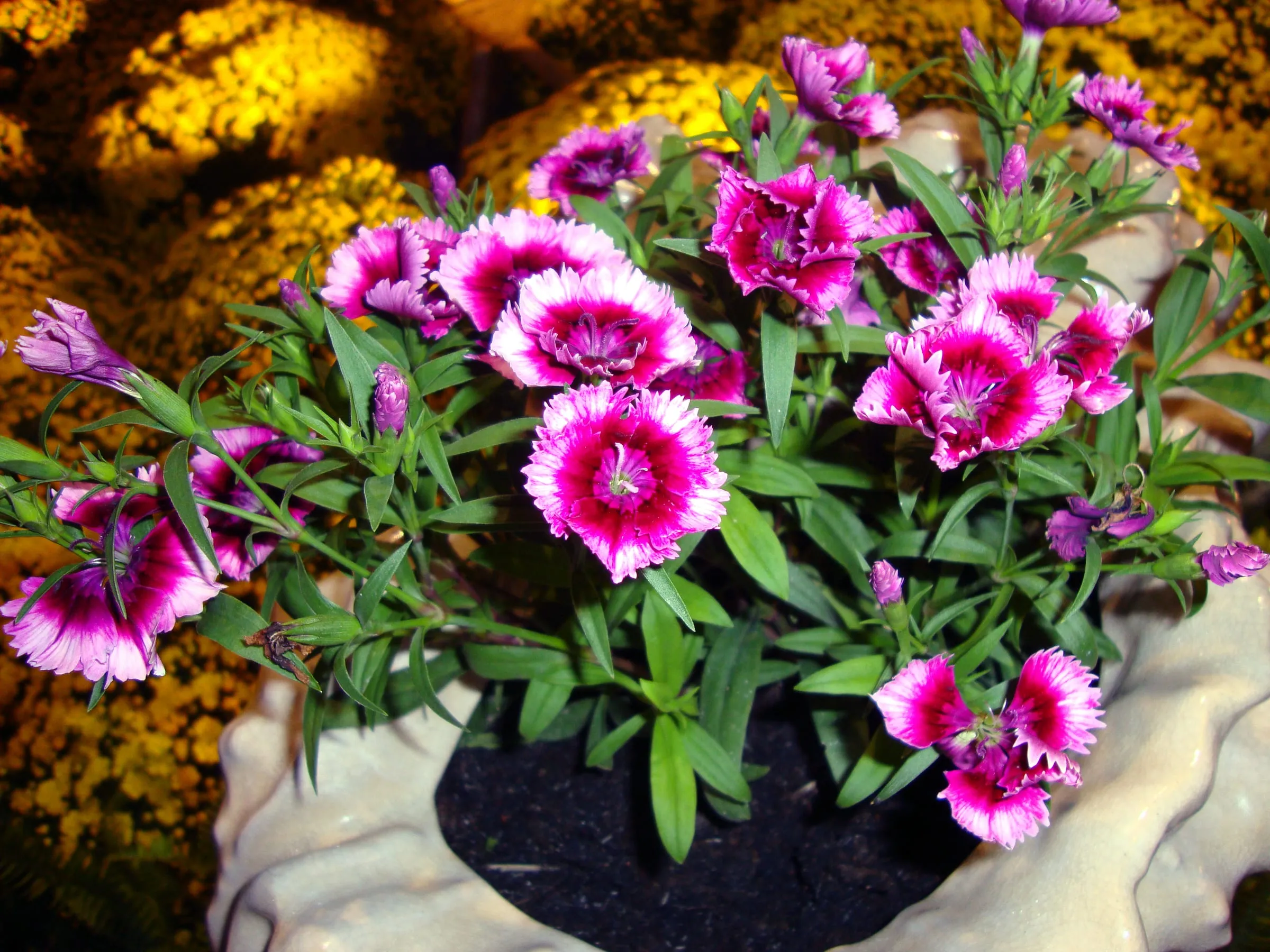
Dianthus is the tidy one in a cool-season planter: a low mound of narrow blue-green leaves with flat, fringed flowers in pink, red, white, and two-tone, most with a darker eye. Many smell like cloves. It fills the gap between pansies and something taller, and the foliage looks good even between flushes of bloom. Clemson lists it with pansies, violas, and snapdragons as a spring pairing, and it earns the spot.
In the Upstate
NC State rates the China pinks hardy from zone 6 to 9, so a Greenville winter in the ground is not the problem. The summer is. NC State says they are grown as annuals because they do not perform well in hot, humid summers, and by July an Upstate dianthus is a tired clump. Plant in October and it holds its foliage through winter for a spring bloom, or plant in late February for spring. In a pot the roots sit about a zone colder than in a bed, so a hard January can still take a container plant. Plan on one fall-to-spring season and treat a second year as a bonus.
In a container
Dianthus is a filler for the front and middle of a pot. Missouri Botanical Garden puts most of the compact cultivars sold today at 6 to 12 inches tall and wide, while the straight species can reach 2 feet or more. It wants sharp drainage more than most, so a pot suits it as long as the mix drains. Water when the surface is dry. Shear it after a big flush of flowers and it comes back into bloom, which usually gets it from October to spring changeover in one piece.
Care
Water sparingly, feed lightly, and deadhead or shear after heavy bloom to bring on the next round. Give it afternoon shade as spring warms and it will bloom longer. The thing that kills dianthus is crown rot from poorly drained soil, and NC State adds that slugs find it in too much shade. Wear gloves if your skin is sensitive, since the leaves can irritate.
Want this planted for the light you actually have? Start a project
Where it shows up
Sources
- NC State Extension Plant Toolbox, Dianthus chinensis (plants.ces.ncsu.edu/plants/dianthus-chinensis/)
- Missouri Botanical Garden Plant Finder, Dianthus chinensis (missouribotanicalgarden.org)
- Clemson HGIC, Sweet Alyssum (hgic.clemson.edu/sweet-alyssum/), on pairing dianthus with pansies, violas and snapdragons in spring
- ASPCA, Pinks (aspca.org)