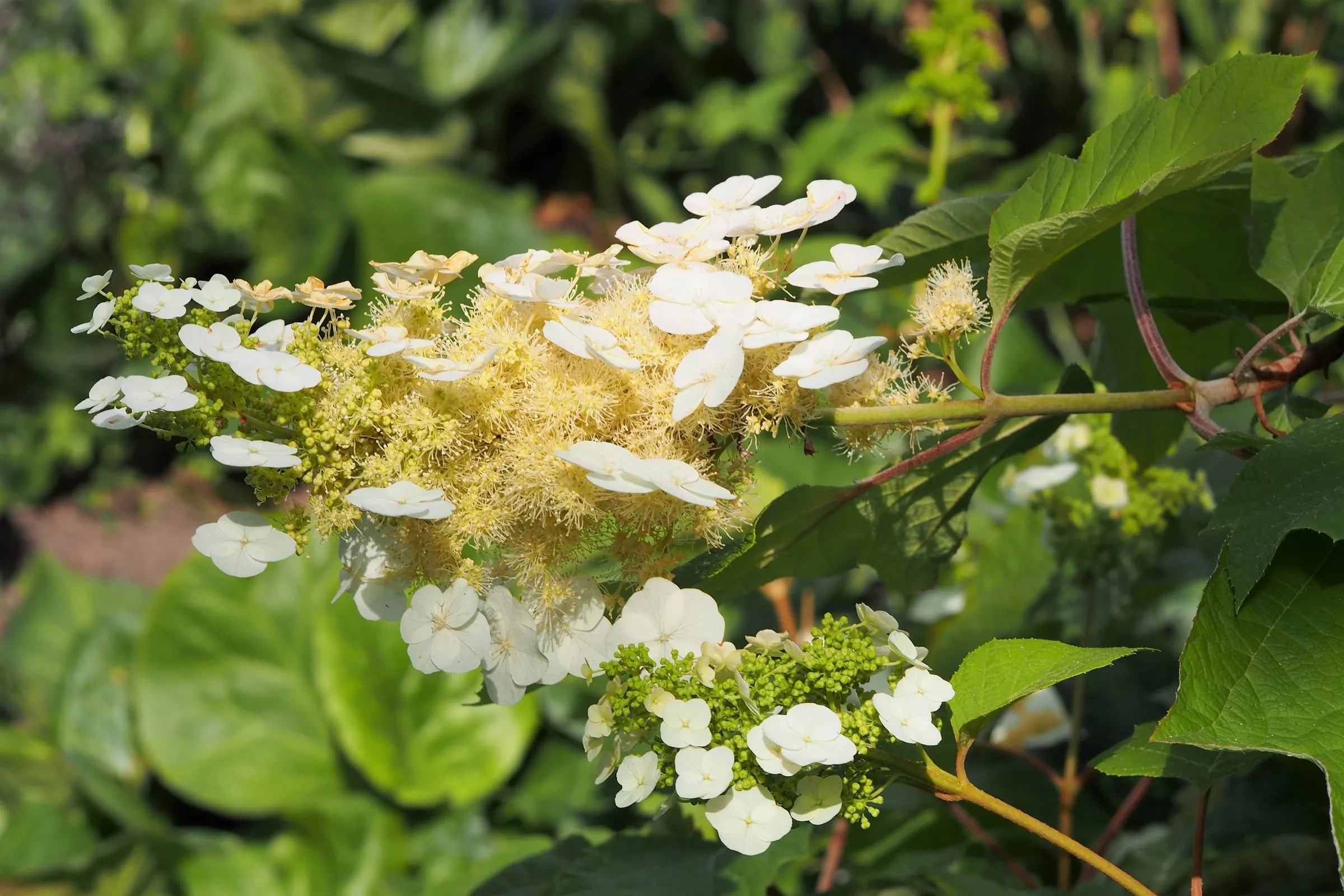
Photo: Agnieszka Kwiecień, Nova, CC BY-SA 4.0, via Wikimedia Commons
- Light
- full sun to part shade. It needs some sun to bloom, and morning sun with afternoon shade is the sweet spot here
- Water
- medium. Water deeply once a week in dry weather the first two summers; mulch keeps the roots cool
- Toxicity
- toxic to dogs, cats and horses (ASPCA, listed for the genus Hydrangea under Hydrangea arborescens, a genus-level match): cyanogenic glycoside; vomiting, depression, diarrhea. Also poisonous to people (NC State Extension, low severity): nausea, stomach pain, vomiting, sweating from leaves, flowers or bark
| Type | Shrub |
|---|---|
| Sun | Full sun, part sun |
| Water | Medium |
| Size | 4 to 8 ft tall, 4 to 10 ft wide |
| Bloom | white, pink · May to June, aging to pink |
| Plant in | fall or early spring |
| Interest | Spring, summer, fall |
| Upstate winter | Survives our winter |
| Hardy zones | 5 to 9 |
| Use in | Containers, beds |
| Role | Height, structure |
Toxicity confirmed against ASPCA Animal Poison Control; NC State Extension Plant Toolbox.
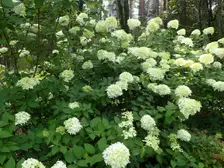
Oakleaf hydrangea is the native one, from stream banks and moist woods across the Southeast, and it looks like it belongs here. Big lobed leaves like an oak’s, white flower cones in late spring that age to pink, then bronze and burgundy leaf color in fall. It gives a bed three seasons for the price of one shrub.
In the Upstate
It is hardy to zone 5, it is native to the Southeast, and NC State lists it as drought tolerant, which is more than bigleaf hydrangea can say. It blooms on old wood, so a hard late freeze can cost some flowers, but the plant itself comes through. Clemson notes the fall color. NC State notes that it needs some sun to bloom well and that mulch in summer keeps the soil moist. Plant in fall or early spring.
In a container
It is the height and the structure, and honestly it is a bed plant that visits a pot. At 4 to 8 feet tall and up to 10 feet wide, a compact cultivar such as Clemson’s ‘Harmony’ at 3 feet is the one to try in a large container, and even that wants the ground within a few years. Water deeply when the top two inches are dry. In a pot the roots sit a zone colder, which is still well inside its range.
Care
Water in dry spells the first two summers, then it mostly looks after itself. A light spring feeding is enough. Prune only right after flowering. Cut winter-damaged stems in early spring. It is one of the easier hydrangeas, and the one thing that sets it back is a poorly drained spot where the roots stay wet.
Want this planted for the light you actually have? Start a project
Sources
- Clemson HGIC 1067, Hydrangea Care in South Carolina (hgic.clemson.edu/factsheet/hydrangea-care-in-south-carolina/)
- NC State Extension Plant Toolbox, Hydrangea quercifolia (plants.ces.ncsu.edu)
- ASPCA, Hydrangea (aspca.org)