Photo: Krzysztof Ziarnek, Kenraiz, CC BY-SA 4.0, via Wikimedia Commons
- Light
- full sun to light shade. Morning sun with afternoon shade gives the best flowers in our heat
- Water
- medium. Water deeply once a week when it is dry; it takes a short drought once established, but a pot dries fast in July
- Toxicity
- toxic to dogs, cats and horses (ASPCA, listed for the genus Hydrangea under Hydrangea arborescens, a genus-level match): cyanogenic glycoside; vomiting, depression, diarrhea. Cyanide intoxication is rare and usually produces more of a gastrointestinal disturbance
| Type | Shrub |
|---|---|
| Sun | Full sun, part sun |
| Water | Medium |
| Size | 6 to 8 ft tall, 6 to 8 ft wide |
| Bloom | chartreuse, white, pink · late summer into fall, fading to pink |
| Plant in | fall or early spring |
| Interest | Summer, fall |
| Upstate winter | Survives our winter |
| Hardy zones | 3 to 9 |
| Use in | Containers, beds |
| Role | Height |
Toxicity confirmed against ASPCA Animal Poison Control, Hydrangea.
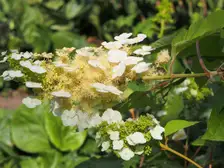
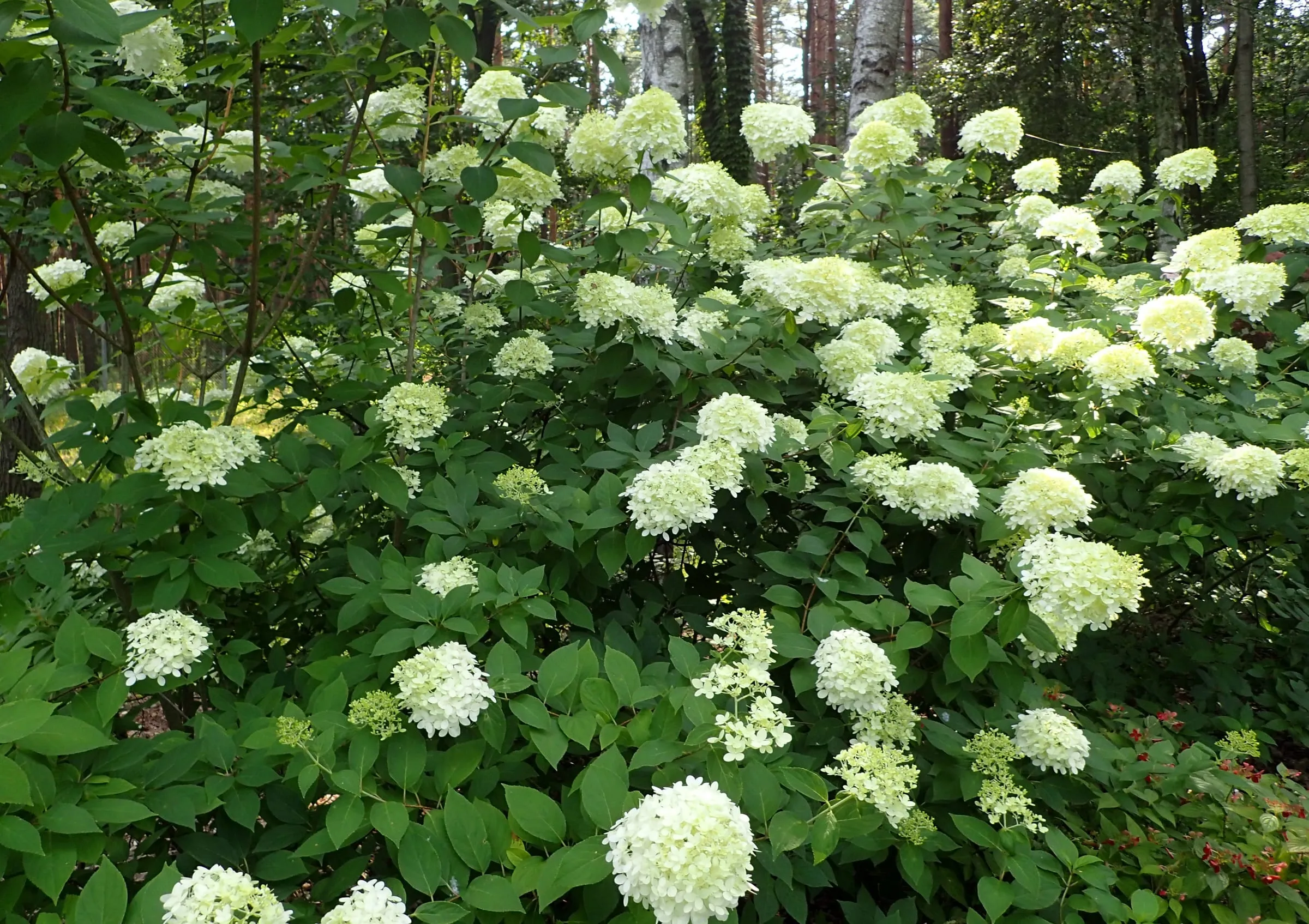
‘Limelight’ is the hydrangea that takes sun. Big cone-shaped flower heads open pale green in late summer, turn white, then blush pink as the nights cool, and the stems are stout enough to hold them up after a storm. For a hydrangea on a porch that gets real afternoon light, this is the one to say yes to.
In the Upstate
Winter is not a concern, since it is hardy to zone 3. It also blooms on the current season’s growth, so a late spring frost does not cost you the flowers the way it does with bigleaf hydrangea. NC State says it tolerates heat and humidity, though it still wants afternoon shade to look its best in August. Plant in fall or early spring.
In a container
It is the height, and NC State says to give it room, and 6 to 8 feet tall and wide is not a pot plant for long. Treat it as a season or two of structure in a very large container, then move it into the ground. Water deeply when the top two inches are dry. In a pot in July that is every two or three days. The stems are brittle in wind, so keep a potted one out of the gusty corner of the porch.
Care
Water deeply, mulch the surface, and feed lightly in spring. Because it flowers on new wood, you can cut it back in late winter to keep it dense. Cut the dried heads for the house in October or leave them on through winter, and do not worry much about the aphids and mites that visit. The thing that kills it is a pot that dries out for a week in August. The thing that flattens it is an unsupported plant in a windy spot.
Want this planted for the light you actually have? Start a project
Sources
- Clemson HGIC 1067, Hydrangea Care in South Carolina (hgic.clemson.edu/factsheet/hydrangea-care-in-south-carolina/)
- NC State Extension Plant Toolbox, Hydrangea paniculata 'Limelight' (plants.ces.ncsu.edu)
- ASPCA, Hydrangea (aspca.org)