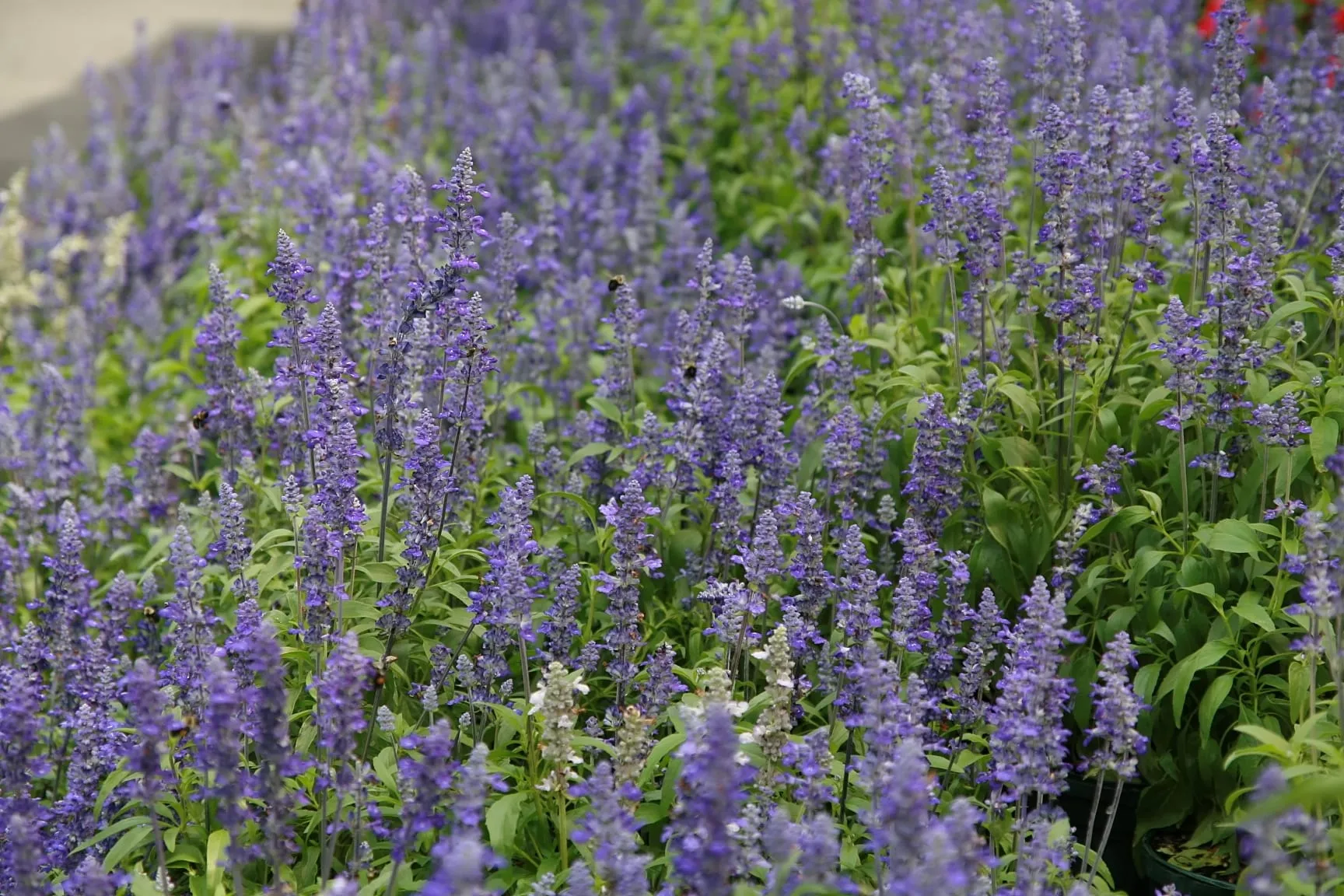
Photo: David J. Stang, CC BY-SA 4.0, via Wikimedia Commons
- Light
- full sun, six hours or more. NC State lists it as tolerant of part shade, but it flowers best in full sun
- Water
- low to medium. Water when the top inch or two is dry; it prefers soil that is not overly moist or overly rich
- Toxicity
- Not listed by ASPCA or Pet Poison Helpline. The ASPCA lists other sages (common sage, scarlet sage) as non-toxic but has no entry for this species, so do not treat it as safe
| Type | Warm-season annual |
|---|---|
| Sun | Full sun, part sun |
| Water | Low |
| Size | 18 to 20 in tall, 12 in wide |
| Bloom | violet-blue · late spring to frost |
| Plant in | mid-April to June |
| Interest | Spring, summer, fall |
| Upstate winter | Needs protection |
| Hardy zones | 8 to 10 |
| Use in | Containers, beds |
| Role | Filler, height |
Toxicity not independently confirmed: Not listed by ASPCA or Pet Poison Helpline. If you have pets, check with the ASPCA or your vet before putting this one where they can reach it.
Mealycup sage is the blue for a planter that needs a vertical line. ‘Victoria Blue’ sends up spike after spike of violet-blue flowers from late spring until frost, on a compact plant that stays about 18 inches tall. Bees and hummingbirds work it all summer. It shrugs off heat, which is the whole point in a Greenville July.
In the Upstate
Clemson lists this sage as hardy in zones 8 to 10, and Greenville sits right at the edge. NC State is blunter: it is reliably perennial only near the coast and behaves as an annual in the Piedmont. In the ground it may come back after a mild winter. In a pot, where the roots see roughly one zone colder than the soil, plan on replacing it every spring. Plant it out from mid-April once frost is past. August does not bother it much, as long as it drains.
In a container
It plays the height role in a small pot and the filler role in a big one, and either way it gives you a vertical line to set against mounding petunias or calibrachoa. Expect 18 to 20 inches tall and about a foot wide. Water when the top inch or two of mix is dry, which in a sunny July pot is every day or two. It does not need swapping mid-season. Trim the spent spikes and it keeps going into October.
Care
Water deeply, then let it dry a little. Feed lightly: too much fertilizer or too much water invites fungus and floppy growth, and Clemson notes it performs best in soil that is not overly fertile or moist. Cut the faded flower spikes to keep new ones coming, and shear it back if it gets leggy in late summer. The one thing that kills it is wet, heavy soil, so give it a pot that drains.
Want this planted for the light you actually have? Start a project
Sources
- Clemson HGIC 1174, Salvia (hgic.clemson.edu/factsheet/salvia/)
- NC State Extension Plant Toolbox, Salvia farinacea (plants.ces.ncsu.edu)
- ASPCA Toxic and Non-Toxic Plants, searched Salvia farinacea, no entry (aspca.org)
- Pet Poison Helpline, searched salvia, no entry (petpoisonhelpline.com)