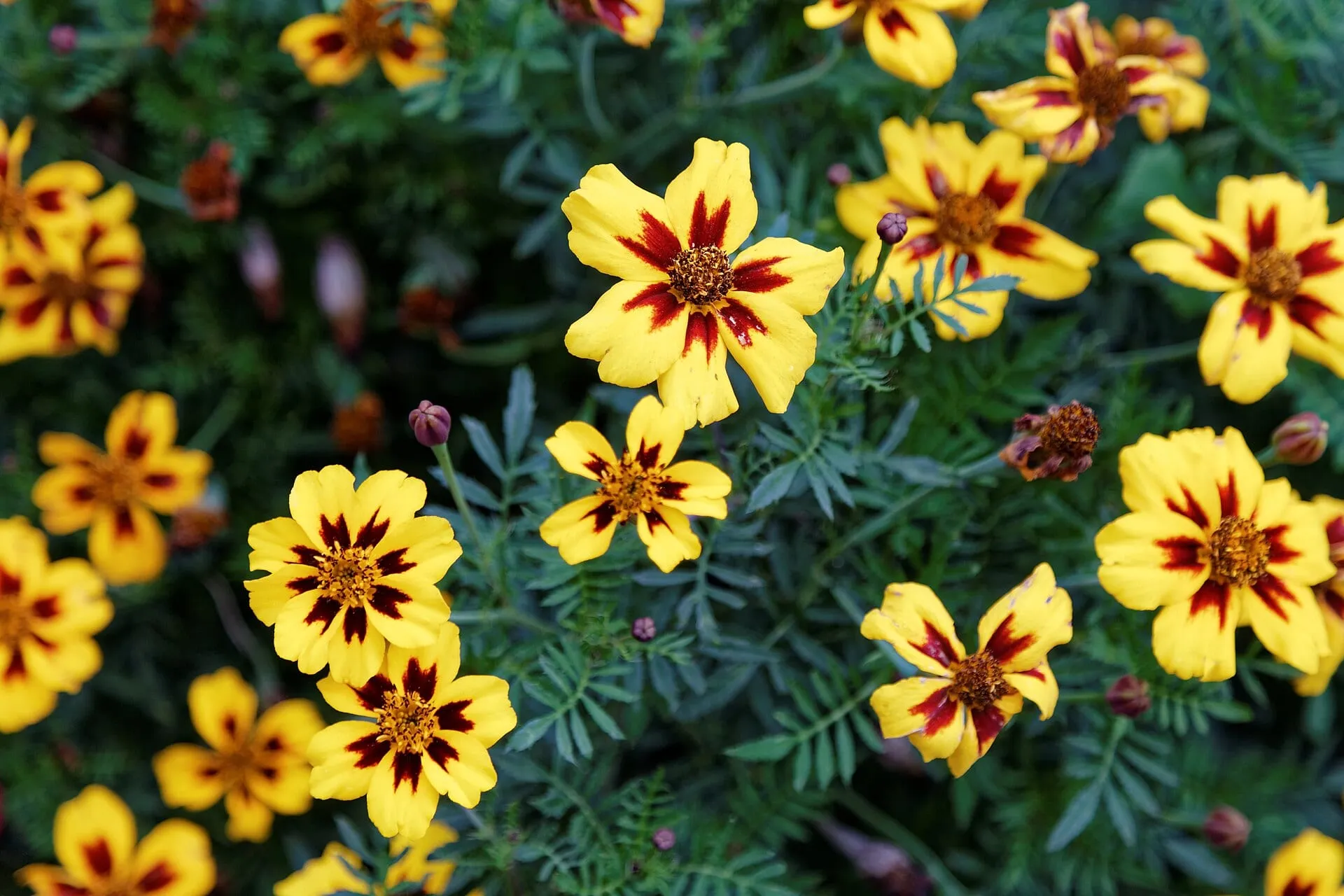
Photo: Acabashi, CC BY-SA 4.0, via Wikimedia Commons
- Light
- full sun, six hours or more. Less sun means fewer flowers and floppier plants
- Water
- medium to low. About an inch a week once established, and let the soil dry somewhat between waterings
- Toxicity
- mildly toxic to dogs and cats (Pet Poison Helpline, Tagetes species): mild irritation of the gastrointestinal tract when eaten, and the sap can irritate skin. The ASPCA's marigold entry is Calendula, a different plant, and does not cover Tagetes. NC State Extension lists it as poisonous to people (low severity): sap on broken skin plus sunlight can redden, burn and blister it, and the scent of the flowers irritates some noses and eyes
| Type | Warm-season annual |
|---|---|
| Sun | Full sun |
| Water | Low |
| Size | 6 in to 3 ft tall, 6 to 18 in wide |
| Bloom | yellow, gold, orange, red, mahogany, cream · June to frost |
| Plant in | mid-April to June |
| Interest | Summer, fall |
| Upstate winter | One season |
| Use in | Beds, containers |
| Role | Filler, height |
Toxicity confirmed against Pet Poison Helpline; NC State Extension Plant Toolbox.
Marigolds are the honest flower: cheap, bright, in bloom from June until a hard frost, and almost nothing eats them. Deer walk past the scented leaves. The compact French types work as a filler in a sunny planter and the tall African types give height in a bed. The colors stay in the yellow, gold, orange and mahogany family, which suits a fall porch as well as a summer one.
In the Upstate
They are true annuals, planted after the last frost from mid-April on, and they are just as happy sown from seed in May. Our heat suits them. Our rain does not always: the big double African flowers take a rainy week badly, and the tall plants can flop in a thunderstorm and need a stake. French marigolds take rain better, which makes them the ones to put near an entrance. Spider mites show up in a hot, dry August.
In a container
A French marigold is a 6 to 12 inch filler, 6 to 18 inches wide. Compact series like Hot Pak and Super Hero were bred for heat and humidity and stay tidy in a pot all season. The 3 foot African types are for beds and cutting. Water when the soil has dried somewhat, about an inch a week, and pull spent flowers to keep new ones coming. No midseason swap. If blooming slows in the worst of the heat, keep deadheading and it picks back up when the nights cool.
Care
Deadhead, water at the base, and feed lightly with a slow-release fertilizer at planting. Wash your hands or wear gloves after handling, since the sap can irritate skin in sunlight. Watch for spider mites in dry weather and slugs in wet. The one thing that kills it is soggy soil, which rots the stems and roots, so give it drainage and do not overwater.
Want this planted for the light you actually have? Start a project
Where it shows up
Sources
- Clemson HGIC 1168, How to Grow and Care for Marigolds in South Carolina (hgic.clemson.edu/factsheet/how-to-grow-and-care-for-marigolds-in-south-carolina/)
- NC State Extension Plant Toolbox, Tagetes patula (plants.ces.ncsu.edu/plants/tagetes-patula/)
- Pet Poison Helpline, Marigold (petpoisonhelpline.com/poison/marigold/)
- ASPCA, Garden Marigold (Calendula officinalis), checked and not applicable (aspca.org)