Photo: Tortie tude, CC0, via Wikimedia Commons
- Light
- full sun to deep shade. It flowers most in sun and stretches in heavy shade
- Water
- low once established. Water weekly in a summer drought; it will not take wet feet
- Toxicity
- non-toxic to dogs, cats and horses (ASPCA, listed as turf lily, Liriope muscari). NC State Extension flags the berries as a low-severity caution for people, with no known cases
| Type | Perennial |
|---|---|
| Sun | Full sun, part sun, shade |
| Water | Low |
| Size | 10 to 18 in tall, 12 to 18 in wide |
| Bloom | lavender, purple, pink, white · July to September |
| Plant in | fall or early spring |
| Interest | Spring, summer, fall, winter |
| Upstate winter | Survives our winter |
| Hardy zones | 5 to 10 |
| Use in | Containers, beds |
| Role | Filler, groundcover |
Toxicity confirmed against ASPCA Animal Poison Control; NC State Extension Plant Toolbox.
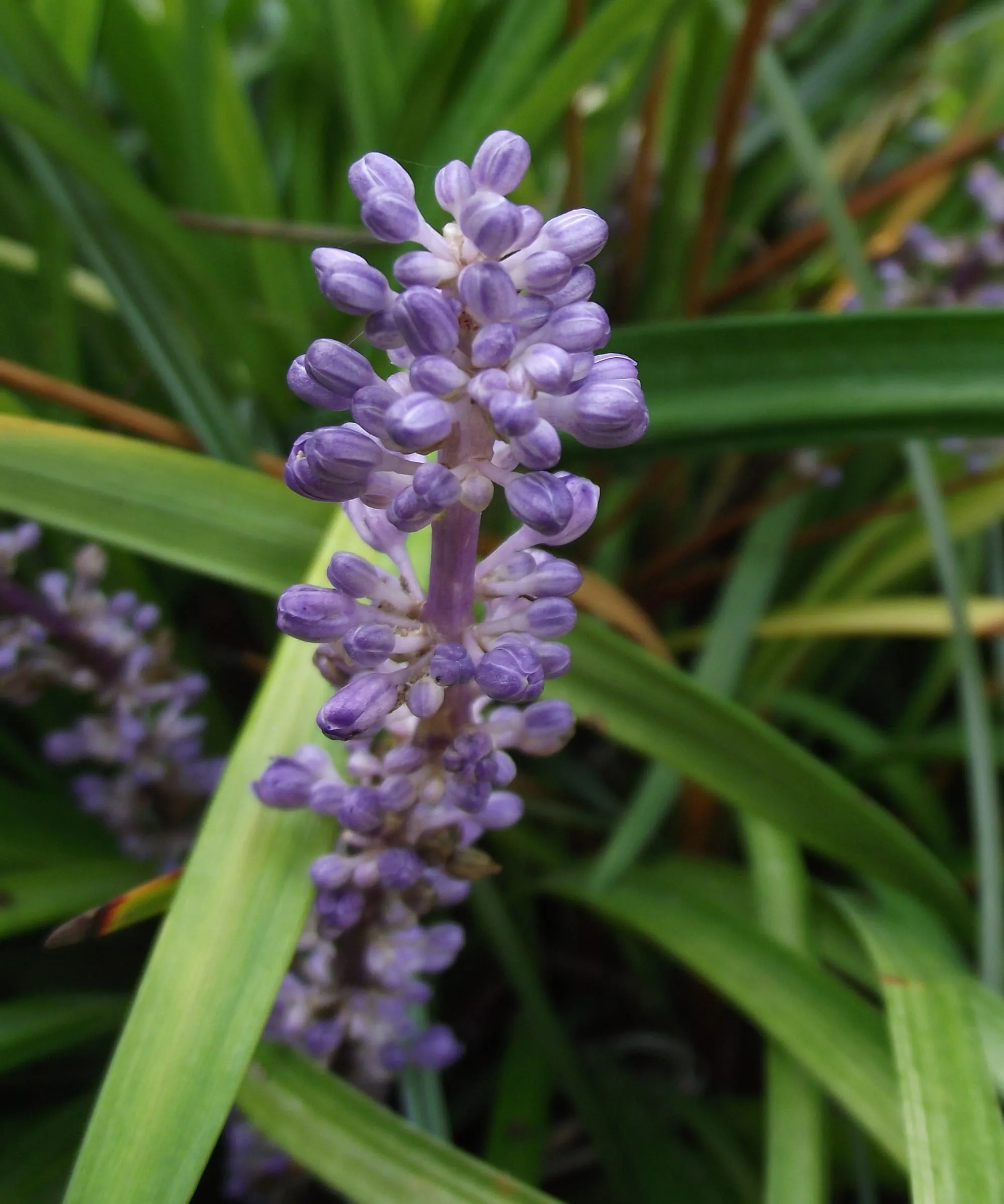
Liriope is the tough one. Clemson calls it among our best evergreen groundcovers, and it earns that in a pot too: a grassy dark green clump that sits there through heat, drought, shade, and neglect, then sends up lavender flower spikes in late summer when the rest of the porch is tired. Black berries follow and hang on into winter. It is the plant for anyone who forgets to water.
In the Upstate
It is hardy in zones 5 to 10 and evergreen here, so it holds a pot through winter without protection. Clemson says it grows well throughout South Carolina, in deep shade or full sun, sand or clay, and takes heat and drought. The one thing it will not take is wet feet. In a bed it spreads slowly by clumps, unlike its creeping cousin Liriope spicata, which Clemson warns can be invasive. Plant in fall or early spring, and do not set the crown too deep.
In a container
It is a filler and a year-round edge, 10 to 18 inches tall and about as wide, and it pairs with almost anything. ‘Variegata’ and ‘Silvery Sunproof’ add a cream stripe if the pot needs lift. Water weekly in a summer drought and otherwise leave it alone. NC State says it needs regular water only in its first year. It stays in the pot for years and can be divided every three or four if you want more, though Clemson notes division is rarely needed for the plant’s health.
Care
Water sparingly and make sure the pot drains, because Clemson lists crown rot and root rot in wet, poorly drained sites among its problems. Feed lightly in early spring and keep granules out of the leaves. Cut the old foliage back to about 3 inches by mid-February, before new growth starts, and clear the clippings. Clemson says that alone may be all it takes to stop anthracnose, and it helps a lot with scale. The one thing that kills it is a soggy pot.
Want this planted for the light you actually have? Start a project
Sources
- Clemson HGIC 1108, Liriope (hgic.clemson.edu/factsheet/liriope/)
- NC State Extension Plant Toolbox, Liriope muscari (plants.ces.ncsu.edu)
- ASPCA, Turf Lily (aspca.org)