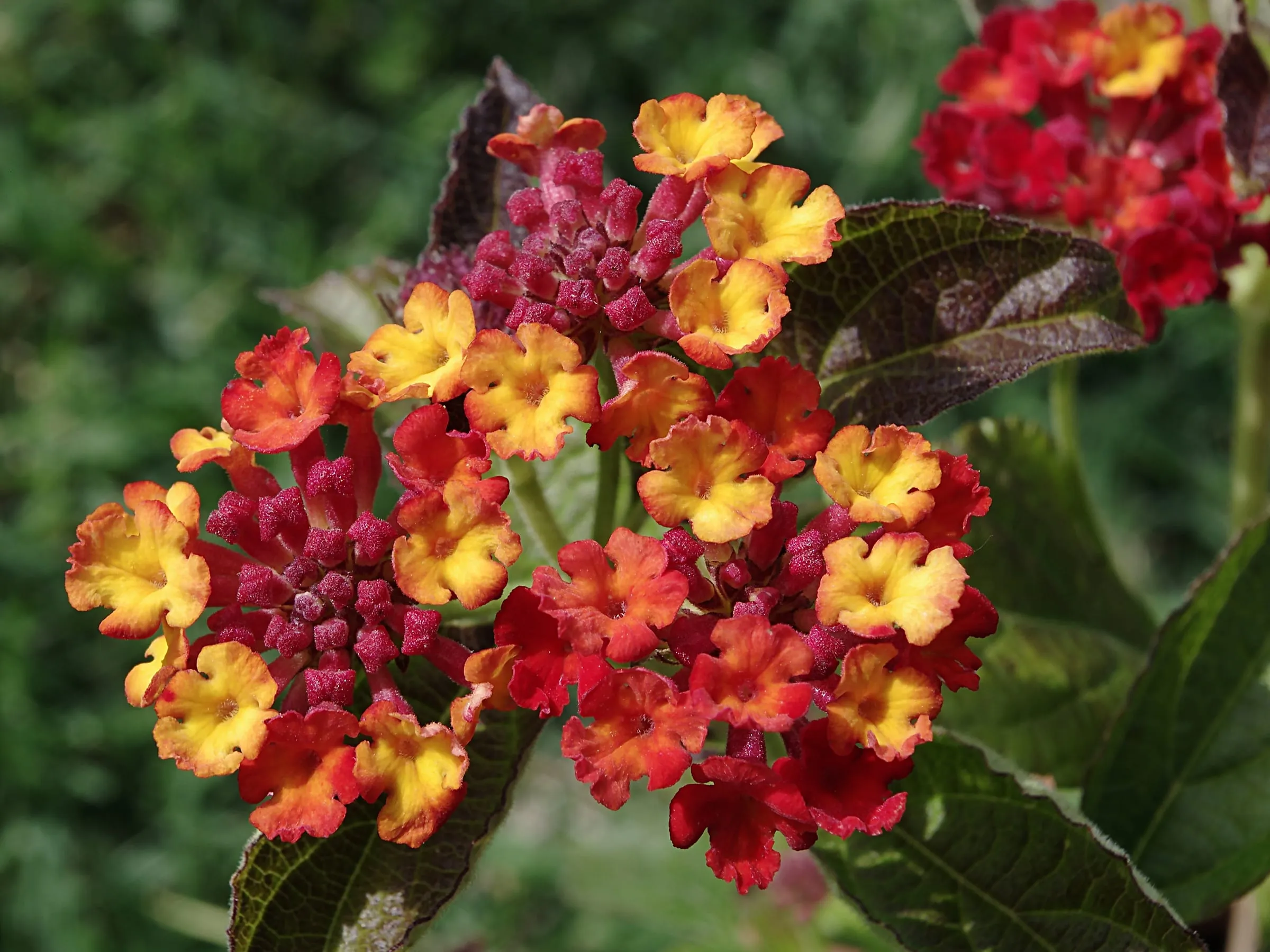
Photo: JLPC, CC BY-SA 3.0, via Wikimedia Commons
- Light
- full sun, six hours or more. In shade it mildews and stops blooming
- Water
- low once established. Water thoroughly once a week in bloom if the week brings less than an inch of rain, which in a pot in July means checking more often
- Toxicity
- toxic to dogs, cats and horses (ASPCA): pentacyclic triterpenoids; vomiting, diarrhea, labored breathing, weakness, and liver failure, which is more common in livestock. Also poisonous to people (NC State Extension, medium severity): vomiting, diarrhea, dilated pupils, labored breathing, weakness and possible liver failure if eaten; the leaves and green berries can irritate skin
| Type | Warm-season annual |
|---|---|
| Sun | Full sun |
| Water | Low |
| Size | 1 to 6 ft tall, 3 to 5 ft wide |
| Bloom | orange, yellow, pink, red, white, lavender · May to frost |
| Plant in | mid-April to June |
| Interest | Summer, fall |
| Upstate winter | Needs protection |
| Hardy zones | 7 to 11 |
| Use in | Containers, beds |
| Role | Filler, trailer |
Toxicity confirmed against ASPCA Animal Poison Control; NC State Extension Plant Toolbox.
Lantana is the plant for the pot that gets the worst of the afternoon sun. Clemson calls it tough and resilient, and it blooms from spring until frost in flower heads that mix orange, yellow, pink, and red on the same cluster. Butterflies work it all day. If the last three things in that spot died, lantana is the next thing to try.
In the Upstate
Clemson is plain about this: most lantanas are grown as annuals in South Carolina, and only a few cultivars are reliably perennial in the Upstate, ‘Miss Huff’ and ‘Mozelle’ among them, with ‘Chapel Hill Yellow’ and ‘Chapel Hill Gold’ rated to zone 7b. NC State’s zone 7 rating applies to those hardy kinds, not to the compact ones sold for pots. In a container the roots sit about a zone colder than the ground, so treat lantana in a planter as a one-summer plant and be pleased when it comes back. Plant it warm, at least 2 weeks after the last frost, so mid-April at the earliest. It does nothing in cool soil and then takes off in June.
In a container
Lantana fills and trails. The compact cultivars Clemson lists, like ‘Patriot Cowboy’ and ‘Patriot Rainbow’ at about a foot tall, suit a mixed pot, and the spreading kinds hang over the rim. Do not put ‘Miss Huff’ in a pot unless the pot is very large, since it makes a 5 to 6 foot mound in one season. Keep new plants moist for the first few weeks, then give them a thorough watering once a week in bloom if the week brings less than an inch of rain, which in a pot in July means checking more often. It does not need swapping mid-season. It needs trimming.
Care
Water deeply but not often, feed lightly once in spring, and shear the tips now and then to keep the flowers coming. Too much fertilizer or too much shade is why a lantana stops blooming. Root rot from overwatering is what kills it. Clemson notes some cultivars set small blue-black berries, which are poisonous, so use the sterile cultivars it lists (‘New Gold’, ‘Samantha’, ‘Miss Huff’) where children play, and keep pets from chewing any of it.
Want this planted for the light you actually have? Start a project
Where it shows up
Sources
- Clemson HGIC 1177, Lantana (hgic.clemson.edu/factsheet/lantana/)
- NC State Extension Plant Toolbox, Lantana camara (plants.ces.ncsu.edu/plants/lantana-camara/)
- ASPCA, Lantana (aspca.org)