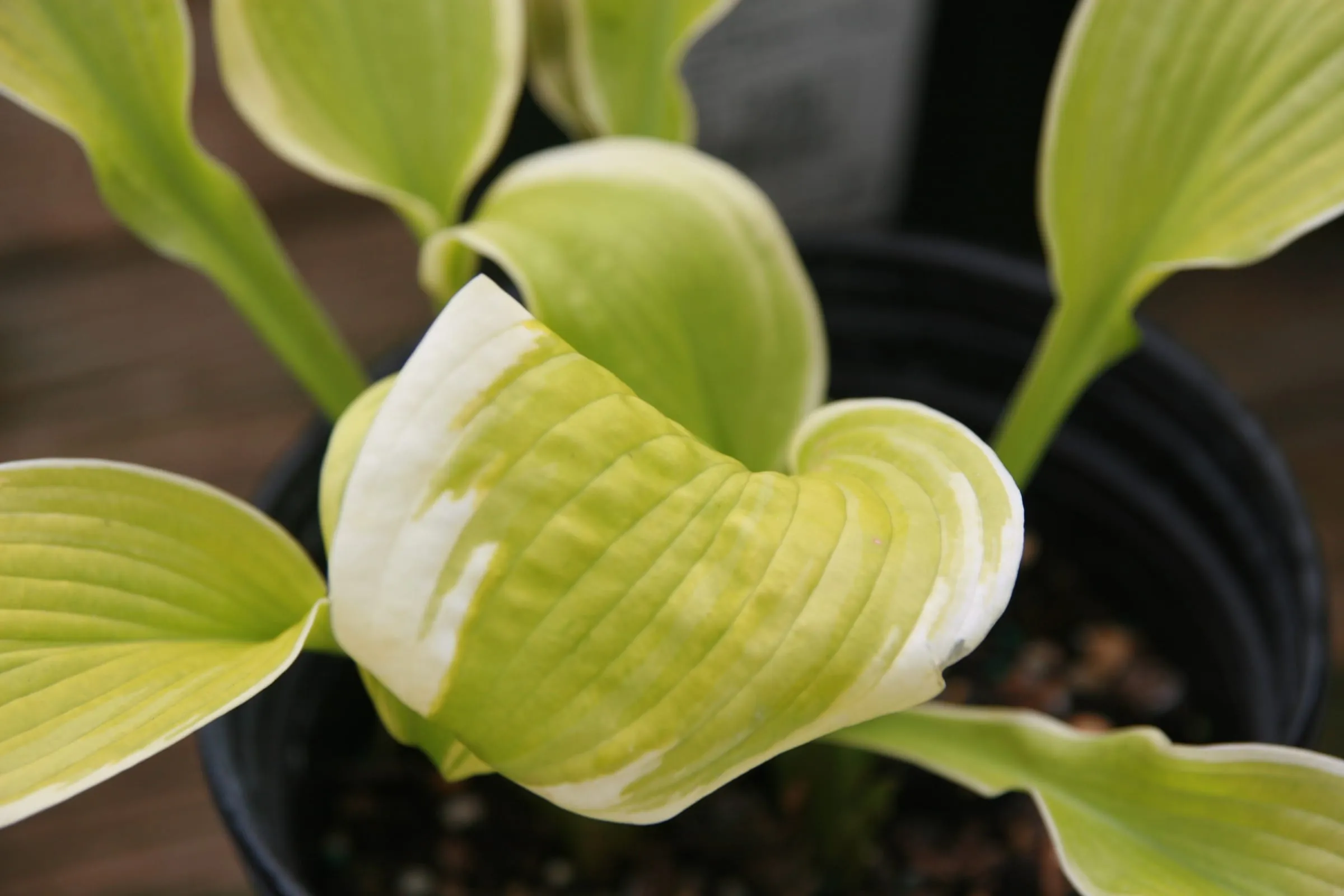
Photo: David J. Stang, CC BY-SA 4.0, via Wikimedia Commons
- Light
- part shade to shade. Afternoon shade is a must here; sun bleaches and scorches the leaves
- Water
- high. An inch or more a week in the ground; in a pot, water whenever the top inch is dry, most days in July
- Toxicity
- toxic to dogs, cats and horses (ASPCA): saponins; vomiting, diarrhea, depression
| Type | Perennial |
|---|---|
| Sun | Part sun, shade |
| Water | High |
| Size | 12 to 30 in tall, 1 to 3 ft wide |
| Bloom | white, lavender, purple · early summer to fall, by cultivar |
| Plant in | fall or early spring |
| Interest | Spring, summer, fall |
| Upstate winter | Survives our winter |
| Hardy zones | 3 to 9 |
| Use in | Containers, beds |
| Role | Filler |
Toxicity confirmed against ASPCA Animal Poison Control.
Hosta is the shade plant everyone knows, and for good reason. A mound of big leaves, blue-green to chartreuse to white-edged, fills a covered porch pot from April to October with no flowers required, though the lavender or white spikes in summer are a nice extra and some are fragrant. Clemson calls it easy to grow, and it is. It can outlive the pot.
In the Upstate
It is hardy to zone 3, so winter is nothing. It goes fully dormant, disappearing in November and pushing new shoots in late March, which means a hosta pot is empty for four months unless you tuck pansies around it. Summer needs shade: Clemson says all hostas do best with afternoon shade here, and blue-leaved kinds need real shade or they fade. Clemson points to Hosta plantaginea cultivars like ‘Royal Standard’ as the most heat and sun tolerant for South Carolina. Plant or divide in early fall or in spring before the leaves unfold.
In a container
It is a filler and, in a small pot, the whole show. Most reach 1 to 2.5 feet tall and 1 to 3 feet wide, so match the pot to the cultivar. Clemson says it needs plenty of moisture to support those big soft leaves, an inch a week or more, and a pot in summer dries faster than that, so check it most days in July. It can stay in the pot for years and be divided when it crowds the rim. Deer eat it, so a porch is safer than a bed.
Care
Water deeply and often in summer. Feed once in early spring with a slow-release. Clemson warns against heavy fertilizer. Cut the flower stalks after bloom and clean up the dead leaves in fall, which also removes the slugs’ winter home. Slugs are the main pest, and Clemson also flags voles, which eat the roots. The one thing that kills it is a dry pot in full sun, and the pot will show you in a day.
Want this planted for the light you actually have? Start a project
Where it shows up
Sources
- Clemson HGIC 1165, Hosta (hgic.clemson.edu/factsheet/hosta/)
- NC State Extension Plant Toolbox, Hosta (plants.ces.ncsu.edu)
- ASPCA, Hosta (aspca.org)