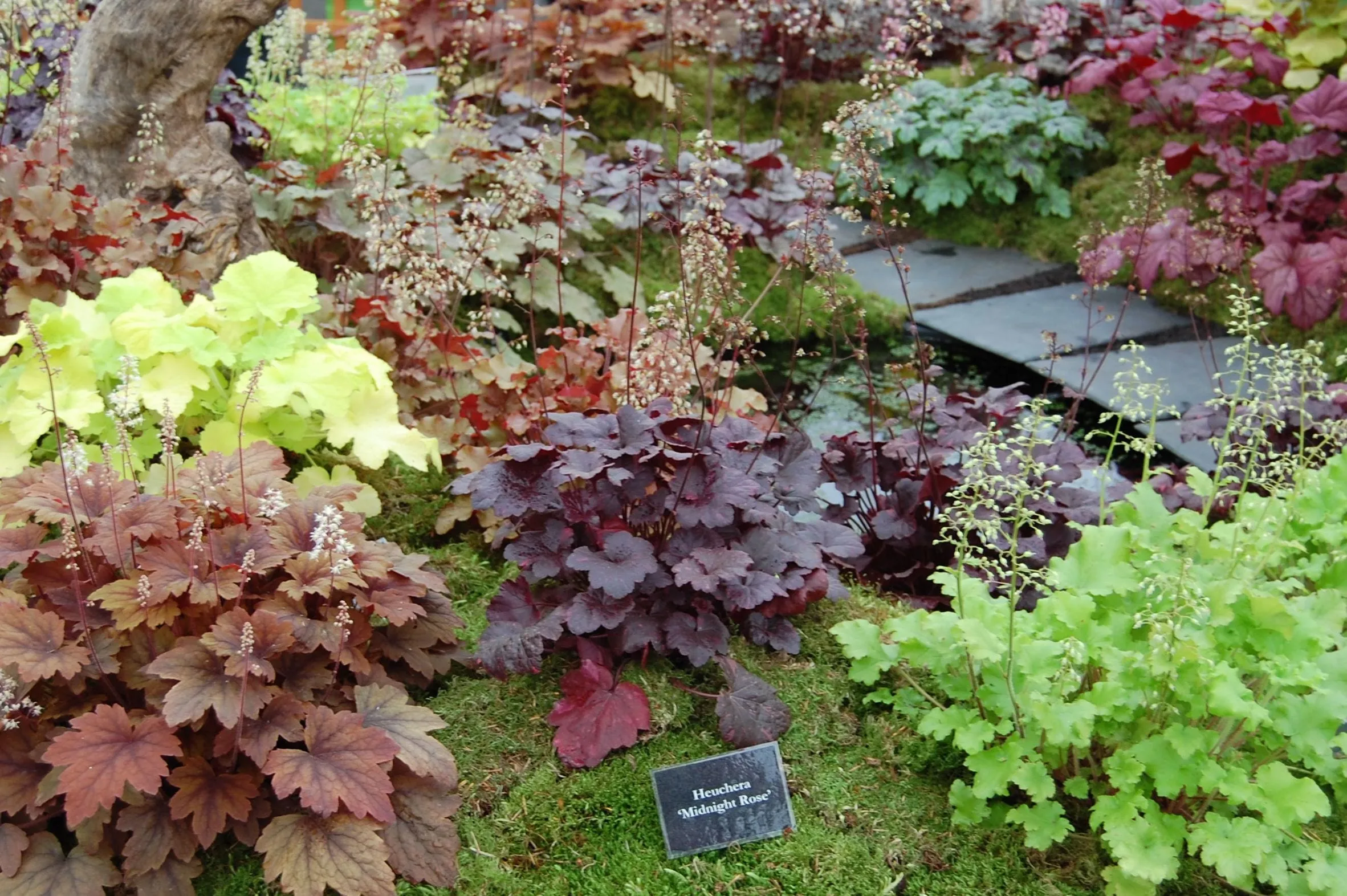
Photo: Andy Mabbett, CC BY-SA 3.0, via Wikimedia Commons
- Light
- morning sun and afternoon shade. Full sun scorches most of them here; deep shade dulls the color
- Water
- medium. Water when the top inch is dry, weekly in hot dry weather, and never soggy
- Toxicity
- non-toxic to dogs, cats and horses (ASPCA, listed as coral bells, Heuchera sanguinea, with Heuchera given as a common name; the garden hybrids descend in part from that species)
| Type | Perennial |
|---|---|
| Sun | Part sun, shade |
| Water | Medium |
| Size | 6 to 20 in tall, 6 to 20 in wide |
| Bloom | pink, white, red · June through summer |
| Plant in | fall or early spring |
| Interest | Spring, summer, fall, winter |
| Upstate winter | Survives our winter |
| Hardy zones | 3 to 9 |
| Use in | Containers, beds |
| Role | Filler |
Toxicity confirmed against ASPCA Animal Poison Control.
Heuchera, or coral bells, is foliage color that stays put. Ruffled leaves in caramel, lime, plum, silver, and nearly black hold their color most of the year and give a shady pot something to look at when nothing is blooming. Thin wands of pink or white flowers come in early summer as a bonus. Clemson notes it grows very well in large containers, and it is native to North America, which we like.
In the Upstate
It is hardy to zone 3, so winter is not the problem. Summer is. Clemson is specific: in the South it wants morning sun and afternoon shade. NC State adds that full sun in hot, dry weather scorches the leaves. Choose cultivars with Heuchera villosa in the parentage. Clemson names ‘Caramel’ and ‘Citronelle’ as two that take our heat and humidity, and some hybrids sold online do not. Plant in fall or early spring. It is evergreen to semi-evergreen here, so it holds a pot through winter.
In a container
It is a filler, a mound 6 to 20 inches tall and about as wide, and it pairs with ferns, carex, and pansies in a shade pot. Water when the top inch of mix is dry, about weekly in hot dry weather per Clemson, and never let it sit wet. It stays in the pot year-round and can be divided every three or four years. It does not need swapping mid-season, though a pot in afternoon sun will tell you so by August.
Care
Water moderately and give it a mix that drains. Clemson says it does not tolerate heavy, poorly drained soil. Feed lightly in spring. Cut the spent flower wands, and if the leaves look ragged in late summer, NC State says you can shear all the foliage and let it flush new. Mulch the pot for winter to protect the shallow roots. The one thing that kills it is a heavy, soggy pot, and the second is a full-sun spot in July.
Want this planted for the light you actually have? Start a project
Where it shows up
Sources
- Clemson HGIC, Heuchera, Coral Bells (hgic.clemson.edu/heuchera-coral-bells/)
- NC State Extension Plant Toolbox, Heuchera (plants.ces.ncsu.edu)
- ASPCA, Coral Bells (aspca.org)