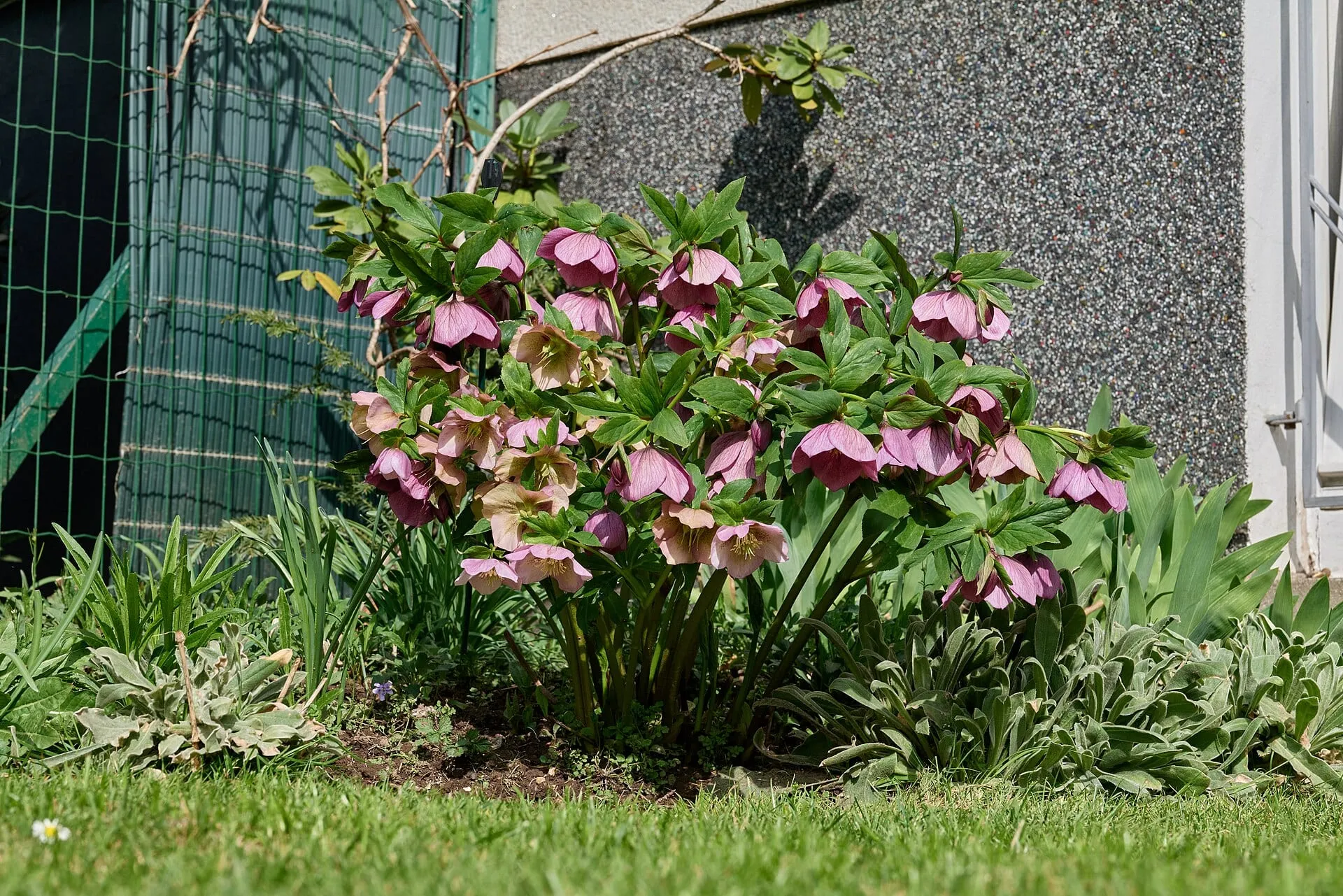
Photo: Leonhard Lenz, CC0, via Wikimedia Commons
- Light
- part shade to full shade. Sun in winter and shade in summer is the ideal, which is what a deciduous tree or a north-facing porch gives it
- Water
- low once established. Water in a long dry spell when the leaves droop, and never let it sit in wet soil
- Toxicity
- toxic to dogs, cats and horses (ASPCA entry for Helleborus niger, which lists Lenten rose and hellebore among its common names; the ASPCA has no separate entry for Helleborus x hybridus): bufadienolides, glycosides, veratrin and protoanemonin; drooling, abdominal pain, diarrhea, colic, depression. Also poisonous to people (NC State Extension, medium severity): all species of Helleborus, living or dried, contain a cardiac glycoside that acts on the heart
| Type | Perennial |
|---|---|
| Sun | Part sun, shade |
| Water | Low |
| Size | 12 to 18 in tall, 12 to 18 in wide |
| Bloom | white, pink, plum, purple, green, yellow · winter into early spring, roughly January to April, each flower lasting two to three months |
| Plant in | fall or early spring |
| Interest | Winter, spring |
| Upstate winter | Survives our winter |
| Hardy zones | 4 to 9 |
| Use in | Containers, beds |
| Role | Height, filler |
Toxicity confirmed against ASPCA Animal Poison Control; NC State Extension Plant Toolbox.
Hellebores bloom when nothing else does. The nodding, cup-shaped flowers push up in January and February, in white, pink, plum, green and yellow, and hold for two or three months because the “petals” are really sepals that do not drop. The leathery evergreen leaves stay handsome all year, deer and rabbits leave it alone, it lives for decades, and Clemson says it can be planted anywhere in the state. It is a natural winter anchor for a shade planter.
In the Upstate
It is hardy through our winters with room to spare, in the ground or in a pot, and it flowers right through a cold snap. Plant in fall or early spring in soil enriched with compost, and give it shade and dry-ish soil for its summer rest. A virus called hellebore black death was found in the Upstate in 2017, and Clemson calls it deadly, so a plant with black streaks along the veins gets pulled. Downy mildew and black spot show up in wet weather. Both are reasons to cut the old leaves off as the flowers emerge in winter, and to water the soil, not the foliage.
In a container
Clemson’s recommendation is a hellebore as the tall accent in a winter pot of pansies and violas, with ivy or early bulbs around it. It stands 12 to 18 inches and holds a pot from November to April. Water a shaded pot when the top inch of mix is dry, which in winter may be every week or two. Then, after it finishes flowering in spring, move it out of the pot into a shady bed. It does not enjoy a summer in a container, and a pot’s roots see a zone colder than the ground.
Care
Water only in a real dry spell once established, and skip fertilizer, because compost or a two-inch mulch is enough. Cut the old leaves to the base when the new leaves and flower stems appear in winter, and leave the foliage alone the rest of the year. Cut spent flower stems in spring if you do not want seedlings, because it seeds freely. Divide in late fall to early winter if you must. The one thing that kills it is wet soil, so drainage matters more than anything else you do.
Want this planted for the light you actually have? Start a project
Sources
- Clemson HGIC 1565, Hellebore (hgic.clemson.edu/factsheet/hellebore/)
- Clemson HGIC 1185, Lenten Rose (hgic.clemson.edu/factsheet/lenten-rose/)
- NC State Extension Plant Toolbox, Helleborus x hybridus (plants.ces.ncsu.edu)
- Missouri Botanical Garden Plant Finder, Helleborus x hybridus (missouribotanicalgarden.org)
- ASPCA, Hellebore and Lenten Rose (aspca.org)