Photo: Forest and Kim Starr, CC BY 2.0, via Wikimedia Commons
- Light
- full sun, at least four hours of direct sun a day. A few hours of midday shade helps in July and August
- Water
- medium to low. Water well, then let the soil dry between waterings. Never let it wilt, but never keep it wet either
- Toxicity
- toxic to dogs, cats and horses (ASPCA, Pelargonium species): geraniol and linalool; vomiting, anorexia, depression, dermatitis. NC State Extension lists the leaves as poisonous to people (low severity): vomiting and loss of appetite if eaten in quantity, and mild contact dermatitis
| Type | Warm-season annual |
|---|---|
| Sun | Full sun, part sun |
| Water | Low |
| Size | 12 to 24 in tall, 12 to 18 in wide |
| Bloom | red, pink, salmon, white, orange · May to frost, slowing in August heat |
| Plant in | mid-April to June |
| Interest | Spring, summer, fall |
| Upstate winter | One season |
| Hardy zones | 10 to 11 |
| Use in | Containers, beds |
| Role | Filler, height |
Toxicity confirmed against ASPCA Animal Poison Control; NC State Extension Plant Toolbox.
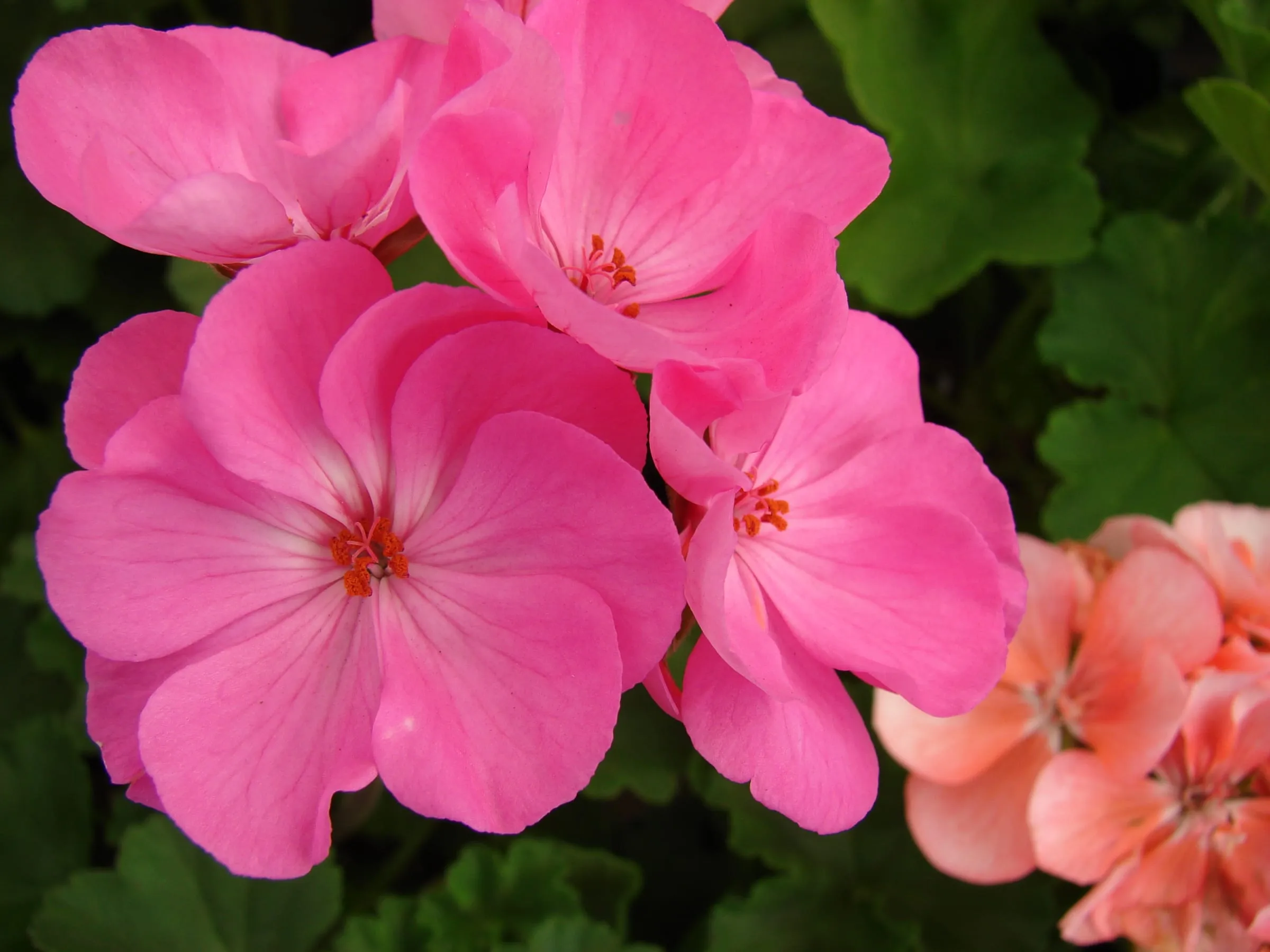
A red geranium in a clay pot is the picture most people have in their heads when they say “porch plant,” and there is a reason it stuck. The flower heads are big and bright, the scalloped leaves have a dark ring that gives the zonal type its name, and a good one blooms from May until frost. It is the upright color in a sunny planter, with something trailing at its feet.
In the Upstate
Zonal geraniums are hardy only to zone 10, so here they are annuals. They go out after the last frost, mid-April on, and they are at their best in May, June and again in September. August is the honest part: hot nights and hard afternoon rain make them sulk, and in poorly drained soil the stems rot. Clemson notes they grow in every part of South Carolina. Missouri Botanical Garden notes they can be tricky in a hot, humid, rainy summer, and both are right.
In a container
Use a bigger pot than you think, because a geranium that wilts often gets yellow leaves and drops them, and a large pot holds enough water to keep that from happening. It stands 12 to 24 inches as a filler or the tall element in a small planter. Water well, then let the soil dry before you water again. Pick off spent flower heads to keep it blooming, and pinch stems in spring so it branches. It does not need swapping midseason, though it may look tired in August and rebound in September.
Care
Geraniums are hungry. Feed every four to six weeks with a water-soluble fertilizer, or they stall and yellow. Keep water off the leaves, give them air, and clean out dead leaves and flowers, which is where botrytis starts in cool wet weather. Corky spots on the leaves mean overwatering. The one thing that kills it is wet soil: a pot without drainage or a bed that holds water, and the stems turn black at the base.
Want this planted for the light you actually have? Start a project
Where it shows up
Sources
- Clemson HGIC 1164, Annual Geranium (Pelargonium) (hgic.clemson.edu/factsheet/geranium/)
- NC State Extension Plant Toolbox, Pelargonium x hybridum (plants.ces.ncsu.edu/plants/pelargonium-x-hybridum/)
- Missouri Botanical Garden Plant Finder, Pelargonium x hortorum (missouribotanicalgarden.org)
- ASPCA, Geranium (aspca.org)