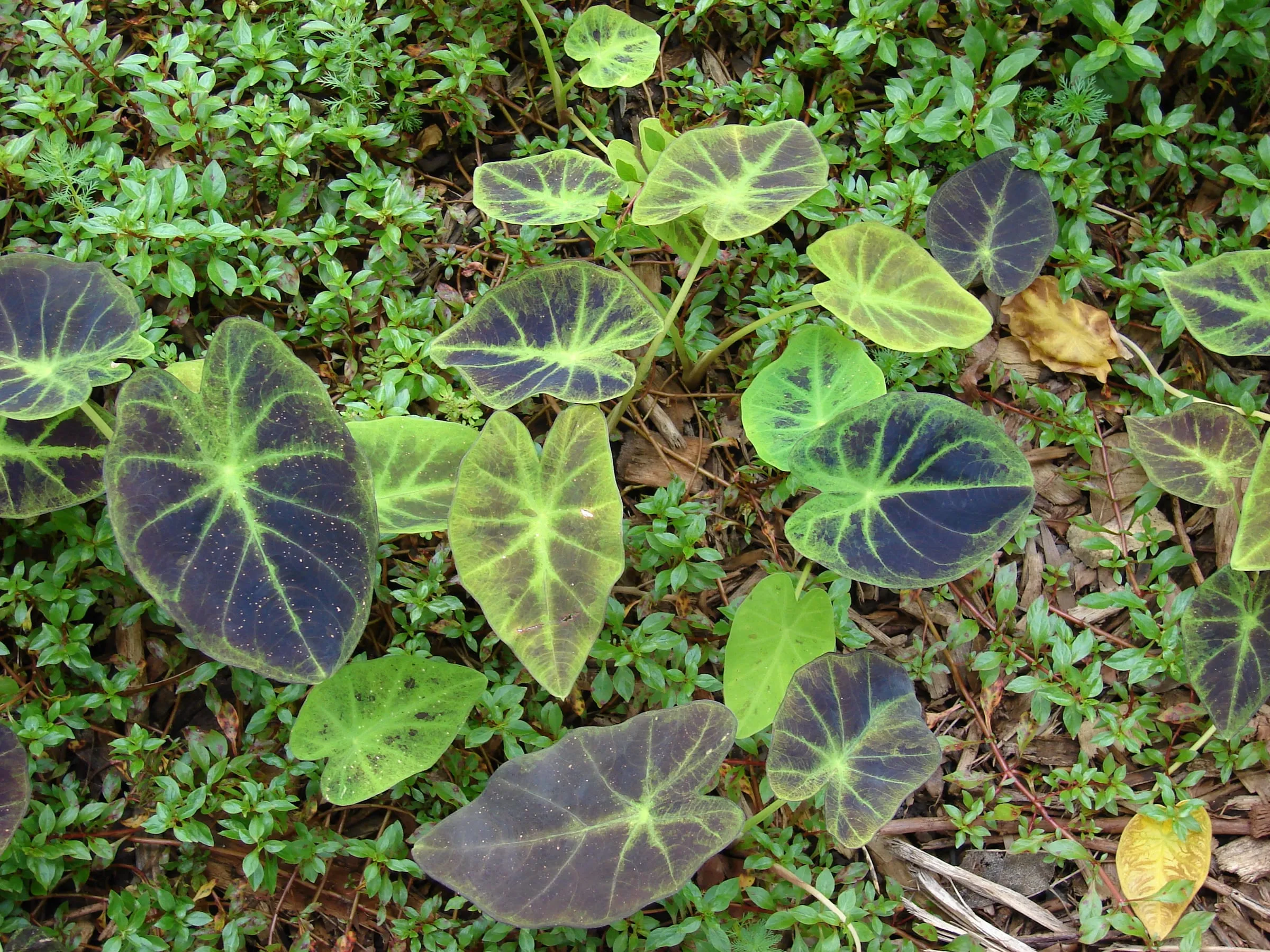
Photo: Forest & Kim Starr, CC BY 3.0, via Wikimedia Commons
- Light
- part shade or filtered sun is best. Full sun works only if the pot never dries out
- Water
- high. Keep it constantly moist; it should never dry out and it will take standing water
- Toxicity
- toxic to dogs, cats and horses (ASPCA): insoluble calcium oxalates; oral irritation, pain and swelling of mouth, tongue and lips, excessive drooling, vomiting (not horses), difficulty swallowing. Also poisonous to people (NC State Extension, medium severity): all parts unless cooked
| Type | Bulb |
|---|---|
| Sun | Full sun, part sun |
| Water | High |
| Size | 3 to 6 ft tall, 3 to 6 ft wide |
| Plant in | mid-April to June |
| Interest | Summer, fall |
| Upstate winter | Survives most winters |
| Hardy zones | 8 to 11 |
| Use in | Containers, beds |
| Role | Height |
Toxicity confirmed against ASPCA Animal Poison Control; NC State Extension Plant Toolbox.
Elephant ear is the biggest leaf you can put on a porch. Heart-shaped leaves up to three feet long, green or nearly black depending on the cultivar, rise from a corm and turn a plain entrance into something that looks like it has been there for years. It is grown for foliage. NC State notes it rarely flowers. It is also one of the thirstiest plants you can put in a pot, and there is no faking that.
In the Upstate
NC State lists it as hardy in zones 8a to 11, which puts Greenville right at the line. In a mulched bed the corm usually overwinters. In a pot, where the roots see roughly one zone colder, it is a coin toss, and a wet pot that freezes solid will rot it. Plant it from mid-April once the soil warms. It sulks in cold ground. It loves a Greenville summer, heat and humidity both, as long as the water keeps coming. Frost in November collapses the leaves overnight.
In a container
It is the height in the pot and often the only plant that needs to be in it. A mature plant reaches 3 to 6 feet tall and as wide, so give it the largest container you have and expect it to fill it. NC State says it should never be allowed to dry out, and in July that means water every day, sometimes twice. A saucer that holds water is a help here, not a hazard. It does not need swapping, but keep it off a windy corner: the leaves tear.
Care
Water, then water again. Feed with a slow-release at planting and again midsummer. A leaf this size is hungry. Cut off leaves as they yellow. After frost, cut the stalks down and either mulch the pot in a sheltered spot or bring the corm inside to store dry. The one thing that kills it in summer is drought, even a single hot weekend, and in winter it is a frozen wet pot.
Want this planted for the light you actually have? Start a project
Where it shows up
Sources
- NC State Extension Plant Toolbox, Colocasia esculenta (plants.ces.ncsu.edu)
- ASPCA, Elephant Ears (Colocasia esculenta) (aspca.org)