- Light
- part sun to shade, and it takes full sun if it never dries out. Morning sun with afternoon shade is the sweet spot on an Upstate porch
- Water
- medium. Keep it evenly moist but well drained. Water at the soil in the morning, not over the leaves in the heat of the day
- Toxicity
- toxic to dogs, cats and horses (ASPCA, Begonia spp.): soluble calcium oxalates; kidney failure in grazing animals, vomiting and salivation in dogs and cats. The most toxic part is underground. NC State Extension lists the roots and sap as poisonous to people (low severity), and the sap can irritate skin
| Type | Warm-season annual |
|---|---|
| Sun | Full sun, part sun, shade |
| Water | Medium |
| Size | 24 to 36 in tall, 12 to 24 in wide |
| Bloom | red, pink · May to frost |
| Plant in | mid-April to June |
| Interest | Summer, fall |
| Upstate winter | One season |
| Hardy zones | 10 to 11 |
| Use in | Containers, beds |
| Role | Filler, height |
Toxicity confirmed against ASPCA Animal Poison Control; NC State Extension Plant Toolbox.
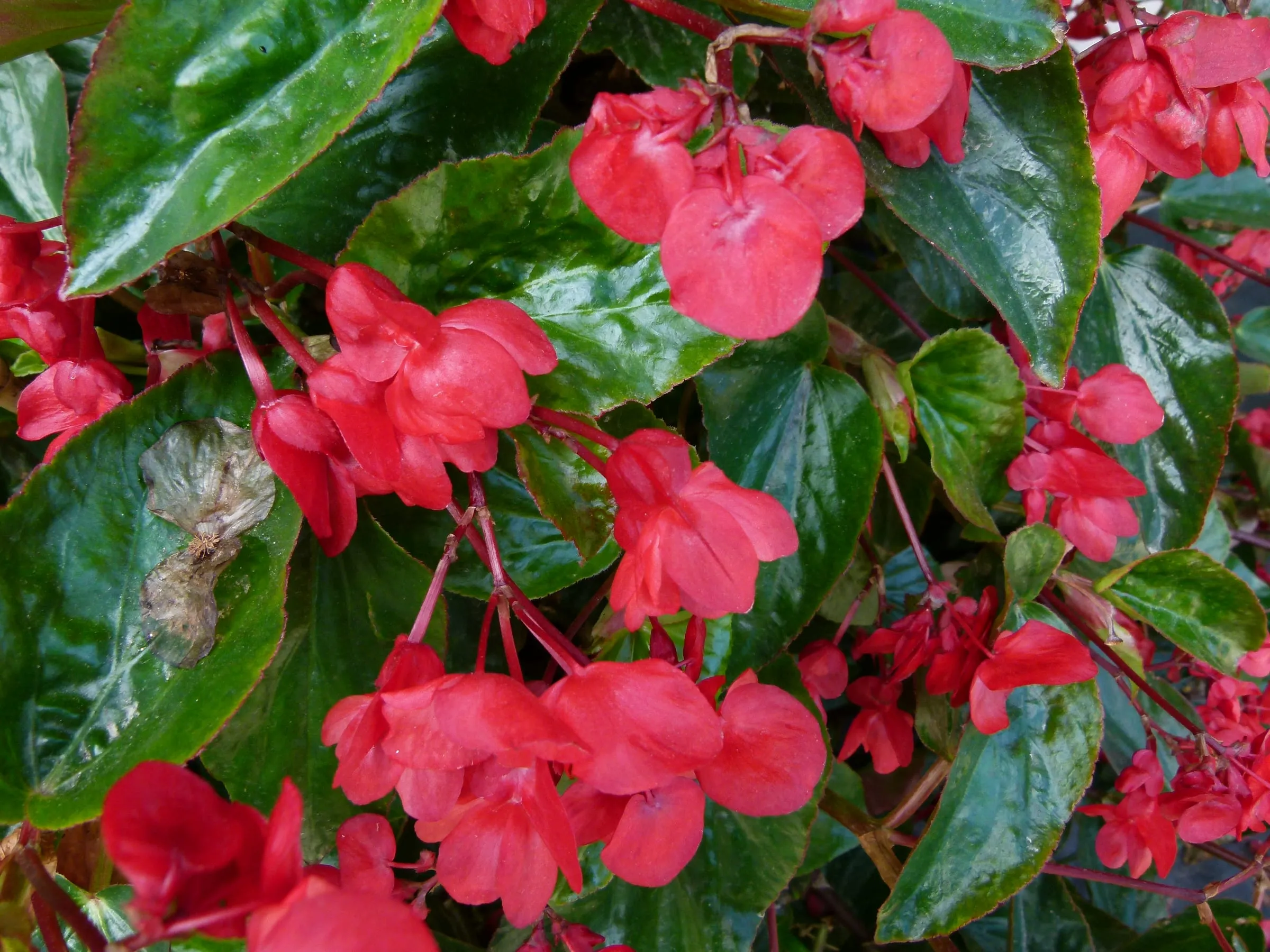
Dragon Wing is the begonia for a porch pot that looks full in June and still looks full in October. The arching red stems carry glossy, five-inch wing-shaped leaves and clusters of red or pink flowers that never stop, because the plant is sterile and does not waste energy on seed. It is also one of the few flowering plants that deer and rabbits walk past.
In the Upstate
It is hardy only to zone 10, so here it is an annual, and the first frost turns it to mush. Plant from mid-April on, once the nights are reliably warm. It handles our humidity better than most begonias and takes more sun than its angel-wing cousins, though on a west-facing porch in August it wants water every day and afternoon shade if it can get it. Where a shaded spot has had impatiens fail from downy mildew, this is what to plant instead.
In a container
Dragon Wing is a filler or a soft centerpiece, two to three feet tall with an arching shape that leans over the rim. One plant fills a good-size pot by midsummer. It does not need pinching, deadheading or a midseason swap. Keep the mix evenly moist and let the top inch dry between waterings. Give it more room than you think, since it will crowd smaller neighbors by August.
Care
Begonias are not heavy feeders. A slow-release fertilizer for annuals at planting is enough, with a light liquid feed in midsummer for a crowded pot. Water in the morning at the soil so the leaves dry fast, which keeps botrytis and powdery mildew away. Wear gloves if the sap bothers your skin. The one thing that kills it is standing water: a pot without a drainage hole or a saucer that never empties brings stem rot.
Want this planted for the light you actually have? Start a project
Sources
- Clemson HGIC 1159, Begonia (hgic.clemson.edu/factsheet/begonia/)
- NC State Extension Plant Toolbox, Begonia cane types (plants.ces.ncsu.edu/plants/begonia-cane-types/)
- ASPCA, Begonia (aspca.org)