Photo: Digigalos, CC BY-SA 3.0, via Wikimedia Commons
- Light
- full sun to part sun. A little afternoon shade helps a dark-leaved one in a black pot in July
- Water
- medium. Keep it evenly moist in summer and let the top inch dry between waterings; never let it sit in water
- Toxicity
- toxic to dogs, cats and horses (ASPCA, listed as giant dracaena, Cordyline australis): saponins; vomiting (occasionally with blood), depression, anorexia, hypersalivation, dilated pupils (cats)
| Type | Warm-season annual |
|---|---|
| Sun | Full sun, part sun |
| Water | Medium |
| Size | 6 to 15 ft over many years tall, 3 to 6 ft wide |
| Plant in | mid-April to June |
| Interest | Summer, fall |
| Upstate winter | Needs protection |
| Hardy zones | 9 to 11 |
| Use in | Containers |
| Role | Height, structure |
Toxicity confirmed against ASPCA Animal Poison Control.
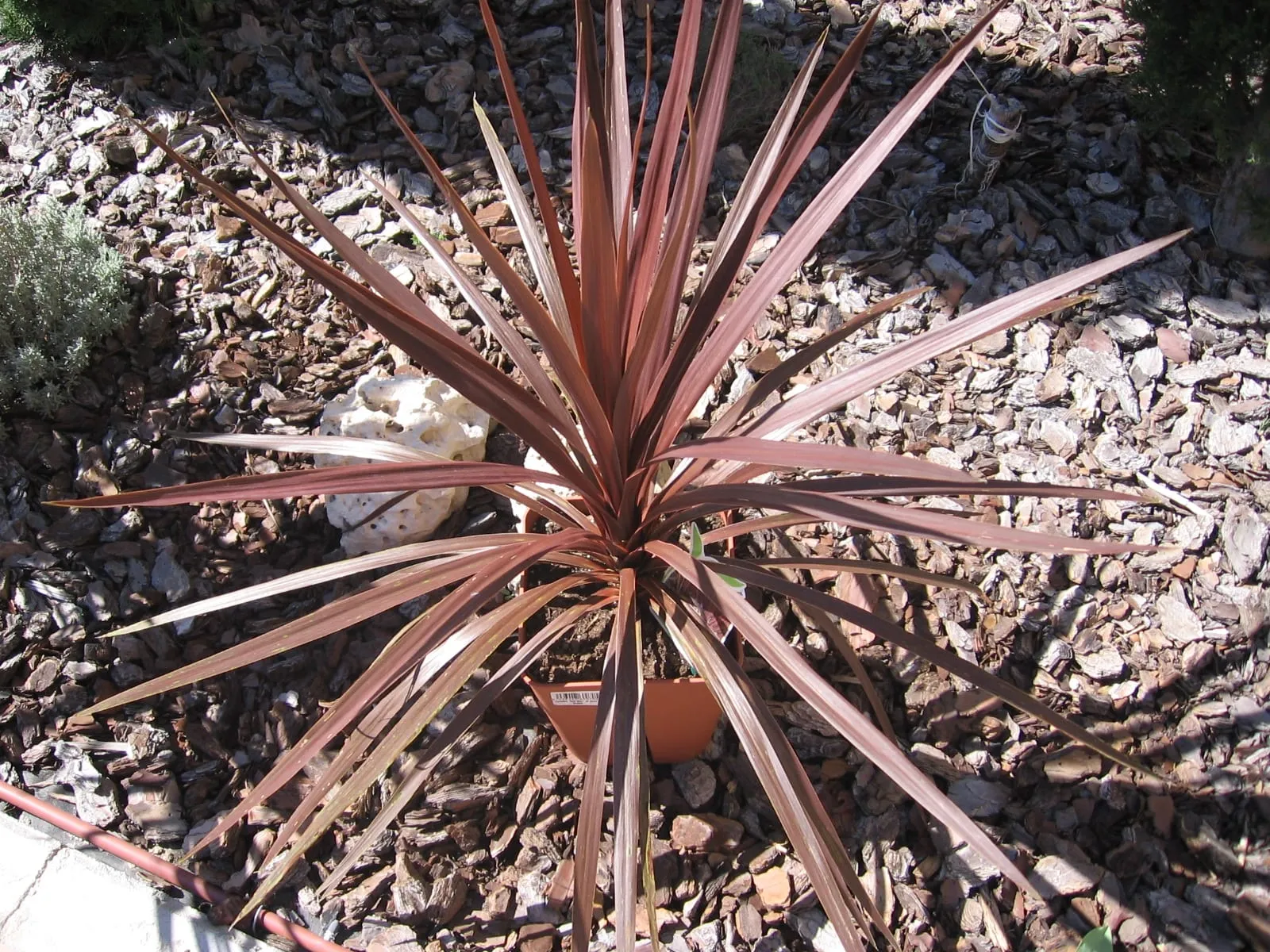
Cordyline is the spike. A fountain of narrow sword leaves, bronze-red in ‘Red Star’ and ‘Red Sensation’, gives a planter a center and a shape before anything else fills in. It looks the same in June as it does in October, which is more than we can say for most things in a summer pot. The young, trunkless plants at the nursery are what go in a planter, not the 30-foot trees they become in New Zealand.
In the Upstate
NC State lists it as hardy in zones 9 to 11. Greenville is 8a, and a pot runs a zone colder still, so an Upstate winter is a gamble it usually loses outdoors. Some people bring the pot into a garage or a bright room from November to April, which NC State says works. If you leave it out, count it as a one-season plant and be pleasantly surprised if it makes it. Summer is easy: it takes heat, wind, and a missed watering better than most.
In a container
It is the height and the structure in the pot, the thing you build the rest around. As sold it is a trunkless fountain of leaves. NC State notes a container plant slowly forms a trunk and can reach 15 feet over many years, so it is a long-term plant only if you overwinter it. It has a taproot and wants a deep pot. Water when the top inch of mix is dry, and keep it evenly moist through July. It does not need swapping mid-season.
Care
Water steadily in summer and much less if you bring it inside for winter. Feed with a slow-release at planting. Pull off the lower leaves as they brown, which they will, one at a time from the bottom. Watch for mealybugs and spider mites on an indoor plant. The one thing that kills it here is a hard freeze in a pot left outside.
Want this planted for the light you actually have? Start a project
Where it shows up
Sources
- NC State Extension Plant Toolbox, Cordyline australis (plants.ces.ncsu.edu)
- ASPCA, Giant Dracaena (aspca.org)