Photo: Katherine Wagner-Reiss, CC BY-SA 4.0, via Wikimedia Commons
- Light
- part shade to full shade. Dappled light under trees or a north-facing porch is ideal; keep it out of afternoon sun and drying wind
- Water
- medium. Keep the soil consistently moist the first year; once established it takes a short dry spell, but a pot should never dry out completely
- Toxicity
- not listed by ASPCA or Pet Poison Helpline. Absence from those lists is not evidence of safety
| Type | Fern |
|---|---|
| Sun | Part sun, shade |
| Water | Medium |
| Size | 18 to 24 in tall, 24 to 36 in wide |
| Plant in | fall or early spring |
| Interest | Spring, summer, fall, winter |
| Upstate winter | Survives our winter |
| Hardy zones | 5 to 8 |
| Use in | Containers, beds |
| Role | Filler, height |
Toxicity not independently confirmed: Not listed by ASPCA or Pet Poison Helpline. If you have pets, check with the ASPCA or your vet before putting this one where they can reach it.
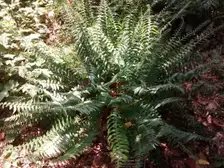
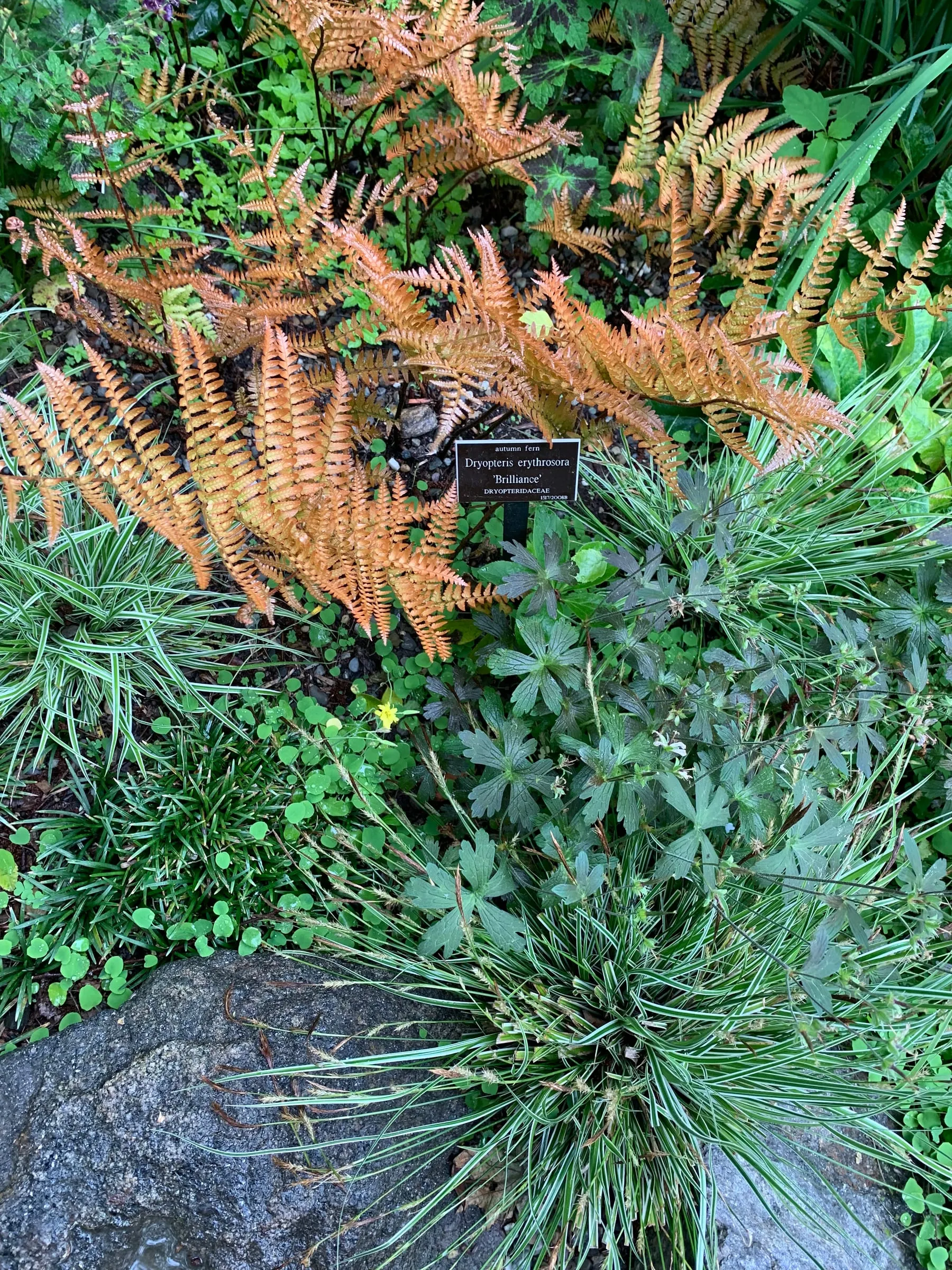
Autumn fern gets its name from spring. The new fronds unfurl coppery orange-pink, like fall color arriving early, and mature to a glossy deep green by summer. It makes an arching, vase-shaped clump about 2 feet tall and up to 3 feet wide, it is evergreen in a mild winter, and deer and rabbits leave it alone. On a shaded porch it is the fern to trust, because it forgives a missed watering better than the delicate ones.
In the Upstate
It is hardy through our winters and stays mostly green, though a hard freeze browns some fronds and a pot’s roots see a zone colder than the ground. Plant in fall or early spring. Summer is fine in shade with steady moisture. NC State’s one warning is that it can naturalize and spread, slowly, by underground rhizomes, so give it a defined bed or keep it in a pot. Protect it from drying wind, which shreds the fronds faster than cold does.
In a container
In a planter it is the filler with height, 18 to 24 inches, and its new copper growth is the spring show. It is slow, so a one-gallon plant holds a pot for several years before it needs dividing. Water a shaded pot when the top inch is dry, roughly every three or four days in summer. It does not need swapping mid-season, and it carries a shade pot through winter.
Care
Keep the soil moist and rich in organic matter, and never let a pot dry out fully. Ferns are sensitive to over-fertilizing, so use a little slow-release fertilizer once in spring after new growth starts, or none. Cut the tattered old fronds in late winter as the new fiddleheads rise, and watch for slugs on the young growth. The one thing that kills it is afternoon sun on dry soil. Shade and water and it will be the easiest plant on the porch.
Want this planted for the light you actually have? Start a project
Sources
- Clemson HGIC 1176, Hardy Ferns (hgic.clemson.edu/factsheet/hardy-ferns/)
- NC State Extension Plant Toolbox, Dryopteris erythrosora (plants.ces.ncsu.edu)
- Missouri Botanical Garden Plant Finder, Dryopteris erythrosora (missouribotanicalgarden.org)
- ASPCA toxic and non-toxic plant list, searched for Dryopteris and autumn fern, no entry (aspca.org)
- Pet Poison Helpline, Ferns (petpoisonhelpline.com), which does not name this species