Photo: ChickenFreak, Public domain, via Wikimedia Commons
- Light
- full sun to part shade. It takes more shade than most cool-season plants
- Water
- medium. Keep the soil evenly moist in rich, well-drained mix, since it stops growing when it dries out
- Toxicity
- non-toxic to dogs, cats and horses (ASPCA, listed under beets, Beta vulgaris, with Swiss chard as a common name). The ASPCA notes that large mature leaves contain oxalic acid
| Type | Cool-season annual |
|---|---|
| Sun | Full sun, part sun |
| Water | Medium |
| Size | 12 to 24 in tall, 8 to 18 in wide |
| Plant in | October, or late February to March |
| Interest | Fall, winter, spring |
| Upstate winter | Survives our winter |
| Hardy zones | 2 to 11 |
| Use in | Containers, beds |
| Role | Height |
Toxicity confirmed against ASPCA Animal Poison Control, Beets (Beta vulgaris).
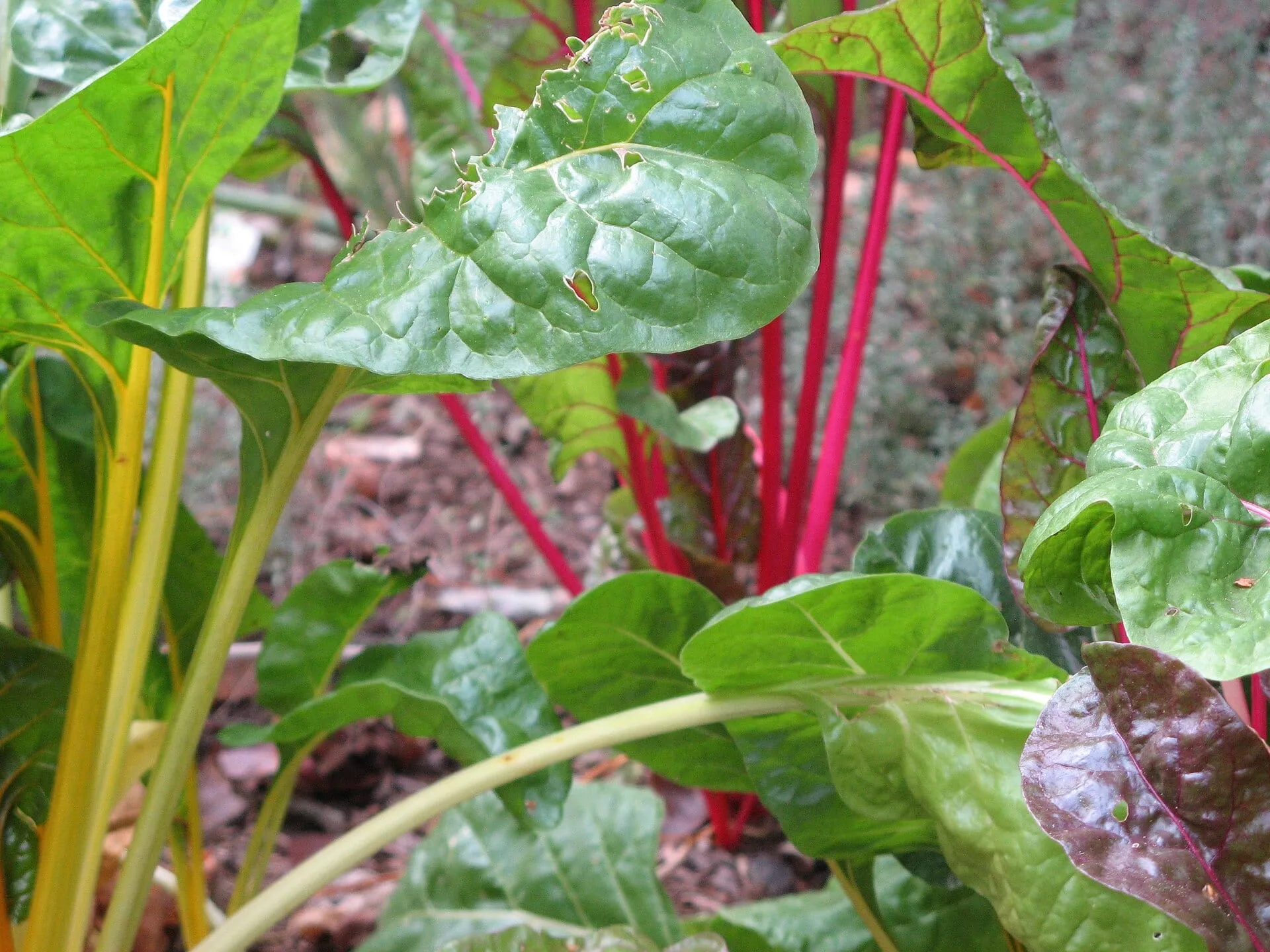
‘Bright Lights’ chard is a vegetable grown for looks. The stems and leaf ribs come up red, pink, gold, orange, and white under big glossy leaves, and Clemson calls it the vertical element in a container of lower flowers like pansies. That is exactly how to use it: one or three stalks of color in the center of a fall pot. It is also edible, which delights some people and does not matter to the rest.
In the Upstate
Chard goes in with the fall planting in October and gives its best color in the cool of fall and spring. NC State rates it for zones 2 to 11 and says it grows fastest in cool weather but keeps producing leaves through summer, tolerating some heat, humidity, and drought. It is a biennial, so it does not bolt in its first year. In a planter, run it fall to spring and swap it out when the summer plants go in, because by June the leaves are coarse and the pot wants something else.
In a container
Chard is the height in a cool-season pot, 12 to 24 inches tall. NC State says it grows well in containers with at least 2 quarts of soil and 8 inches of depth, so a normal planter is plenty. Set it in the center with pansies, violas, and dusty miller around the base. Keep the soil evenly moist, since it simply stops growing when it dries out. Pull the oldest outside leaves as they fade and new ones keep coming from the center.
Care
Water steadily, feed with a balanced fertilizer at planting, and harvest or remove the outer leaves first. NC State reports no significant pests or diseases. The thing that ruins chard in a pot is drought: it does not die quickly, it just sits there, and the stems lose their shine. If you eat it, Clemson says leaves are ready when they reach 4 to 12 inches, cut one at a time.
Want this planted for the light you actually have? Start a project
Sources
- Clemson HGIC, Swiss Chard (hgic.clemson.edu/swiss-chard/)
- Clemson HGIC, Seasonal Container Gardening: Fall Through Winter (hgic.clemson.edu/seasonal-container-gardening-fall-through-winter/)
- NC State Extension Plant Toolbox, Beta vulgaris Leaf Beet Group (plants.ces.ncsu.edu/plants/beta-vulgaris-leaf-beet-group/)
- ASPCA, Beets (aspca.org)