- Light
- full sun to part sun. More sun means more spikes
- Water
- medium. Water on a regular basis through fall and winter, at the soil and not over the leaves
- Toxicity
- non-toxic to dogs, cats and horses (ASPCA, common snapdragon, Antirrhinum majus)
| Type | Cool-season annual |
|---|---|
| Sun | Full sun, part sun |
| Water | Medium |
| Size | 6 to 36 in tall, 6 to 10 in wide |
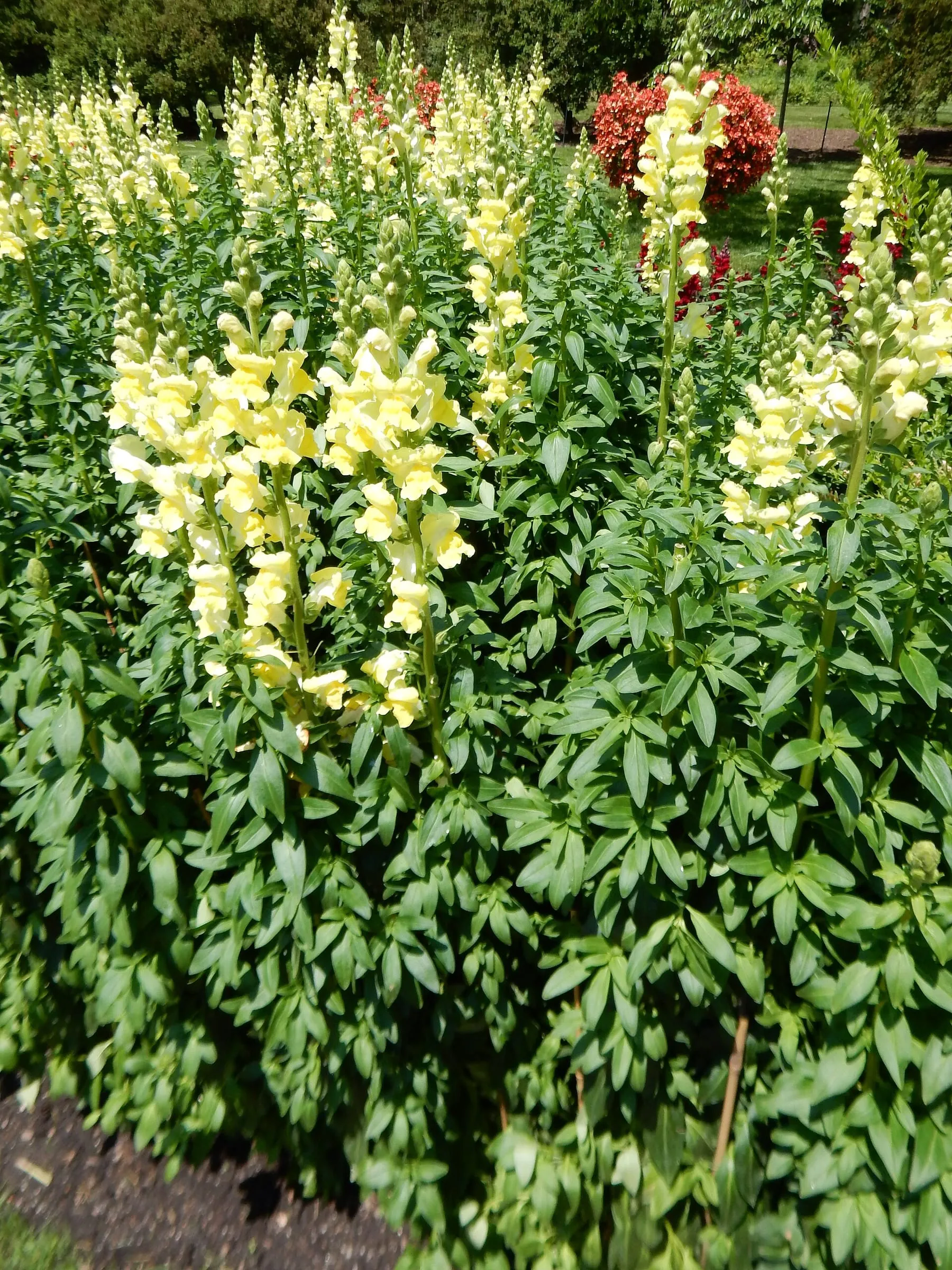
| Bloom | pink, red, orange, yellow, white, bicolor · October to December and March to May, with a pause in the coldest weeks |
| Plant in | October, or late February to March |
| Interest | Fall, spring |
| Upstate winter | Survives most winters |
| Hardy zones | 7 to 10 |
| Use in | Containers, beds |
| Role | Height, filler |
Toxicity confirmed against ASPCA Animal Poison Control, Common Snapdragon.
Snapdragons give a fall or spring planter something pansies cannot: height. The spikes open from the bottom up in pink, red, orange, yellow, and white, and the dwarf kinds sit at 6 to 10 inches while the tall ones run past 2 feet. Clemson plants them with pansies, violas, and ornamental kale for fall color. Kids squeeze the flowers to make the dragon mouth open. So do we.
In the Upstate
Snapdragons go in with the fall planting in October and bloom until the cold sets in, then rest through the coldest weeks and come back strong in March and April. NC State rates them hardy to zone 7, and a Clemson agent reports plants living nearly 3 years in an Upstate zone 8 garden, but Clemson also calls them annuals anywhere colder than zone 9. A mild winter carries them, and a hard one, or a pot that freezes solid, does not. Summer is the real end: NC State says they languish in the heat, and by June they are done. Plan on one fall-to-spring season and be pleased if you get more.
In a container
Use a dwarf or medium snapdragon (Clemson’s list runs from 8-inch ‘Floral Showers’ to 16-inch ‘Snaptastic’) as the tall element in the center or back of a fall pot, with pansies and violas around it. The tall cutting types like ‘Rocket’ need staking and belong in a bed. Snapdragons are narrow, 6 to 10 inches wide, so plant three together for any presence. Water on a regular schedule, more often in a sunny spot. They hold from October to spring changeover with one cutback in between.
Care
Water at the soil line and keep it off the leaves, since rust and leaf spots follow overhead watering. Pinch off finished spikes so the plant does not go to seed, and after a flush of bloom cut the plant back to about 6 inches to bring on more stems. Feed once with an all-purpose fertilizer after that spring cutback. The thing that kills snapdragons is rust and rot from wet foliage in a crowded, poorly drained pot.
Want this planted for the light you actually have? Start a project
Where it shows up
Sources
- Clemson HGIC, Snapdragons for Fall Blooms (hgic.clemson.edu/snapdragons-for-fall-blooms/)
- Clemson HGIC, Seasonal Container Gardening: Fall Through Winter (hgic.clemson.edu/seasonal-container-gardening-fall-through-winter/)
- NC State Extension Plant Toolbox, Antirrhinum majus (plants.ces.ncsu.edu/plants/antirrhinum-majus/)
- ASPCA, Common Snapdragon (aspca.org)