Photo: Alpsdake, CC BY-SA 4.0, via Wikimedia Commons
- Light
- full sun to part shade. It does best sheltered from hot afternoon sun and winter wind
- Water
- medium. Keep it evenly moist the first two years; underwatering in summer makes it drop flower buds
- Toxicity
- non-toxic to dogs, cats and horses (ASPCA). The ASPCA entry is 'Camellia' under Camellia japonica, a genus-level match; there is no separate listing for Camellia sasanqua
| Type | Evergreen |
|---|---|
| Sun | Full sun, part sun |
| Water | Medium |
| Size | 6 to 14 ft tall, 5 to 7 ft wide |
| Bloom | white, pink, red · October to December |
| Plant in | October to November, or March to mid-April |
| Interest | Fall, winter |
| Upstate winter | Survives our winter |
| Hardy zones | 7 to 9 |
| Use in | Containers, beds |
| Role | Height, structure |
Toxicity confirmed against ASPCA Animal Poison Control, Camellia.
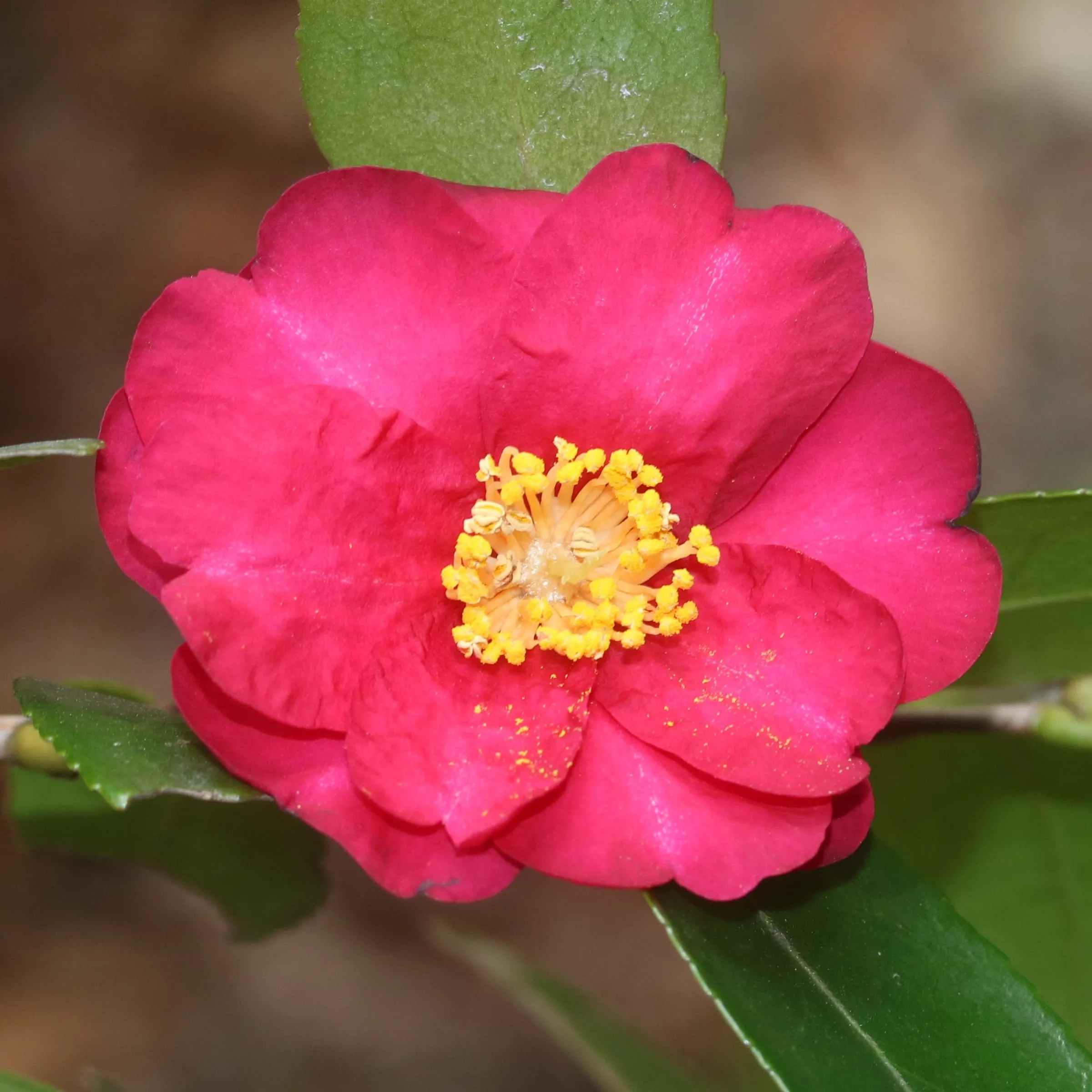
Sasanqua is the camellia that blooms when almost nothing else does. From October into December it opens single and semi-double flowers in white, pink or red against small, glossy, dark green leaves, and the rest of the year it is a handsome evergreen. It belongs where a porch or entry needs something alive in November.
In the Upstate
It is hardy through zone 7, so a Greenville winter is fine in the ground, and a pot, which runs about a zone colder at the roots, is still inside its range. NC State does say to shelter it from winter wind and cold, and a hard early freeze can brown the open flowers. Summer heat is not a problem once it is established, but Clemson is clear that competition for water during establishment is the one critical thing, so the first two summers need attention. Clemson’s planting windows are October to November and March to mid-April.
In a container
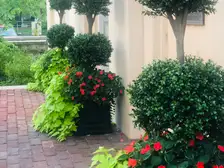
It is the height and the structure, and NC State lists it as a container plant. Choose a compact cultivar: Clemson lists ‘Shishi-Gashira’ at 4 to 5 feet and drought tolerant, while ‘Kanjiro’ and ‘Setsugekka’ run to 10 feet. In a big pot it holds for several years, then wants a bed. Plant it shallow, mulch the surface, and water when the top inch is dry. It does not need swapping mid-season.
Care
Water evenly, especially in summer when the buds are forming. Feed lightly in spring with an azalea and camellia fertilizer and no more, because burned leaf edges mean too much. Prune right after flowering if you prune at all. Scale is the pest to watch on the leaf undersides. The thing that kills it is drying out while young, and the thing that stops it blooming is a dry August.
Want this planted for the light you actually have? Start a project
Sources
- Clemson HGIC 1062, Camellia (hgic.clemson.edu/factsheet/camellia/)
- NC State Extension Plant Toolbox, Camellia sasanqua (plants.ces.ncsu.edu)
- ASPCA, Camellia (aspca.org)