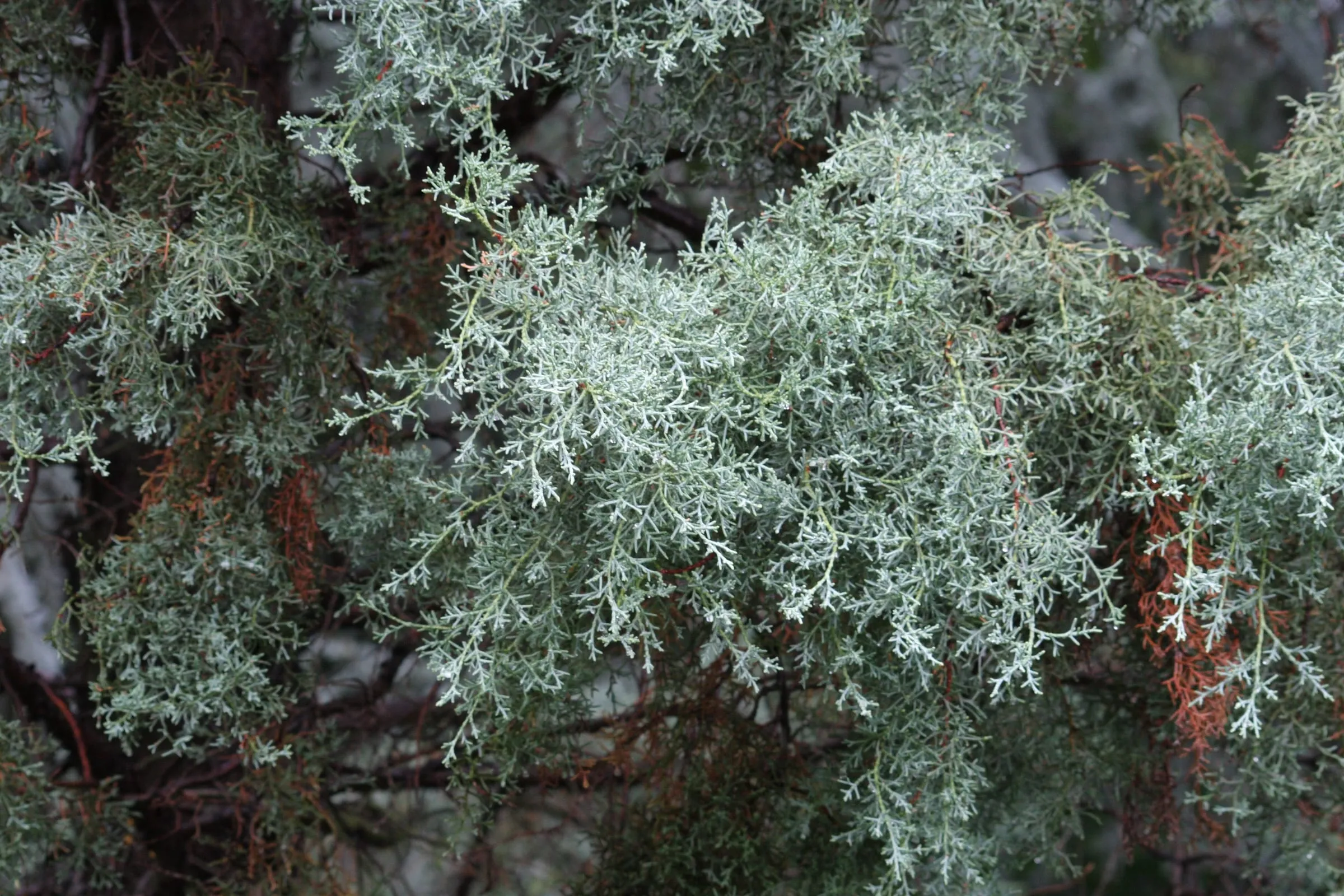
Photo: Ragesoss, CC BY-SA 3.0, via Wikimedia Commons
- Light
- full sun, six hours or more. The foliage thins and loses its blue in shade
- Water
- low once established in the ground. In a pot, water when the top two inches are dry, and do not let it stay soggy
- Toxicity
- Not listed by ASPCA or Pet Poison Helpline. That is not the same as safe, so keep pets from chewing it
| Type | Evergreen |
|---|---|
| Sun | Full sun |
| Water | Low |
| Size | 20 to 30 ft tall, 8 ft wide |
| Plant in | fall or early spring |
| Interest | Spring, summer, fall, winter |
| Upstate winter | Survives our winter |
| Hardy zones | 7 to 11 |
| Use in | Containers, beds |
| Role | Height, structure |
Toxicity not independently confirmed: Not listed by ASPCA or Pet Poison Helpline. If you have pets, check with the ASPCA or your vet before putting this one where they can reach it.
‘Carolina Sapphire’ is the steel-blue conifer for a big pot that needs a big evergreen for the holidays and the months after. The color is the point. Clemson lists it among the Arizona cypress selections that will grow anywhere in South Carolina, and it smells wonderful when you brush it. The photo above is the straight species, smooth Arizona cypress, not the cultivar. We could not find a ‘Carolina Sapphire’ photo we were allowed to use.
In the Upstate
It is hardy through zone 7, so a Greenville winter does not worry it, even with roots in a pot sitting a zone colder. What it wants is sun and drainage. Clemson describes it as thriving in hot, dry conditions, which is most of our summer, but a soggy pot or a wet clay bed is the way to lose one. NC State notes some susceptibility to canker, so prune only in dry weather.
In a container
This is the tall structural piece, and it is honest to say it is a tree, not a shrub. Clemson lists a mature size of 20 to 30 feet tall and 8 feet wide with a rapid growth rate while young. In a large pot it serves as porch or entry structure for a season or two, often starting as a living Christmas tree, and then it wants the ground. Water when the top two inches are dry. It does not need swapping mid-season.
Care
Water to establish, then only in long dry spells, and skip fertilizer. Do not shear it hard. A light tip prune in dry weather is all it wants. The thing that kills it is standing water at the roots. If a branch browns from the trunk outward, that is canker, so cut it out below the damage and clean the pruners.
Want this planted for the light you actually have? Start a project
Sources
- Clemson HGIC, Living Christmas Trees, Table 1 (hgic.clemson.edu/factsheet/living-christmas-trees/)
- Clemson HGIC, Leyland Cypress Alternatives (hgic.clemson.edu/factsheet/leyland-cypress-alternatives/)
- NC State Extension Plant Toolbox, Hesperocyparis arizonica (plants.ces.ncsu.edu)
- ASPCA Toxic and Non-Toxic Plants list, letter A and C pages, no entry for cypress or Cupressus (aspca.org)