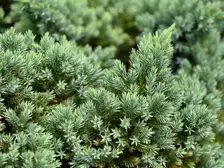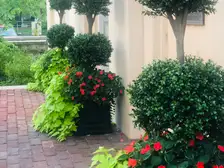
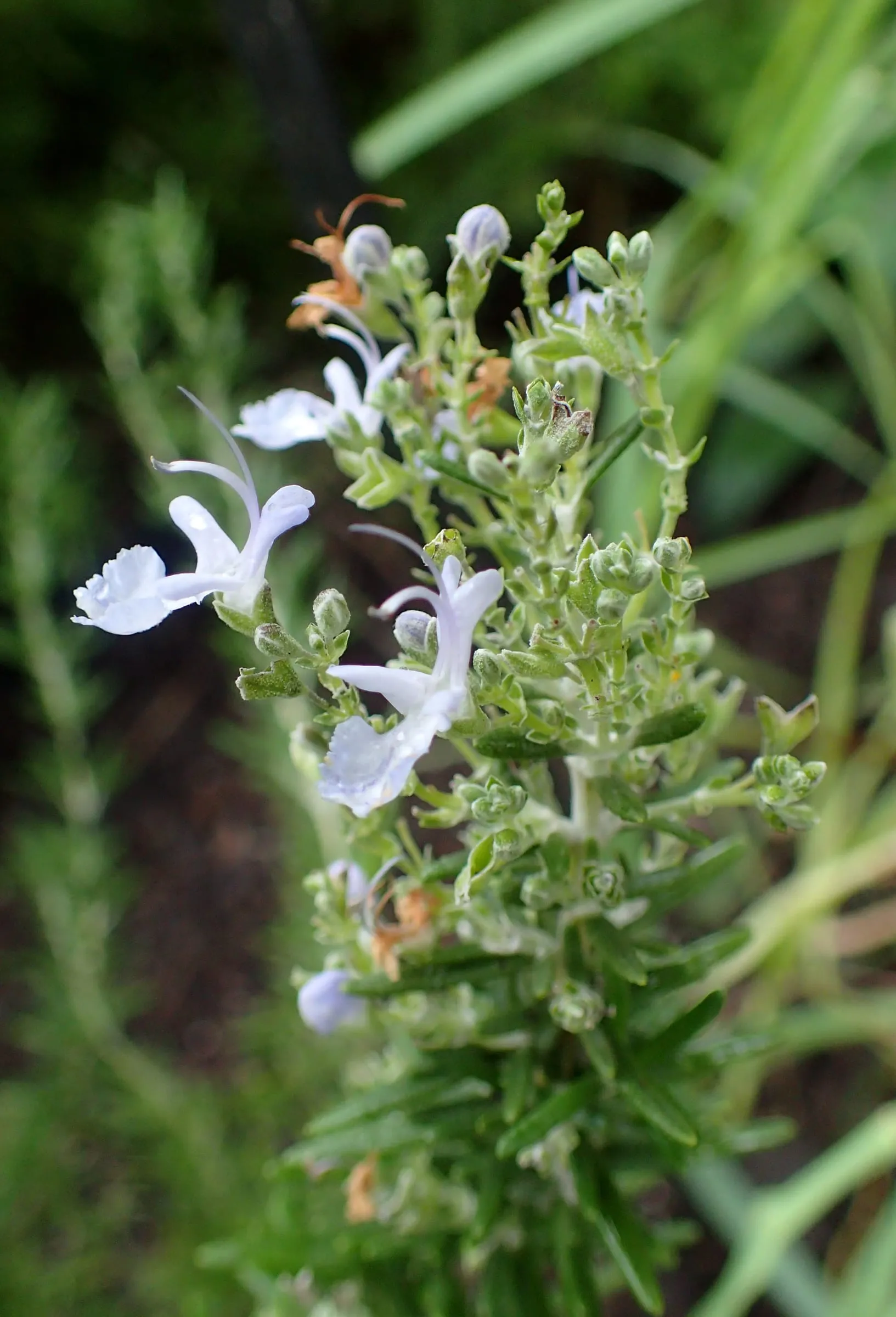
Photo: Krzysztof Ziarnek, Kenraiz, CC BY-SA 4.0, via Wikimedia Commons
- Light
- full sun, six hours or more. It gets leggy and prone to rot with less
- Water
- low. Let the top two inches dry between waterings and never let the pot stay wet; it has a low tolerance for wet soil
- Toxicity
- non-toxic to dogs, cats and horses (ASPCA, listed under the older name Rosmarinus officinalis)
| Type | Evergreen |
|---|---|
| Sun | Full sun |
| Water | Low |
| Size | 4 to 5 ft tall, 3 to 4 ft wide |
| Bloom | blue, lavender, white · spring to early summer |
| Plant in | early spring, after the last frost, or early fall |
| Interest | Spring, summer, fall, winter |
| Upstate winter | Survives most winters |
| Hardy zones | 8 to 10 |
| Use in | Containers, beds |
| Role | Filler, structure |
Toxicity confirmed against ASPCA Animal Poison Control, Rosemary.
Rosemary is the evergreen you can cook with. Gray-green needles, a piney smell every time someone brushes past the pot, and small blue flowers in spring. Upright forms give a planter a bit of structure. Trailing forms spill over the rim. The ASPCA lists it as non-toxic to dogs, cats and horses, which matters on a porch where the dog naps.
In the Upstate
This is the honest part. NC State gives rosemary zones 8a to 10b, and Clemson says that in the Upstate you should plant reliably hardy cultivars such as ‘Arp’ or ‘Hill Hardy’, and that the prostrate types are less cold hardy. Greenville sits right at 8a, and a pot puts the roots about a zone colder, so a container rosemary can be lost in a hard winter, and a wet cold winter is worse than a dry one. Summer is easier: it likes our heat as long as it drains. Humid, still air and heavy soil rot it.
In a container
It is a filler with structure and scent, and a pot with sharp drainage is actually the best home for it here, because our red clay holds too much water. NC State lists 4 to 5 feet tall and 3 to 4 feet wide for the species, but it grows slowly in a pot and takes clipping, so it stays in scale for years. Water when the top two inches are dry. Bring a small pot into a bright garage on the coldest nights if you want to improve its odds.
Care
Water sparingly. Skip fertilizer, or feed once in spring at half strength. Clip the tips through summer for the kitchen and to keep it bushy, and NC State says a harder cut after the spring bloom is fine if it has gone leggy. The one thing that kills it is wet roots: a saucer, a plugged drain hole, or a peat-heavy mix that never dries.
Want this planted for the light you actually have? Start a project
Where it shows up
Sources
- Clemson HGIC, Herbs, Rosemary section (hgic.clemson.edu/factsheet/herbs/)
- NC State Extension Plant Toolbox, Salvia rosmarinus (plants.ces.ncsu.edu)
- ASPCA, Rosemary (aspca.org)