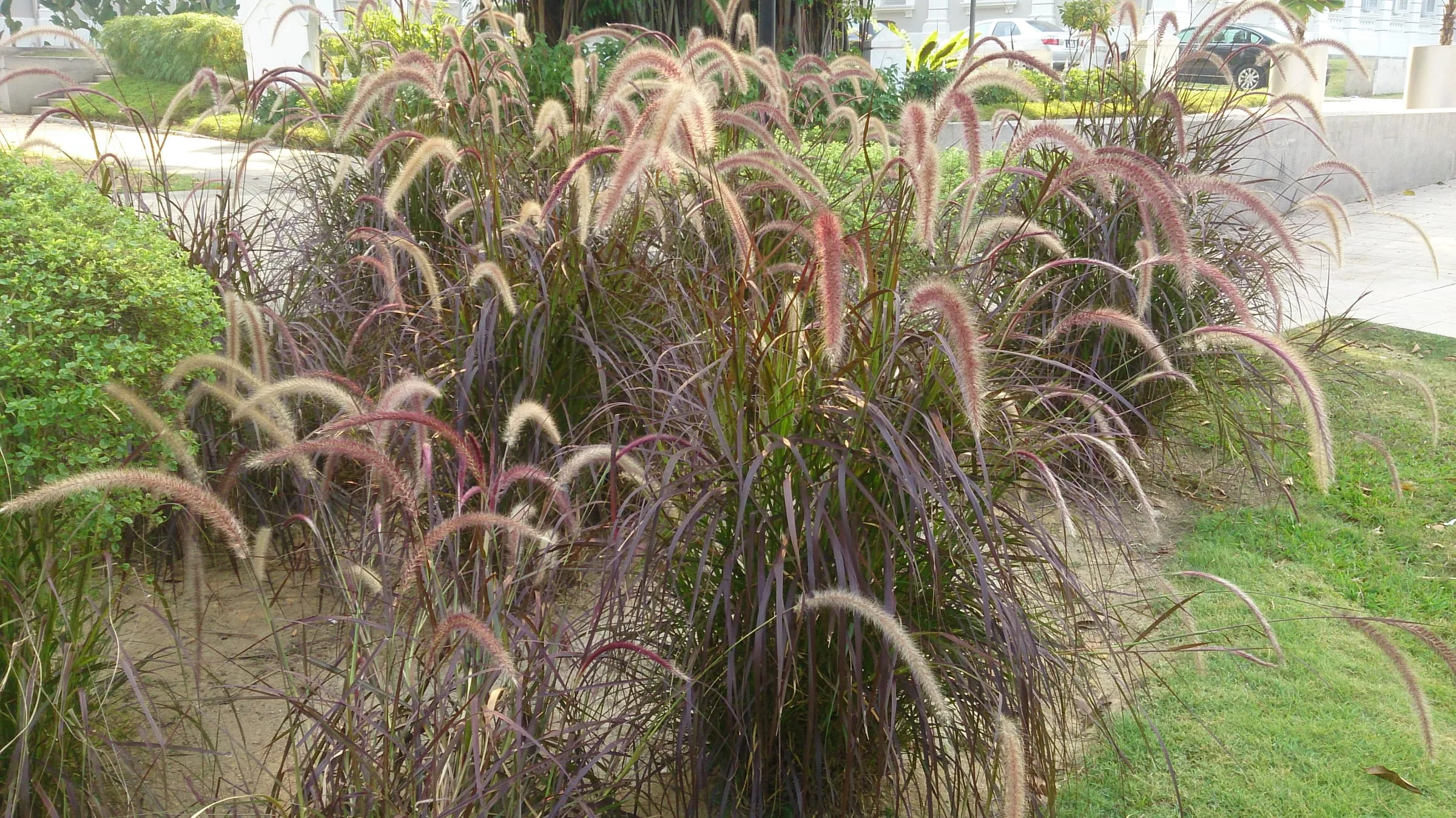
Photo: Mokkie, CC BY-SA 3.0, via Wikimedia Commons
- Light
- full sun, six hours or more. It tolerates part sun but the burgundy fades and the clump flops
- Water
- low to medium once established. Water deeply when the top two inches of mix are dry
- Toxicity
- Not listed by ASPCA or Pet Poison Helpline. Absence from those lists is not evidence of safety
| Type | Grass |
|---|---|
| Sun | Full sun, part sun |
| Water | Low |
| Size | 3 to 5 ft tall, 3 to 4 ft wide |
| Bloom | burgundy, pink · summer to frost |
| Plant in | mid-April to June |
| Interest | Summer, fall |
| Upstate winter | One season |
| Hardy zones | 9 to 11 |
| Use in | Containers, beds |
| Role | Height |
Toxicity not independently confirmed: Not listed by ASPCA or Pet Poison Helpline. If you have pets, check with the ASPCA or your vet before putting this one where they can reach it.
Purple fountain grass is the tall thing in a summer pot. Arching burgundy blades and soft pink bottlebrush plumes catch every bit of wind and afternoon light. It grows fast, takes heat and drought, and deer leave it alone. Nothing else gives a planter three feet of movement by July from a plant that small in April.
In the Upstate
It is hardy only in zones 9 to 11. NC State classes it as an annual, and Clemson says it is grown as an annual throughout South Carolina. An Upstate winter kills it, and a pot makes that more certain, not less. Plant it from mid-April once frost is past. It is at its best in August and September when the plumes are full, then the first hard frost in November browns it. You can leave the dry clump in the pot for winter texture, but it will not come back in spring.
In a container
It is the height in the pot, 3 to 5 feet tall and nearly as wide by late summer, so give it a large container and put it in the center or back. It wants full sun and good drainage. Water deeply when the top two inches of mix are dry. It does not need swapping mid-season, and it is one of the few plants that looks better in September than in June.
Care
Water deeply and less often. Feed with a slow-release at planting and leave it alone. No trimming needed until it browns. One caution from NC State: the species is weedy, self-seeds, and is considered invasive in parts of the West, so cut the plumes before they shatter if you have a bed nearby. The one thing that kills it is winter, and the second is a pot that stays wet in a cool spring.
Want this planted for the light you actually have? Start a project
Where it shows up
Sources
- NC State Extension Plant Toolbox, Cenchrus setaceus (plants.ces.ncsu.edu)
- Clemson HGIC 1178, Ornamental Grasses and Grass-like Plants (hgic.clemson.edu)
- ASPCA Toxic and Non-Toxic Plants, searched fountain grass, no entry (aspca.org)
- Pet Poison Helpline, searched fountain grass, no entry (petpoisonhelpline.com)