Photo: Agnieszka Kwiecień, Nova, CC BY-SA 4.0, via Wikimedia Commons
- Light
- part shade to dappled shade. Morning sun is fine, afternoon sun scorches it here, and deep shade turns the gold striping to lime green
- Water
- high. Rich soil kept consistently moist; if it dries out in summer the leaf tips brown first and the color fades
- Toxicity
- not listed by ASPCA or Pet Poison Helpline. Absence from those lists is not evidence of safety
| Type | Grass |
|---|---|
| Sun | Part sun, shade |
| Water | High |
| Size | 12 to 18 in tall, 12 to 24 in wide |
| Plant in | spring, March to May |
| Interest | Spring, summer, fall |
| Upstate winter | Survives our winter |
| Hardy zones | 5 to 9 |
| Use in | Containers, beds |
| Role | Trailer, filler |
Toxicity not independently confirmed: Not listed by ASPCA or Pet Poison Helpline. If you have pets, check with the ASPCA or your vet before putting this one where they can reach it.
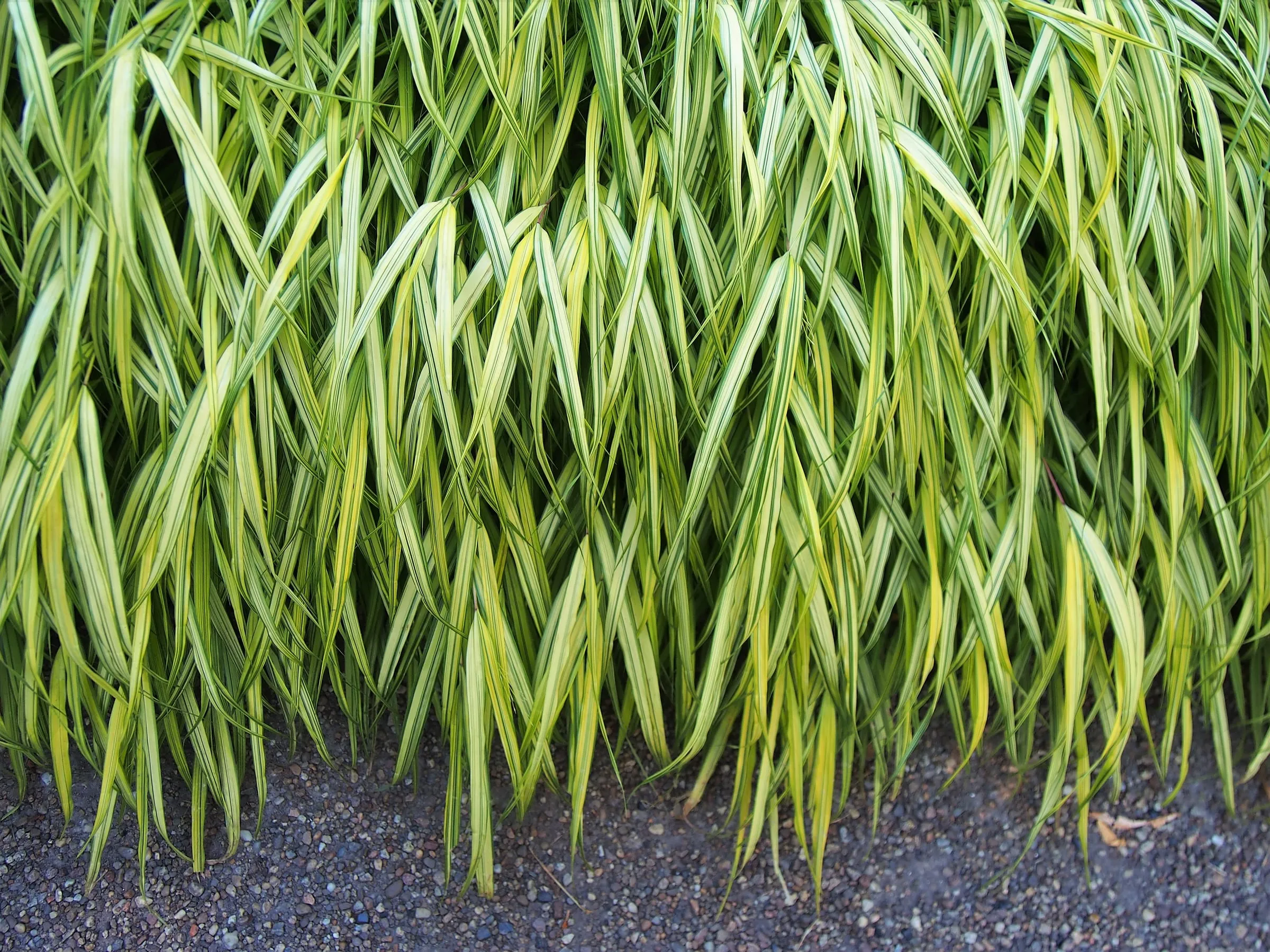
Japanese forest grass is the one grass that wants shade. It makes a low, dense mound of arching leaves, 12 to 18 inches tall, that all lean the same way like water pouring over the edge of a pot. The gold-striped ‘Aureola’ lights up a dark corner of a covered porch the way few plants can. It is deer resistant and slow, and it is the plant for a shaded planter that needs movement instead of another fern.
In the Upstate
Winter is not the problem: it is hardy to zone 5, dies back to the ground after frost, and returns in spring even in a pot. Summer is the problem. NC State says plainly that it grows best in cool summer climates and may not tolerate the hot summers of zones 8 and 9. In Greenville that means the shadiest spot you have, rich soil, and water that never lapses in July and August, because a missed week browns the tips. It is a warm-season grass, so plant it in spring, and mulch the crown before winter so it does not heave.
In a container
Its job is the trailer or the front-edge filler in a shade pot, spilling over the rim. It grows slowly and stays 12 to 24 inches wide, so it can hold a pot for years without dividing. A container dries faster than a bed, and this is the plant that tells you first, so water it every day or two in summer heat. It does not need swapping mid-season, but it has nothing to show from frost until spring, so pair it with an evergreen or plan a winter changeover.
Care
Water, water, water in summer, and use a rich mix that holds moisture but drains. It needs very little fertilizer, and too much nitrogen makes weak growth. Cut the dead foliage to the ground in late winter before new shoots appear, and divide in spring only if a clump has thinned, which takes years. The one thing that kills it is a hot, dry spell with no one watching. Second is heavy clay that stays wet in winter.
Want this planted for the light you actually have? Start a project
Sources
- Clemson HGIC 1178, Ornamental Grasses and Grass-like Plants (hgic.clemson.edu/factsheet/ornamental-grasses-and-grass-like-plants/)
- NC State Extension Plant Toolbox, Hakonechloa macra and Hakonechloa macra 'Aureola' (plants.ces.ncsu.edu)
- Missouri Botanical Garden Plant Finder, Hakonechloa macra 'Aureola' (missouribotanicalgarden.org)
- ASPCA toxic and non-toxic plant list, searched for Hakonechloa and forest grass, no entry (aspca.org)