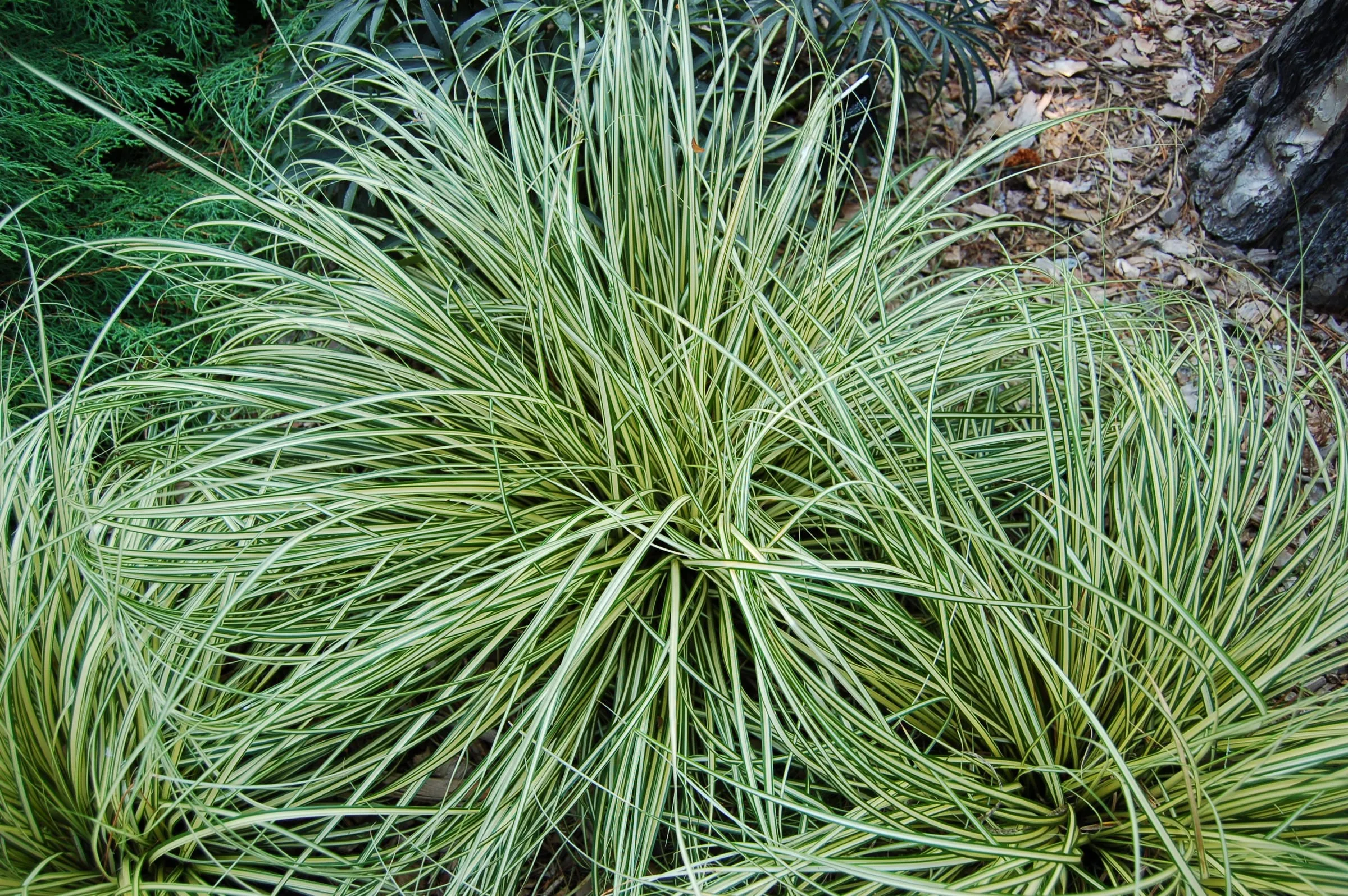
Photo: Derek Ramsey (Ram-Man), CC BY-SA 2.5, via Wikimedia Commons
- Light
- part shade to shade, afternoon shade at least. It takes more sun only if the soil stays moist
- Water
- medium to high. Keep it evenly moist; it does not tolerate drought and browns at the tips in a dry pot
- Toxicity
- Not listed by ASPCA or Pet Poison Helpline. Absence from those lists is not evidence of safety
| Type | Grass |
|---|---|
| Sun | Part sun, shade |
| Water | High |
| Size | 12 to 18 in tall, 12 to 17 in wide |
| Plant in | fall or early spring |
| Interest | Spring, summer, fall, winter |
| Upstate winter | Survives our winter |
| Hardy zones | 5 to 9 |
| Use in | Containers, beds |
| Role | Filler, structure |
Toxicity not independently confirmed: Not listed by ASPCA or Pet Poison Helpline. If you have pets, check with the ASPCA or your vet before putting this one where they can reach it.
‘Everillo’ is a lime-green sedge that stays lime green all year. It gives a shady pot the arching, grassy texture that ornamental grasses give a sunny one, and Clemson notes it is evergreen in South Carolina, so it is still there in January when everything else is bare. The flowers are small and brown and nobody plants it for them. It is one of the few plants that can anchor a porch pot in all four seasons. The photo above shows ‘Evergold’, an older striped sibling; ‘Everillo’ is the same sedge in solid lime green.
In the Upstate
It is hardy in zones 5 to 9, so winter is fine, and a container adds no real risk. Clemson’s advice for our climate is afternoon shade to full shade, and NC State adds that it does not tolerate drought, which is the summer problem: a sedge in a hot pot that dries out browns at the tips and looks tired by August. Keep it shaded and watered and it stays clean. Plant in fall or early spring.
In a container
It is a filler in summer and the structure of the pot in winter. Clemson suggests pairing it with pansies and violas for fall and winter combinations, and it holds its own with hostas, ferns, and heuchera in a shade pot the rest of the year. It grows 12 to 18 inches tall and about as wide, and the clump widens slowly without running. Keep the mix evenly moist. It stays in the pot year-round and does not need swapping.
Care
Water is the main task. It takes wet feet better than dry ones and NC State lists it for rain gardens and pond margins. Feed lightly in spring. Do not cut it back every year. Clemson says to trim it only when the foliage is worn, in late winter, and no lower than 2 inches. Divide in late winter if it outgrows the pot. The one thing that kills it is a pot that dries out in a sunny spot in July.
Want this planted for the light you actually have? Start a project
Sources
- Clemson HGIC, Japanese Sedges (hgic.clemson.edu/japanese-sedges/)
- NC State Extension Plant Toolbox, Carex oshimensis (plants.ces.ncsu.edu)
- ASPCA Toxic and Non-Toxic Plants, searched sedge and carex, no entry (aspca.org)
- Pet Poison Helpline, searched sedge, no entry (petpoisonhelpline.com)