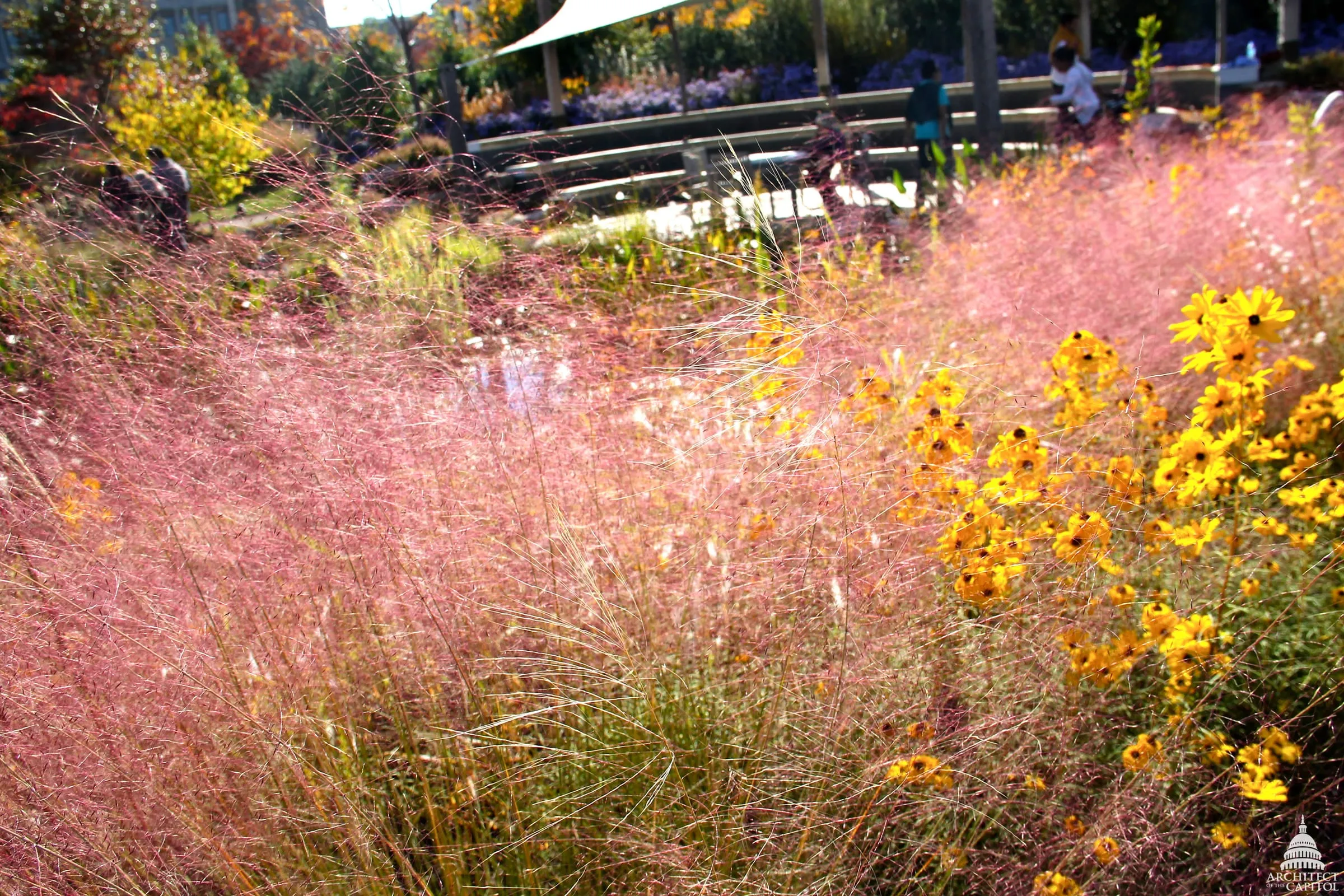
Photo: USCapitol, Public domain, via Wikimedia Commons
- Light
- full sun, six hours or more. Light shade is tolerated, but the fall plume shrinks with every hour of sun it loses
- Water
- low once established. Water it through the first season, then only in a long drought, though a drink in August makes a bigger bloom
- Toxicity
- not listed by ASPCA or Pet Poison Helpline. Absence from those lists is not evidence of safety
| Type | Grass |
|---|---|
| Sun | Full sun |
| Water | Low |
| Size | 24 to 36 in tall, 28 to 36 in wide |
| Bloom | pink, purplish red · September to November, fading to tan plumes that stand through winter |
| Plant in | spring, March to May |
| Interest | Summer, fall, winter |
| Upstate winter | Survives our winter |
| Hardy zones | 5 to 9 |
| Use in | Containers, beds |
| Role | Height, filler |
Toxicity not independently confirmed: Not listed by ASPCA or Pet Poison Helpline. If you have pets, check with the ASPCA or your vet before putting this one where they can reach it.
Pink muhly grass is a Southeastern native that spends the summer as a neat 2 foot mound of fine, wiry, dark green leaves and then, in October, throws up a cloud of pink flowers you can see from the street. The plumes fade to tan and stand through winter. It takes heat, humidity, drought and poor soil, deer ignore it, and it has almost no pests. It is a fall moment worth building a sunny planting around.
In the Upstate
It is hardy through our winters with room to spare, in the ground or in a pot. It is a warm-season grass, so Clemson’s timing is spring planting, and it needs a full sunny season to build the fall show. It is green and quiet from May to September, so it needs company that blooms earlier. Cut it to a few inches in late winter before new growth. One new pest to know: the muhly grass mealybug, first found in South Carolina in 2018, shows as white fuzz on the leaves from late spring on, so check nursery plants before you buy.
In a container
In a planter it is the height, 2 to 3 feet, and in October the whole point of the pot. Give it a big container, because a plant that reaches 3 feet wide in bloom wants root room. Water a pot weekly in summer once it is established, more in a hot spell, and the plume will be fuller for it. It does not need swapping mid-season, and the dried plumes can stay up until you cut the whole thing back in February.
Care
Water to establish, then mostly leave it alone. It needs very little fertilizer, and extra nitrogen makes floppy stems. Cut back to the ground in late winter, and divide in early spring every three or four years when the center thins. The one thing that kills it is shade: in less than six hours of sun it lives but barely blooms, and a muhly with no plume is just a tuft of grass. Wet, heavy soil in winter is the other risk.
Want this planted for the light you actually have? Start a project
Sources
- Clemson HGIC 1178, Ornamental Grasses and Grass-like Plants (hgic.clemson.edu/factsheet/ornamental-grasses-and-grass-like-plants/)
- Clemson HGIC 1865, Rain Garden Plants: Muhlenbergia capillaris (hgic.clemson.edu)
- Clemson HGIC, Muhly Grass Mealybug (hgic.clemson.edu/muhlygrass-mealybug/)
- NC State Extension Plant Toolbox, Muhlenbergia capillaris (plants.ces.ncsu.edu)
- Missouri Botanical Garden Plant Finder, Muhlenbergia capillaris (missouribotanicalgarden.org)
- ASPCA toxic and non-toxic plant list, searched for Muhlenbergia and muhly grass, no entry (aspca.org)