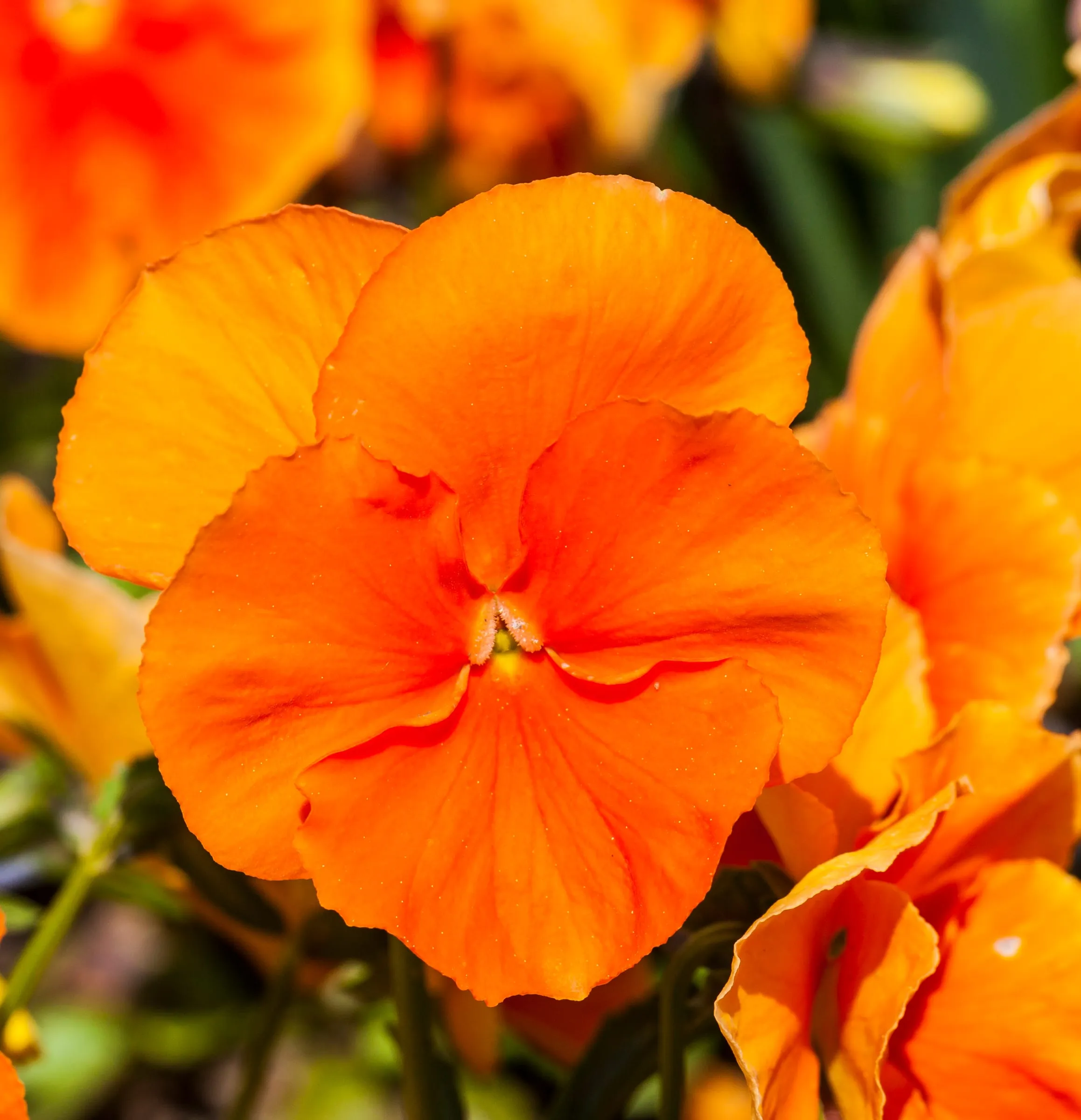
Photo: Diego Delso, CC BY-SA 3.0, via Wikimedia Commons
- Light
- morning sun to full sun. Part shade is fine, but the flowers thin out in deep shade
- Water
- medium. Water after planting and any week that brings less than an inch of rain, fall through spring. Never late in the day
- Toxicity
- considered non-toxic to pets in an ASPCA Poison Control article on fall plants (pansy, Viola tricolor var. hortensis, October 2025), not a database entry; there is no ASPCA or Pet Poison Helpline database entry for pansy. The ASPCA adds that any plant material eaten in quantity can cause mild stomach upset
| Type | Cool-season annual |
|---|---|
| Sun | Full sun, part sun |
| Water | Medium |
| Size | 4 to 9 in tall, 9 to 12 in wide |
| Bloom | purple, blue, yellow, white, orange, red, bronze · October to May, any time it is above freezing |
| Plant in | October, or late February to March |
| Interest | Fall, winter, spring |
| Upstate winter | One season |
| Hardy zones | 6 to 10 |
| Use in | Containers, beds |
| Role | Filler |
Toxicity confirmed against ASPCA Poison Control, Are These Fall Plants Hazardous or Harmless? (aspca.org, October 2025).
Pansies are the first flower to reach for when the summer pots come out. Clemson calls pansies and violas the best annual flowers for cool-season color, and we agree. They bloom any time the temperature is above freezing, so a Greenville porch can have real flowers in January. The big faced blooms read from the street, which is the whole point of a front-step planter.
In the Upstate
Pansies want cool weather, and our winter gives them plenty of it. They shrug off frost and keep blooming through most of it, with the heaviest show in spring. The trouble is timing on the front end: a pansy planted in September, while afternoons are still in the 90s, sits there and sulks, or rots. Wait for the heat to break, usually October. By late May or June they stretch, fade, and are done. Pull them and put the summer plants in. Nothing you do will carry a pansy through a Greenville July.
In a container
Pansies are a filler. They stay under a foot tall and wide, so they fill the front and middle of a pot around something taller like a snapdragon, kale, or chard. Plant them close, 6 to 8 inches apart for small-flowered types. In a pot they dry out faster than in a bed, so check them weekly through winter, and more often in a windy or sunny spot. They hold until spring changeover, then get swapped.
Care
Water in well at planting and any week that gets less than an inch of rain, morning only, so the leaves dry before dark. Mix a slow-release fertilizer into the soil at planting and skip high-nitrogen feeds, which invite rot. Pinch off spent flowers to keep new ones coming. The thing that kills pansies is wet feet: black root rot shows up in soggy, overwatered pots, so use a container that drains and do not baby them with the hose.
Want this planted for the light you actually have? Start a project
Sources
- Clemson HGIC 1169, Pansies and Johnny-Jump-Ups (hgic.clemson.edu/factsheet/pansies-and-johnny-jump-ups/)
- Clemson HGIC, Seasonal Container Gardening: Fall Through Winter (hgic.clemson.edu/seasonal-container-gardening-fall-through-winter/)
- NC State Extension Plant Toolbox, Viola x wittrockiana (plants.ces.ncsu.edu/plants/viola-x-wittrockiana/)
- ASPCA Poison Control, Are These Fall Plants Hazardous or Harmless? (aspca.org/news/are-these-fall-plants-hazardous-or-harmless)