Photo: Krzysztof Ziarnek, Kenraiz, CC BY-SA 4.0, via Wikimedia Commons
- Light
- full sun to part shade. The purple-leaved forms hold their color best in sun with a little afternoon shade
- Water
- low once established. Water deeply in a long dry spell; a pot needs water when the top two inches are dry
- Toxicity
- Not listed by ASPCA or Pet Poison Helpline. That is not the same as safe, so keep pets from chewing it
| Type | Evergreen |
|---|---|
| Sun | Full sun, part sun |
| Water | Low |
| Size | 3 to 8 ft tall, 4 to 8 ft wide |
| Bloom | pink, red, white · late March to April, with some rebloom in fall |
| Plant in | early spring |
| Interest | Spring, summer, fall, winter |
| Upstate winter | Survives most winters |
| Hardy zones | 7 to 9 |
| Use in | Containers, beds |
| Role | Filler, structure, height |
Toxicity not independently confirmed: Not listed by ASPCA or Pet Poison Helpline. If you have pets, check with the ASPCA or your vet before putting this one where they can reach it.
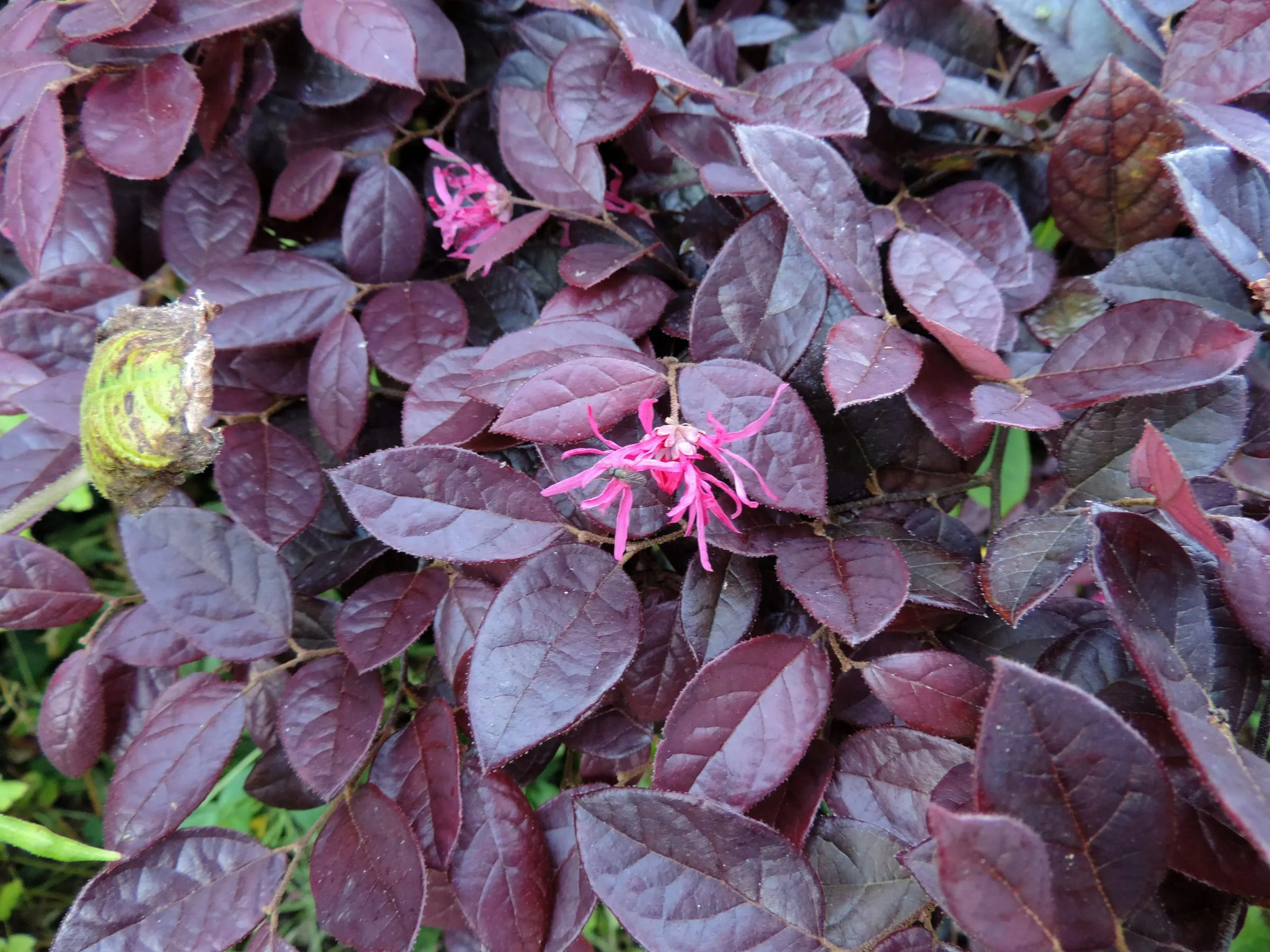
Loropetalum is the purple one. The red-leaved forms hold burgundy foliage most of the year, and in late March they cover themselves in hot pink fringe flowers for two or three weeks. It is tough, it takes shearing, and Clemson calls it a hallmark of durability. It is the answer when a planter needs dark foliage that does not quit.
In the Upstate
Clemson gives it zones 7b to 9b and says it grows from the foothills to the coast, so Greenville at 8a is inside its range in the ground. A pot runs about a zone colder at the roots, which is the cold edge of its range, and for the cold edge NC State says to give it a spot out of winter wind and to plant in spring so it is established before cold arrives. Expect some leaf drop after a hard snap. The plant usually pushes new growth. Summer heat and short droughts do not bother it once it is rooted in.
In a container
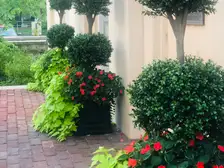
Pick the cultivar for the pot. Clemson lists Purple Pixie at 1.5 to 3 feet with a weeping habit that spills over an edge, Purple Daydream at about 3.5 feet, and Ever Red at 6 feet, while ‘Zhuzhou’ grows into a 30-foot tree. The dwarfs are fillers and trailers that stay in a container for years. The mid-size ones are height for a season or two before they want a bed. Water when the top two inches are dry and use a mix that drains.
Care
Water to establish, then only in long dry spells, and a light spring feeding is plenty. It wants acidic soil and yellows in alkaline soil. Prune right after the spring bloom if you prune at all. The thing to watch for is bacterial gall, which Clemson warns about: knobby galls on the stems that girdle branches. Cut them out several inches below the gall with clean pruners, and buy plants with clean stems to begin with.
Want this planted for the light you actually have? Start a project
Sources
- Clemson HGIC 1085, Loropetalum (Chinese Fringe-Flower) Care, Cultivars and Growing Guide (hgic.clemson.edu/factsheet/loropetalum-chinese-fringe-flower-care-cultivars-growing-guide/)
- NC State Extension Plant Toolbox, Loropetalum chinense (plants.ces.ncsu.edu)
- ASPCA Toxic and Non-Toxic Plants list, letter L pages, no entry for loropetalum (aspca.org)