Photo: Alpsdake, CC BY-SA 3.0, via Wikimedia Commons
- Light
- light to partial shade, ideally morning sun and afternoon shade. It does best out of hot afternoon sun
- Water
- medium to high. Keep it evenly moist and water weekly in a summer dry spell; a pot may need it every other day in July
- Toxicity
- toxic to dogs, cats and horses (ASPCA): genioposide, gardenoside; mild vomiting and/or diarrhea, hives. Also poisonous to people (NC State Extension, low severity): mild vomiting and/or diarrhea, hives
| Type | Evergreen |
|---|---|
| Sun | Part sun |
| Water | High |
| Size | 3 to 8 ft tall, 3 to 8 ft wide |
| Bloom | white · May to June, then sporadically through summer |
| Plant in | fall |
| Interest | Spring, summer |
| Upstate winter | Survives most winters |
| Hardy zones | 7 to 11 |
| Use in | Containers, beds |
| Role | Filler, structure |
Toxicity confirmed against ASPCA Animal Poison Control; NC State Extension Plant Toolbox.
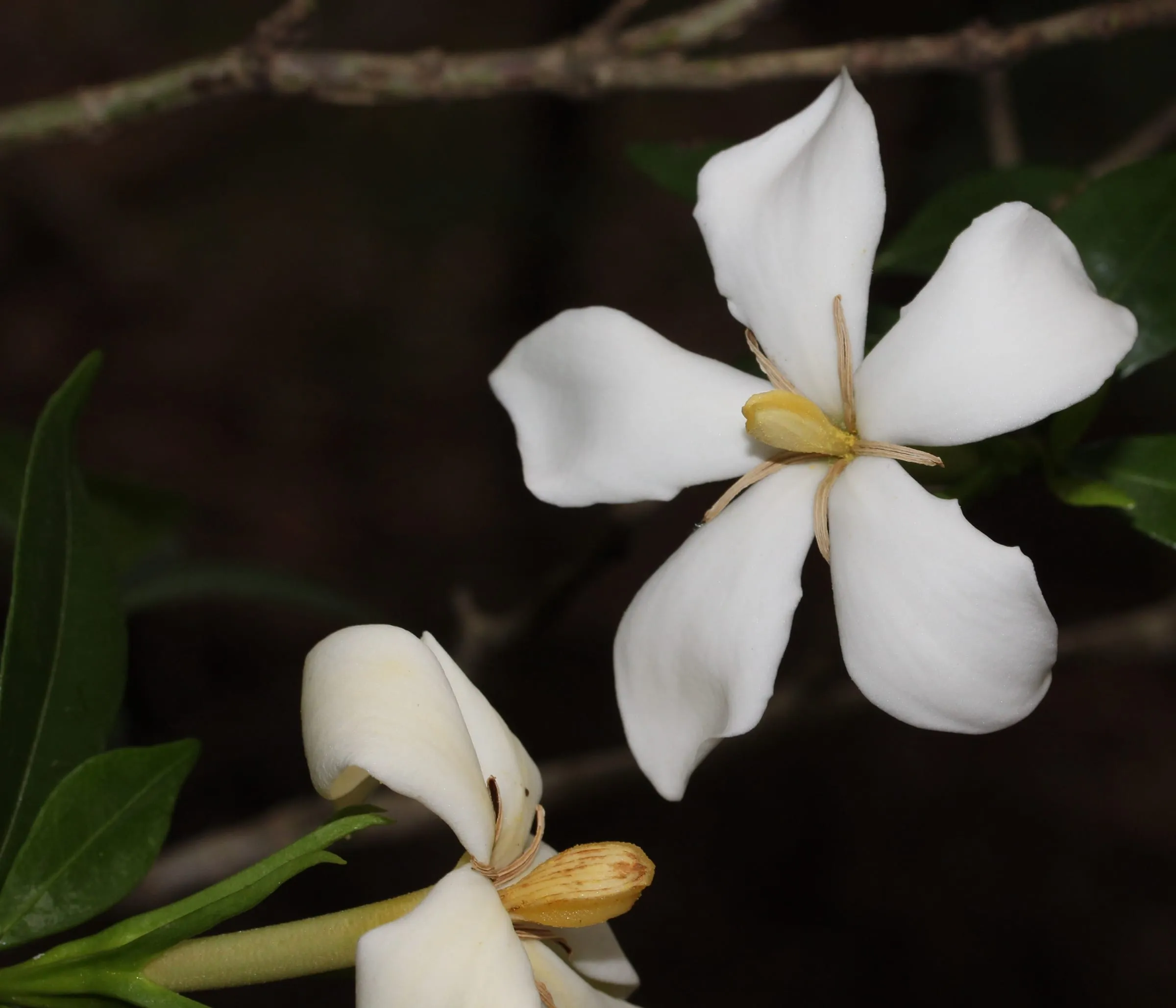
Gardenia is the one plant people ask for by smell. One waxy white flower by the front door in June and the whole porch knows it. The glossy dark leaves look good the rest of the year. Clemson says plainly that gardenias are not the easiest shrubs to grow, and we agree, so this is a plant for someone who will pay attention.
In the Upstate
Winter is the gamble. Clemson notes that gardenias are cold-sensitive and can be killed to the ground in a severe Upstate winter, though they often come back from the roots in spring. Older cultivars are hardy to zone 8, ‘Daisy’ is the one Clemson recommends for the Upstate, ‘Chuck Hayes’ is listed as extra cold hardy, and ‘Kleim’s Hardy’ is listed as hardy to 10 °F. In a pot the roots see roughly a zone colder, so a container gardenia wants a sheltered spot against the house. Plant in fall, never fertilize in fall, and expect some leaf drop after a hard snap.
In a container
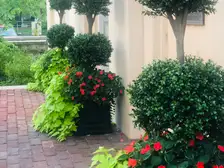
Smaller cultivars grow well in pots, and that is where they shine: a 3-foot ‘Daisy’ or ‘Double Mint’ as the filler and the fragrance in a big planter near a door. It stays for years if the winter is kind. The catch is water. A gardenia in a pot in July can want water every other day, and it sulks and drops buds if it dries out. Use an acidic mix and never lime the pot.
Care
Keep it evenly moist and feed lightly in spring with an acid-forming azalea fertilizer, then again six weeks later, and never in fall. Prune only after flowering. Yellow new leaves usually mean the soil is not acidic enough, which is common next to a new concrete walk or foundation. The one thing that kills it, besides a hard winter, is root disturbance: it resents being moved, so pick the pot and the spot once.
Want this planted for the light you actually have? Start a project
Sources
- Clemson HGIC 1065, Gardenia (hgic.clemson.edu/factsheet/gardenia/)
- NC State Extension Plant Toolbox, Gardenia jasminoides (plants.ces.ncsu.edu)
- ASPCA, Gardenia (aspca.org)