- Light
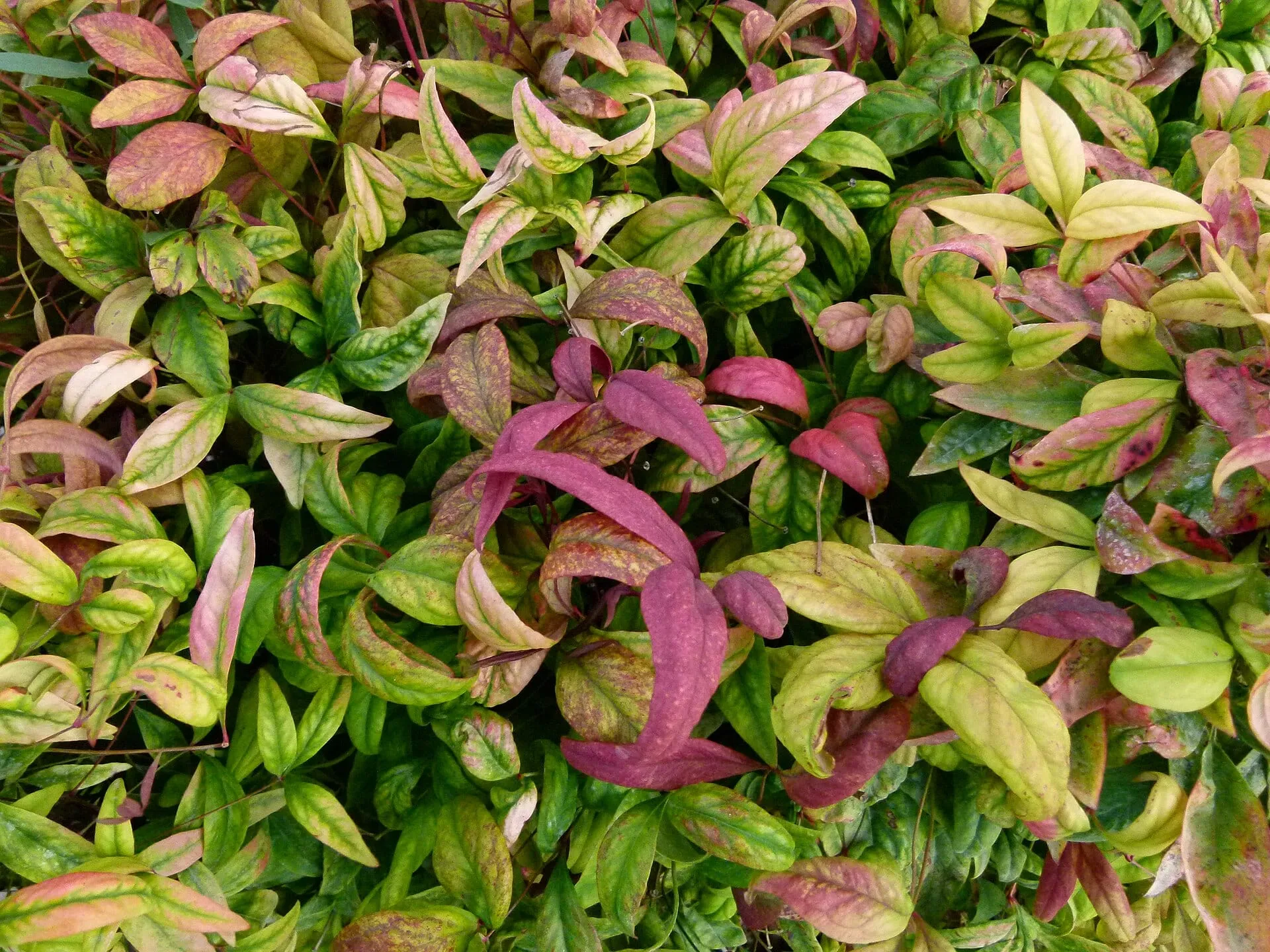
- full sun to part shade, and it tolerates deep shade. The red winter color is strongest in sun
- Water
- low once established. Water when the top two inches are dry; it shrugs off short droughts but not a dry pot for weeks
- Toxicity
- toxic to dogs, cats and horses (ASPCA): cyanogenic glycosides; weakness, incoordination, seizures, coma, respiratory failure, death (rare in pets). Also poisonous to people (NC State Extension, high severity): all parts are toxic, with leaves and stems listed as the poison parts
| Type | Evergreen |
|---|---|
| Sun | Full sun, part sun, shade |
| Water | Low |
| Size | 1 to 3 ft tall, 1 to 5 ft wide |
| Plant in | fall or early spring |
| Interest | Spring, summer, fall, winter |
| Upstate winter | Survives our winter |
| Hardy zones | 6 to 9 |
| Use in | Containers, beds |
| Role | Filler, structure |
Toxicity confirmed against ASPCA Animal Poison Control; NC State Extension Plant Toolbox.
Dwarf nandina earns its spot with color. The fine, layered leaves go lime and copper in spring, green in summer, then bright red for fall and winter, and it holds that color through the cold months when a planter needs it most. Stick to the compact cultivars, ‘Firepower’ and ‘Gulf Stream’, and there is a reason for that.
In the Upstate
The straight species is listed as a significant threat by the South Carolina Invasive Pest Council, its berries carry cyanide compounds that kill cedar waxwings, and Clemson says not to plant it or the heavy-fruiting cultivars. ‘Firepower’ and ‘Gulf Stream’ are different: Clemson lists both among the cultivars that produce little to no fruit, and NC State calls them essentially sterile, which is why they are the only nandinas we would recommend. Winter is no trouble, since they are hardy to zone 6 and a pot in Greenville is fine. Sun gives the best red, and deep shade gives more green and less show.
In a container
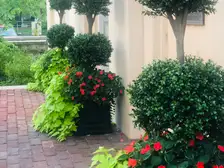
It is a filler with year-round structure. ‘Firepower’ stays about 1 to 2 feet tall and wide, while ‘Gulf Stream’ reaches 2 to 3 feet tall and 3 to 5 feet wide, so give it the bigger pot. Neither outgrows a container quickly. Water when the top two inches are dry. It stays put through all four seasons, so plan the annuals around it.
Care
Water to establish, then only in dry spells, and a light spring feeding is plenty. It rarely needs pruning, but if a stem gets leggy, cut it to the base in late winter. If a ‘Firepower’ shows cupped, crinkled leaves, that is the nonlethal virus Clemson describes in this cultivar, and there is nothing to do about it. Keep it away from pets and children, because every part is poisonous.
Want this planted for the light you actually have? Start a project
Sources
- Clemson HGIC 1071, Nandina (hgic.clemson.edu/factsheet/nandina/)
- NC State Extension Plant Toolbox, Nandina domestica, 'Fire Power' and 'Gulf Stream' (plants.ces.ncsu.edu)
- ASPCA, Heavenly Bamboo (aspca.org)