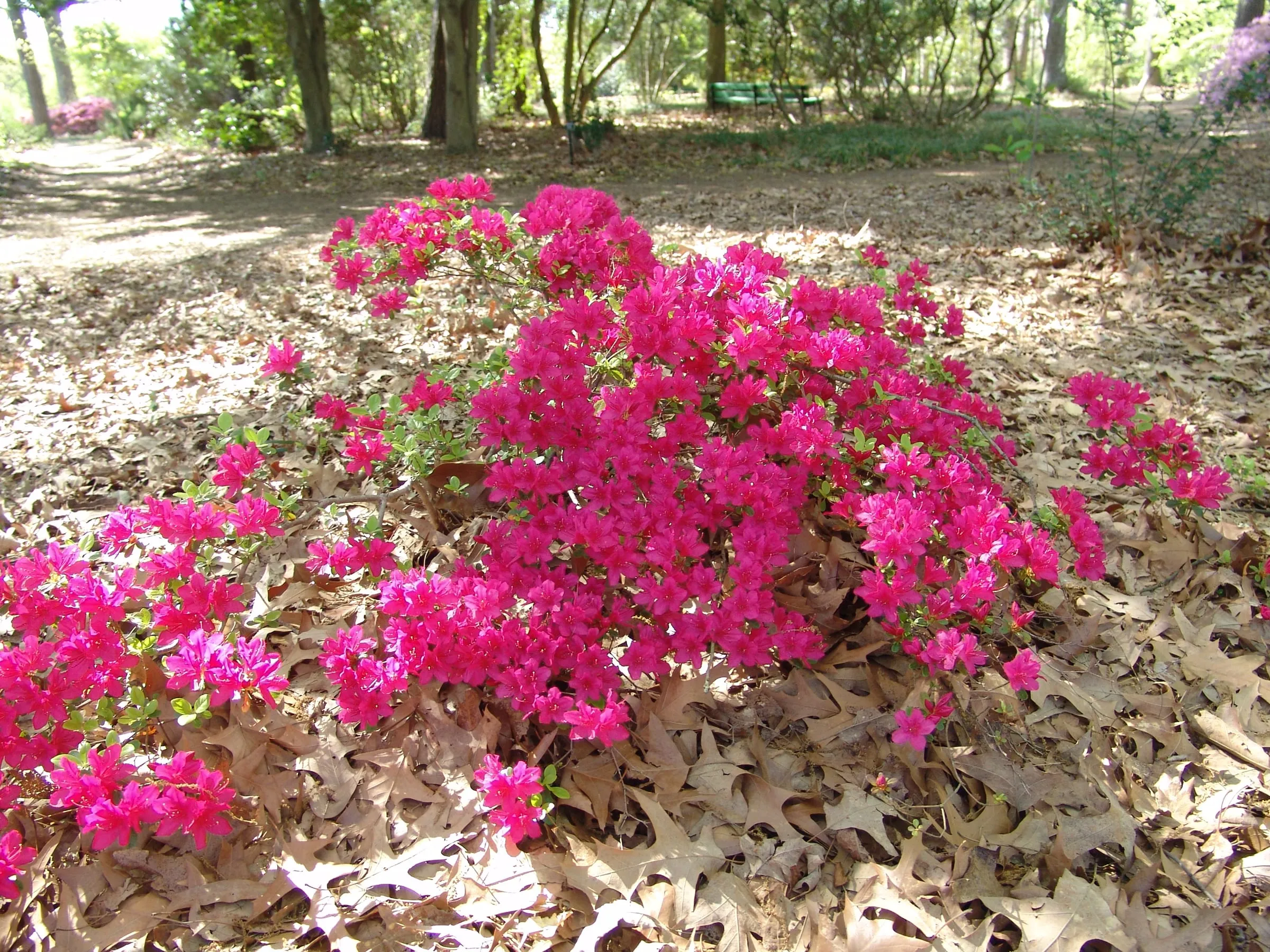
Photo: Drew Avery, CC BY 2.0, via Wikimedia Commons
- Light
- four to six hours of sun with afternoon shade for the best bloom. It takes more sun than older azaleas but not a hot west wall
- Water
- medium, and regular. Shallow roots dry fast, so water when the top inch is dry and never let the pot stay soggy
- Toxicity
- toxic to dogs, cats and horses (ASPCA, listed for the genus Rhododendron): grayanotoxin; vomiting (not in horses), diarrhea, weakness, cardiac failure. Also poisonous to people (NC State Extension, low severity): grayanotoxins in all parts, though moderate amounts of nectar or leaves pose little hazard
| Type | Evergreen |
|---|---|
| Sun | Full sun, part sun |
| Water | Medium |
| Size | 2 to 5 ft tall, 3 to 4 ft wide |
| Bloom | white, pink, purple, red · spring, then again summer into fall |
| Plant in | fall or early spring |
| Interest | Spring, summer, fall |
| Upstate winter | Survives our winter |
| Hardy zones | 6 to 10 |
| Use in | Containers, beds |
| Role | Filler, structure |
Toxicity confirmed against ASPCA Animal Poison Control, Azalea; NC State Extension Plant Toolbox.
Encore azaleas are the ones that bloom twice: a big flush in spring and then again in summer and fall. Clemson mentions the series for exactly that reason. They stay compact, they keep their leaves through winter, and NC State says they take more sun than the old Southern azaleas, which opens up a lot of porches.
In the Upstate
They are hardy to zone 6, so winter in the ground is fine and a pot, a zone colder at the roots, is still inside the range. Clemson’s warning applies to all azaleas: bark splits when a hard freeze is followed by early morning sun, and a sudden fall freeze does the same, so an east-facing spot with morning shade is kinder. NC State recommends 3 inches of mulch each winter over the root zone. Summer is about water and lace bugs, and azaleas in full sun get more lace bug damage than ones in some shade. Plant in fall or early spring.
In a container
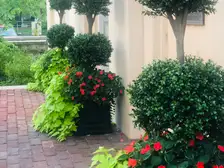
They are a filler with evergreen structure, and NC State lists them as a specimen for a container. The dwarf Encores top out around 3.5 feet and the intermediates at 5, so pick a dwarf for a pot. Use an acidic, bark-heavy mix that drains, because Clemson says azaleas in waterlogged soil decline and rot. Water when the top inch is dry, which in July is often daily. It can stay in a large pot for years.
Care
Water regularly and deeply, because the roots are shallow and dry out fast. Feed lightly in spring with an acid-forming azalea fertilizer only if the leaves are pale, and never in late fall. Prune, if at all, right after the spring bloom. Yellow leaves with green veins mean the soil is not acidic enough or the roots are too wet. The one thing that kills it is wet feet, and the one thing that ruins the look is lace bugs on a plant in hot full sun.
Want this planted for the light you actually have? Start a project
Sources
- Clemson HGIC 1059, Azalea Care (hgic.clemson.edu/factsheet/azalea-care/)
- NC State Extension Plant Toolbox, Rhododendron Encore Group (plants.ces.ncsu.edu)
- ASPCA, Azalea (aspca.org)