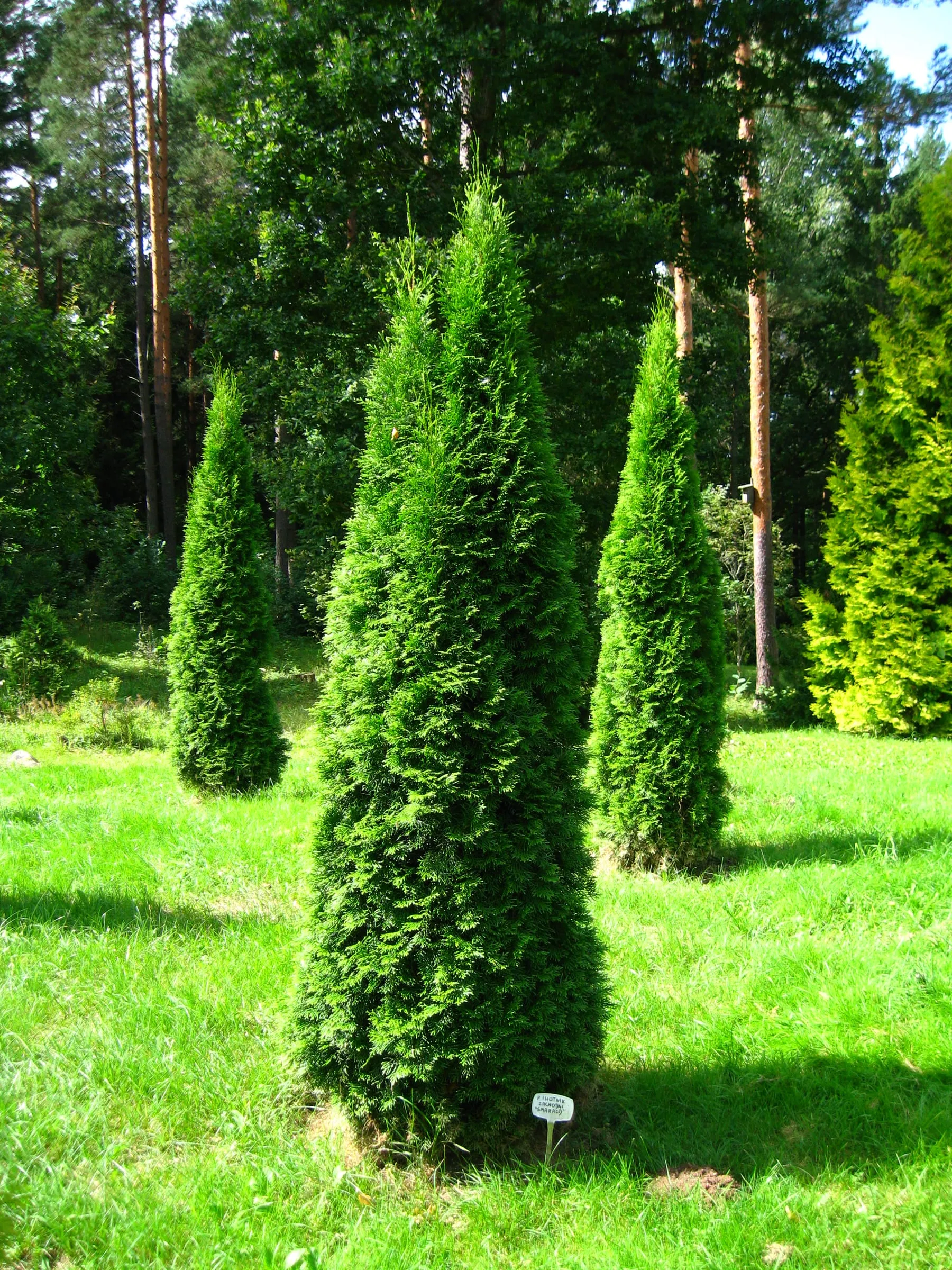
Photo: Athantor, CC BY-SA 4.0, via Wikimedia Commons
- Light
- full sun to part sun. It appreciates a little afternoon shade in our summers, and it thins out badly in full shade
- Water
- medium, and steady. It does not tolerate drying out, so a pot needs water every few days in July and a drink through winter dry spells
- Toxicity
- Not listed by ASPCA or Pet Poison Helpline. That is not the same as safe, so keep pets from chewing it
| Type | Evergreen |
|---|---|
| Sun | Full sun, part sun |
| Water | Medium |
| Size | 7 to 15 ft tall, 3 to 4 ft wide |
| Plant in | fall or early spring |
| Interest | Spring, summer, fall, winter |
| Upstate winter | Survives our winter |
| Hardy zones | 2 to 7 |
| Use in | Containers, beds |
| Role | Height, structure |
Toxicity not independently confirmed: Not listed by ASPCA or Pet Poison Helpline. If you have pets, check with the ASPCA or your vet before putting this one where they can reach it.
‘Emerald Green’ is the skinny green exclamation point for an entrance that needs height without width. It stays narrow, it stays green through winter, and it takes shearing if you want it tidier. A pair flanking a front door does more for a house than almost anything else you can plant.
In the Upstate
Cold is not the problem. This is a northern tree, hardy far below anything Greenville sees, and a pot does not change that. Our summers are the problem. Missouri Botanical Garden notes it wants some afternoon shade in hot climates and will not tolerate dry conditions, so a west-facing brick wall in August is a hard place for it. Plant in fall or early spring so the roots settle before the heat.
In a container
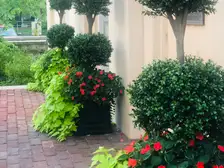
It is the height and the structure. Give it the biggest pot you can live with, because the roots dry out fast in a small one and browned foliage does not green back up. Expect 7 to 15 feet tall over years in the ground, but a container holds it smaller for a long time. A pair in matched pots can serve as porch structure for several seasons before they want the ground. Water it in winter too, on the mild dry days, because an evergreen keeps drinking.
Care
Water deeply and often enough that the soil never goes dry. No fertilizer beyond a light spring feeding. Shear lightly in early summer if you want a formal shape, but it does not need it. The thing that kills it is drought, and the thing that wrecks it is wet snow or ice splaying the branches, so brush heavy snow off gently. Bagworms visit sometimes, so pick off the little hanging bags when you see them.
Want this planted for the light you actually have? Start a project
Sources
- Missouri Botanical Garden Plant Finder, Thuja occidentalis 'Smaragd' (missouribotanicalgarden.org)
- NC State Extension Plant Toolbox, Thuja occidentalis (plants.ces.ncsu.edu)
- ASPCA Toxic and Non-Toxic Plants list, letter A pages, no entry for arborvitae or Thuja (aspca.org)