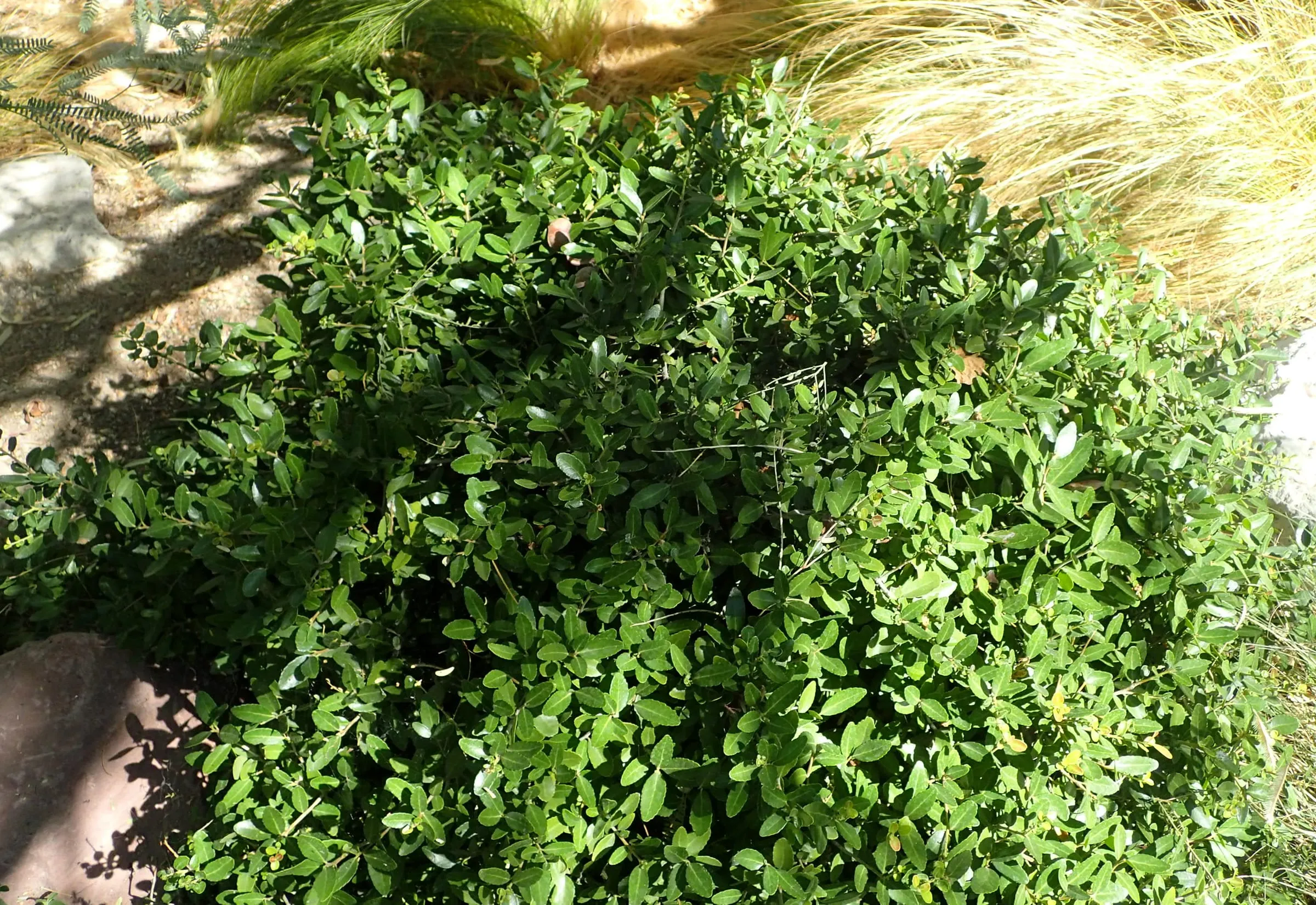
Photo: Krzysztof Ziarnek, Kenraiz, CC BY-SA 4.0, via Wikimedia Commons
- Light
- full sun to part shade. It stays denser and tighter in sun
- Water
- low once established. Water when the top two inches are dry; it takes drought and heat better than most hollies
- Toxicity
- toxic to dogs, cats and horses (ASPCA, listed for the genus Ilex under American holly): saponins; vomiting, diarrhea and depression. Leaves and berries are low toxicity. Also poisonous to people (NC State Extension, low severity): nausea, vomiting, diarrhea when the fruits are eaten in quantity
| Type | Evergreen |
|---|---|
| Sun | Full sun, part sun |
| Water | Low |
| Size | 3 to 5 ft tall, 3 to 6 ft wide |
| Plant in | early fall, or early spring |
| Interest | Spring, summer, fall, winter |
| Upstate winter | Survives our winter |
| Hardy zones | 7 to 9 |
| Use in | Containers, beds |
| Role | Structure, filler |
Toxicity confirmed against ASPCA Animal Poison Control, Holly; NC State Extension Plant Toolbox.
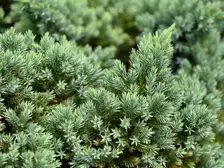
Dwarf yaupon is the native answer to boxwood. Tiny dark leaves, a naturally round mound, no spines, and it shears into a ball or a low hedge without complaint. Clemson notes that yaupon tolerates wind and heat better than most evergreen hollies, which is exactly why it works in a pot on a sunny entry.
In the Upstate
It is native from the coast up through the Southeast and hardy through zone 7, so a Greenville winter is no trouble, even with roots in a container. NC State lists it as resistant to Phytophthora root rot, drought and salt spray, which covers most of what a South Carolina summer and a road-side planter throw at it. Plant in early fall, which Clemson calls the best time for hollies, or in early spring.
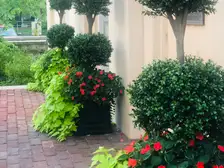
In a container
It is the structure: the evergreen anchor that holds a planter’s shape while the seasonal color changes around it. It grows 3 to 5 feet tall and 3 to 6 feet wide in the ground, but it takes shearing so well that a potted one can be held much smaller. Water when the top two inches are dry, and it does not need swapping mid-season. Being a dwarf, it may set few or no berries. The show is the foliage.
Care
Water to establish, then only in long dry spells. Feed lightly in spring. Shear in late spring after the new growth hardens, and again in midsummer if you want it formal. Scale and leafminers are the pests to watch. It is one of the easiest plants in this guide, and the surest way to lose one is a pot with no drainage hole.
Want this planted for the light you actually have? Start a project
Sources
- Clemson HGIC 1066, Holly (hgic.clemson.edu/factsheet/holly/)
- NC State Extension Plant Toolbox, Ilex vomitoria 'Dwarf' (plants.ces.ncsu.edu)
- ASPCA, Holly (aspca.org)