Photo: Krzysztof Ziarnek, Kenraiz, CC BY-SA 4.0, via Wikimedia Commons
- Light
- full sun for the most flowers. It grows in part shade but blooms less
- Water
- medium. Water deeply when the top two inches are dry; it is not fussy once established
- Toxicity
- Not listed by ASPCA or Pet Poison Helpline (the ASPCA's only honeysuckle entry is a fuchsia, not this plant). That is not the same as safe, so keep pets from eating the berries
| Type | Vine |
|---|---|
| Sun | Full sun, part sun |
| Water | Medium |
| Size | 10 to 20 ft tall, 3 to 6 ft wide |
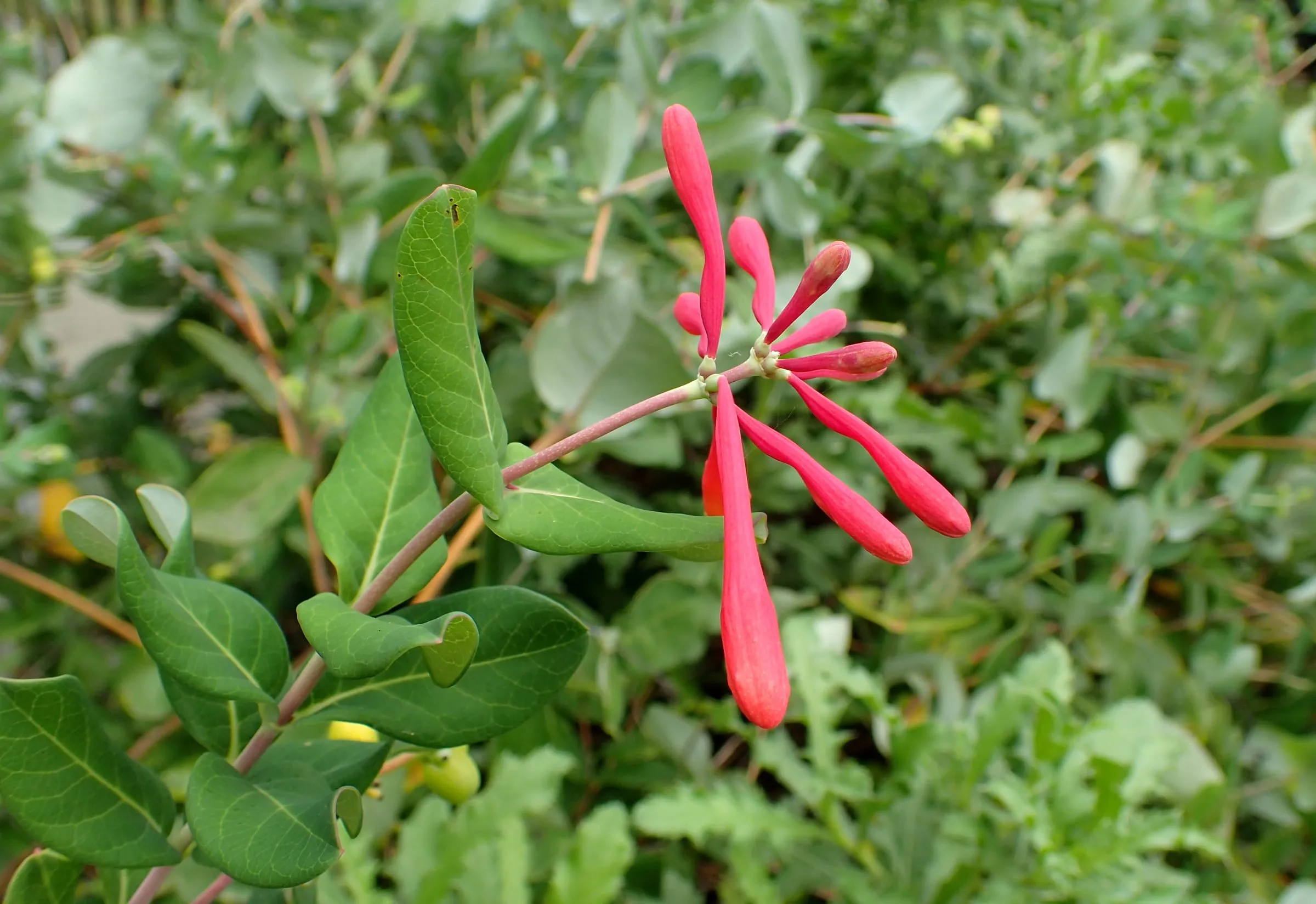
| Bloom | scarlet, orange-red, yellow inside · March to July, heaviest in mid-spring |
| Plant in | fall or early spring |
| Interest | Spring, summer |
| Upstate winter | Survives our winter |
| Hardy zones | 4 to 9 |
| Use in | Containers, beds |
| Role | Height, trailer |
Toxicity not independently confirmed: Not listed by ASPCA or Pet Poison Helpline. If you have pets, check with the ASPCA or your vet before putting this one where they can reach it.
Coral honeysuckle is the native vine, not the invasive Japanese one. Red-orange trumpets from mid-spring on, no perfume to speak of, and hummingbirds work it all day. It twines rather than clings, so it climbs a trellis or a porch post without damaging anything. For a vine on an entry, this is the one we would suggest first.
In the Upstate
It is native to the eastern United States and hardy to zone 4, so winter is not a concern in the ground or in a pot. NC State notes that the species epithet means evergreen and that it holds its leaves in mild winters in the Deep South, and Clemson lists it among the evergreen vines for South Carolina. In Greenville, expect it to keep some leaves in an easy winter and drop them in a hard one. Full sun gives the most flowers.
In a container
It is the height, on a trellis or an obelisk set in the pot, or the trailer if you let it spill. NC State gives 10 to 20 feet in the ground, but a container and a yearly cutback keep it far smaller. Plant it with a support from day one, because it will not climb a smooth wall on its own. Water when the top two inches are dry. It stays in a large pot for years.
Care
Water in dry spells the first summer, then mostly leave it alone. Go easy on fertilizer: NC State says high nitrogen gives leaves instead of flowers. Prune after the main spring bloom to keep it in bounds. The main way to ruin it is a shady spot, where it grows fine and barely blooms.
Want this planted for the light you actually have? Start a project
Sources
- Clemson HGIC 1101, Vine Selections for Landscaping, Evergreen Vines table (hgic.clemson.edu/factsheet/vine-selections-for-landscaping/)
- NC State Extension Plant Toolbox, Lonicera sempervirens (plants.ces.ncsu.edu)
- ASPCA Toxic and Non-Toxic Plants list, letter H pages, no entry for Lonicera (aspca.org)